
| Home | About | Archives | RSS Feed |

The Independent Investor: Chances of a 2020 Recession Have Just Sky-Rocketed
 |
The one-two punch of a worldwide pandemic, plus the sudden sharp decline in energy prices have increased the odds that the U.S. economy could fall into a recession as early as this year. The fact that we still do not know the economic damage of the COVID-19, only increases the odds of a prolonged economic downturn.
At this writing, the number of cases and deaths attributed to the pandemic is growing, which is moving both consumers and businesses to dial back their spending on travel, conferences, large events and various work processes. As schools close, more and more parents are stuck at home instead of going into the office. This is also causing increased disruptions in productivity as companies begin to direct some of their work force to stay home. The recent government decision to bar travel from continental Europe doesn't help the economic situation either.
To be sure, none of the economic data so far reveals any impact from these actions. Unemployment still remains at a 30-year low. The economy is still growing moderately and, until recently, the stock market was celebrating record highs. However, all of those statistics are backward-looking.
One way to suss out how bad things may get in the future is to check out the nation's seaports. After all, 90 percent of world shipping goes through their ports, which provides a good read on world trade. The story from the seaport side is not encouraging.
The Los Angeles port saw cargo fall 23 percent in February and officials there see first-quarter volumes dropping 17 percent or more. The Port Authority of New York and New Jersey are expecting at least 10 out of 180 ship arrivals to cancel. That doesn't sound like much, but they are expecting far more cancellations than that. In Texas, the Port of Corpus Christi, which is the largest source of U.S. oil exports going overseas, is now expecting big cutbacks in their business thanks to the decline in oil prices.
The Federal Reserve Bank was worried enough last week to have instituted a 50-basis point cut in interest rates and has promised to do more if, and when, it is necessary. The threat of recession normally evokes a response from the Fed. It appears that next week, most market participants expect the Fed to initiate yet another interest rate cut and possibly a new round of quantitative easing.
A slower economy and declining energy prices also pose some risks to the nation's corporations. Thanks to low interest rates that have been readily available for corporate borrowers over the last several years, a number of American companies may have borrowed a little too often. The results are that today there are some heavily leveraged companies out there that are up to their eyeballs in debt. If a recession were to begin, investors worry that not all of these companies will have the financial resources to weather a long downturn.
Likewise, lower oil prices pose a risk for many energy companies (and the banks that lend to them). There are about $100 billion in outstanding bank loans to energy producers through lines of credit, which are based on the value of a company's oil and gas reserves. These credit lines are evaluated twice a year.
The last time this was done oil was at $50 a barrel. If oil remains where it is (below $35 a barrel), a lot of oil production, especially among shale producers, won't be worth extracting, which means companies will no longer be able to borrow against production and must immediately repay their loans to the banks.
While we are in the early days, and the dollar and cents hit from the pandemic might not be as serious as many predict, the economic signs from China, indicate the opposite. The early data is breathtakingly bad, even though China, unlike, our own country, responded to the virus threat with quarantines and massive amounts of both economic and monetary stimulus.
Despite more than two months of evidence from countries such as China, Iran, Italy, South Korea and more, Donald Trump chose to downplay the response to this national threat. Only this week, when it is now too late to stem the tide of infection and the subsequent impact on our economy and financial markets, has Trump seemed to realize how badly he has miscalculated. In my opinion, that miscalculation has upped the probability of an imminent recession to an almost certain bet. It is simply a question of how deep and long the recession will be.
Bill Schmick is registered as an investment adviser representative and portfolio manager with Berkshire Money Management (BMM), managing over $400 million for investors in the Berkshires. Bill's forecasts and opinions are purely his own. None of the information presented here should be construed as an endorsement of BMM or a solicitation to become a client of BMM. Direct inquiries to Bill at 1-888-232-6072 (toll free) or email him at Bill@afewdollarsmore.com.
The Independent Investor: The Biden Bounce
 |
Super Tuesday surprised many investors. As the smoke cleared and the results came dribbling in, it became apparent that Joe Biden had risen from the dead. Wall Street celebrated by gaining over 4 percent in one day.
The market's performance says a lot about how investor's view the Democratic candidates. Taken as a group, Wall Street was not happy with where the Democratic candidates were heading. Last week, for example, I discussed Bernie Sander's election platform. The price tag alone ($50 trillion over 10 years) was enough to convince most Wall Streeters that the market and economy would be in for some really rough sledding if Bernie were to be elected.
Elizabeth Warren's ideas were in some ways even worse. Her pugilistic attitude surpassed even Sander's stance and has sent the financial markets into a tailspin, at least mentally. Therefore, the primary election results of the 14 states held on Tuesday heartened investors. Sanders trailed Biden overall, while Warren failed to capture a single state. And then, on Thursday, Elizabeth Warren dropped out of the race, leaving the field to just Biden and Sanders.
From a Wall Street perspective "Joe" appears to be the best of a bad bunch. Now, I am speaking in general terms, because there are plenty of investors who love Sanders, Warren, and the liberal cause. That's not to say Biden isn't liberal, he is, but he also is a moderate, and one who would be far more likely to compromise with his opponents across the aisle.
However, from a middle-class point of view, there is no question that Biden is seen as the "voice of the working man." In comparison to his fellow politicians, and especially someone like Donald Trump, he is by no means considered rich. He is also a fiscal conservative, unlike most members of Congress today, as well as the president. That appeals to many in the financial community.
Biden would prefer to work within the existing system, whether we are talking about taxes, health care, the middle-class, or child care. Rather than jettison the entire system and embrace a new vision of economics and finance, Biden simply wants to reorder capitalism without embarking on a fundamental shift into Democratic Socialism.
He opposes universal health care but wants to see Obamacare improved and extended. It was indicative that health care companies were one of the sectors that bounced the most in Tuesday's market. Financials also did well since his suggested capital gains tax and other tax proposals would raise $400 billion and not the trillions of dollars suggested by his rivals. He is no friend of the uber wealthy, but his tax plan would fall far short of Senator Warren's direct tax on the wealthy that she claims would raise $2.75 trillion.
Wall Street also likes his stance on free trade. After several years of bluster and bluff, tariffs and tantrums, Biden's track record on trade is appealing. He is not for or against free trade, he is for renegotiating trade deals, but without the hysterics.
Most of all, Biden represents compromise, rather than confrontation, and after four years of the latter, many investors, in my opinion, would at least given Biden a pass if he won the general election. And while most investors are still convinced that a Trump presidency would be good for their pocketbooks (if not for their sanity), a Biden win would not be the disaster that many feared if the Democrats turned out on top.
Bill Schmick is registered as an investment adviser representative and portfolio manager with Berkshire Money Management (BMM), managing over $400 million for investors in the Berkshires. Bill's forecasts and opinions are purely his own. None of the information presented here should be construed as an endorsement of BMM or a solicitation to become a client of BMM. Direct inquiries to Bill at 1-888-232-6072 (toll free) or email him at Bill@afewdollarsmore.com.
The Independent Investor: Can America Afford Sanders' promises?
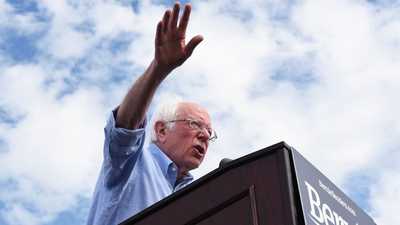 |
| The presidential hopeful speaks last week at an outdoor event at Santa Ana Valley High School in California. |
On the eve of yet another Democratic primary, the policies and promises of the front runner, Bernie Sanders, haves suddenly come into focus for many voters. The price tag of his platform could be enormous -- as much as $60 trillion. Are these promises just waiting to be broken?
Last week, I focused on the promises Donald Trump has made and his track record on fulfilling them. He gets at least a "B," although things like his infrastructure projects and restoring manufacturing were big failures.
In Bernie's case, as a big picture guy, he is arguing for a new vision of America's future. His platform lists seven major spending programs (and a bunch of little ones). The price tag for a Green New Deal, universal pre-kindergarten and childcare, tuition-free public colleges and universities and public housing, is estimated to cost about $23 trillion. Universal health care would add anywhere from $22 to $34 trillion.
In addition, a proposal to increase Social Security benefits, an infrastructure program, a federally guaranteed jobs program, etc. could boost that total by several trillion dollars more. This money would be spent over a decade and would fundamentally change the direction and vision of our society.
Bernie's program would double the amount of government spending throughout the next decade and would increase the share of federal spending by 20 percent. It would make Franklin D. Roosevelt's New Deal look like peanuts, since the price tag of Roosevelt's efforts increased federal spending as a share of Gross Domestic Product by a mere 8 percent.
Of course, in the midst of partisan politics, the actual cost of these ideas could be far higher (or lower). How does Bernie intend to pay for it? Sanders has said $30 trillion in new taxes would come from businesses and the rich. Another $12 trillion from revenue and savings, and a $1.2 trillion cut in defense spending. He also argues that $6.4 trillion would be generated from earnings from his Green Deal program.
The director of the Progressive Policy Institute's Center for Funding, Ben Ritz, concluded that Sanders' numbers would only generate about $29 trillion in taxes and revenues. That would still leave a big short fall and would need to be made up by either borrowing or by taxing the middle class. To put that into perspective, the entire personal income tax over 10 years would amount to the same amount of money. So, what about borrowing the money?
Both bond investors and more and more economists are concluding that raising the money in the debt markets is entirely doable. In fact, it has never been cheaper for the U.S. government to borrow money. U.S. treasuries this week for at least the next few years.
For the last 40 years, interest rates have been in a broad decline, while the national debt has moved in the opposite direction. There was a time when Republicans were supposedly the watch dogs of the budget deficit and government spending, but that is no longer the case. Under Donald Trump, the GOP spends more money than a drunken sailor and no one cares. Democrats don't seem to care either. Deficits have grown and are approaching 5 percent of GDP and hit an all-time low with as little as 1.25 percent on the benchmark 10-year bond. It appears that this trend is here to stay federal debt owned by the public is above 80 percent of GDP this year.
It seems from this perspective that Bernie Sanders' programs could be accomplished simply by issuing U.S. Treasury 100-year bonds every year for the next decade. Of course, Sanders' knows this as well as anyone, but chooses (because the optics are better) to argue he can finance his program by a platform of taxes and revenues. That is nothing new. Every politician in modern history promised the same thing.
The question one must ask is not whether it is affordable, because most Americans tend to live above their means and have no problem going into debt to accomplish that, but whether or not you embrace Sanders' vision of America's future. It is not a question of socialism. That horse has left the barn. Corporate Socialism is the reality of our everyday lives, in my opinion. It is simply a question of what kind of socialism you want to embrace, his or Trump's?
Bill Schmick is registered as an investment adviser representative and portfolio manager with Berkshire Money Management (BMM), managing over $400 million for investors in the Berkshires. Bill's forecasts and opinions are purely his own. None of the information presented here should be construed as an endorsement of BMM or a solicitation to become a client of BMM. Direct inquiries to Bill at 1-888-232-6072 (toll free) or email him at Bill@afewdollarsmore.com.
The Independent Investor: Can Politicians' Promises Be Believed?
 |
As the 2020 presidential election campaign heats up, so do the promises. Lower taxes for some, higher taxes for others, better health care, higher Social Security payments; whatever it takes to get elected seems to be on the table for now.
But most politician's promises are made to be broken. Once the candidate becomes the president, reality sets in and the blame game starts. "The House is against me." "The Senate won't cooperate." "The deficit is too large." "Spending is out of control."
The list of excuses goes on and on.
Truth be told, Donald Trump has come the closest to fulfilling at least some of his promises. He gave us a tax cut. He is building his wall. He has moved the U.S. in a dozen ways, away from multinationalism and back to isolationism. He has stood foreign policy on its head by forsaking World War II allies, while embracing dictators such as Putin and Kim Jong Il.
Using executive orders, Trump has gutted efforts to control climate change and protect the environment. He has stemmed the flow of immigrants, both legal and illegal, coming into the country. He has packed the courts with conservatives at every level, whether qualified or not. If you are a Republican and a conservative, you should be quite happy with Donald Trump's efforts to deliver on his promises.
Now, in preparation for his effort to gain a second term in the White House, he is focusing on the economy and taxes once again. The Trump administration is hard at work devising a middle-class tax cut. Supposedly, this "Tax Cut 2.0" plan would reduce taxes on the middle class by 10-15 percent. It would also make permanent some of the tax cuts that were originally implemented in 2018 but were set to sunset in 2023.
Trump is also suggesting a new tax deferred vehicle to encourage lower- and middle-income Americans to invest and save more. One proposal would allow savers who make $200,000 or less to invest $10,000 in the stock market tax-free, in addition to the contributions they are already allowed to make in their 401 (k) or 403 (b) plans at work.
Both the president and the Republican Party have experienced blow-back from voters who felt that the 2018 tax cut did far more for the country's business sector than it did for the middle-class. Taking that on board, President Trump is now focusing on remedying that shortfall, while appealing to a wider swath of voters.
At the same time, the promises he made that the tax cuts would galvanize corporate America to invest more and thereby grow the economy were not kept. The economy's average growth rate is at about the same level it has been over the last eight years. Part of the reason for that disappointing performance was the economic dampening effects of his multi-year trade war.
In that area, he has kept his promise to work on leveling the playing field for the U.S. in global trade.
Whether you agree with Donald Trump's policies or not, he has been steadfast in following his own agenda. For those who believe in him, there is no reason to doubt that if he is elected for a second term, he will continue to make good on his promises.
Bill Schmick is registered as an investment adviser representative and portfolio manager with Berkshire Money Management (BMM), managing over $400 million for investors in the Berkshires. Bill's forecasts and opinions are purely his own. None of the information presented here should be construed as an endorsement of BMM or a solicitation to become a client of BMM. Direct inquiries to Bill at 1-888-232-6072 (toll free) or email him at Bill@afewdollarsmore.com.
The Independent Investor: Economic Inequality Becomes Campaign Issue
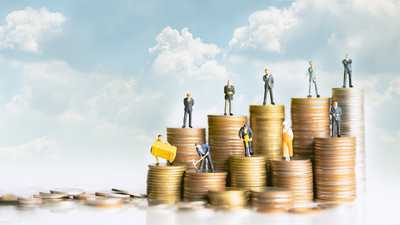 |
As Bernie Sanders takes the lead in the Democratic primary campaign, investors are beginning to take his socialist leanings to heart. But dire warnings from the opposition and Wall Street seem to have little impact. A look at the present income inequality in America goes a long way in explaining why.
Over the years, I have written a number of articles on the growing threat of income inequality and its damage to "the Great Center" — the American middle class. According to a new study by the respected Pew Research organization, over the past 50 years, the highest earning 20 percent of U.S. households have garnered a steadily increasing share of America's total income.
I have pointed out on numerous occasions that not only is our income inequality the highest of the G7 nations, but (depending on some studies), it is also the highest in the developed economies of the world.
If we talk about overall wealth, it should come as no surprise that the gap between America's (richest 1 percent) and poor families has doubled from 1989 to 2016. And middle-class income earnings have grown, but at a much slower rate (49 percent) than upper income families (64 percent), according to the Pew Research study. Given this backdrop, is it any wonder that more and more young Americans worry that capitalism has failed them?
Before I get the usual amount of hate mail, let me be clear: not all Americans believe this. Take someone my age. I grew up in a time when communism and socialism were interchangeable. Both were abhorrent political and economic concepts. The USSR, parts of South America, Eastern Europe, and China had either rejected capitalism outright, or were experimenting with different degrees of centralized government control of the economy. We were at war. It was literally us against them. There was no room for compromise.
Therefore, no matter how hard we try, even the word "socialism" triggers old prejudices and fears. Younger folk, who were not around for the Cold War, only see what is happening today. They see the increasing disparity in income and wealth. They compare the universal health-care systems around the world and wonder why the richest nation on earth can't afford the same.
But it is not just the elderly that shy away from socialism. In the same Pew study, only 41 percent of Republicans and those who lean that way in their political views, think there is too much inequality in this country. That compares with 78 percent among liberals and Democrats.
Of course, many people's opinion of income inequality is dictated by their pocketbooks. Twenty-six percent of upper-and middle-income Americans believe there is about the right amount of income inequality in this country. Only 17 percent of lower income adults think that way. Even on the Republican side, lower-incomers believe income inequality is too high compared to upper-income conservatives (48 percent vs. 34 percent).
However, over in liberal country the reverse is true. Those making the most income believe there is too much income inequality (93 percent), compared to lower-income Democrats (65 percent). Unfortunately, income inequality has been expanding in this country for the last 30 years under both Democrats and Republicans.
In my opinion, as more and more of the middle class slipped into the lower-income category, their stake in the institutions of this country (capitalism and our form of democracy) has weakened. I believe the election of Donald Trump was in response to this trend in income inequality.
His promise to "Make America Great Again" was exactly the lifeline the disappearing middle class was praying for. While it has made most Americans somewhat better off, it has done little to reverse the disparity between the haves and have-nots. This has emboldened some of Trump's political rivals to demand and even more radical change in the economy and possibly the entire political system. It remains to be seen how voters will come down on this issue.
Bill Schmick is registered as an investment adviser representative and portfolio manager with Berkshire Money Management (BMM), managing over $400 million for investors in the Berkshires. Bill's forecasts and opinions are purely his own. None of the information presented here should be construed as an endorsement of BMM or a solicitation to become a client of BMM. Direct inquiries to Bill at 1-888-232-6072 (toll free) or email him at Bill@afewdollarsmore.com.
