
| Home | About | Archives | RSS Feed |

The Independent Investor: Was There Really a Trade Deal?
 |
Last Friday a "phase one" trade agreement between the United States and China was announced with great fanfare. The problem is that nothing was written down, nor were the terms agreed upon. In the end, we only have a gentlemen's handshake. Will that be enough?
With the stock market up by over one percent, President Donald Trump spent most of the that day in front of the cameras crowing that China had agreed to buy $40-$50 billion worth of food imports from our nation's farmers. He repeated those numbers over and over, throwing in comments of how famers were going to have to buy bigger tractors to handle the business.
China's Vice Premier Liu He smiled in the background, yet he never backed up those numbers, preferring instead to deliver a note by his boss, President Xi Jinping, that simply referred to a "healthy and steady relationship."
However, before the weekend was out, the official, government-backed news agencies in China disputed the Trump's take on what was accomplished or agreed upon. For example, China wants the U.S. to drop all the tariffs the White House has imposed on them thus far in exchange for Trump's $40-$50 billion in imports.
And by the way, that was a number that could be imported over three years, not next year. And no, the Chinese have not "already begun buying," as President Trump claimed. Many on Wall Street believe that the entire announcement was little better than a public relations stunt to woo Trump's farming base of voters back into the fold. Unfortunately for the president, few farmers or ranchers seem to be falling for the ploy. It may be that they also know who will benefit the most from these additional exports and it won't be the family farmer.
If we take pork, for example, (one of the products that China is interested in importing), the lion's share of benefits will go to global mega producers that are domiciled in the United States. Eleven of the world's 26 such producers are in the U.S.
And guess what company dominates pork production in this country? Smithfield Foods. And guess who purchased Smithfield back in 2013? WH Group LLC; and who are they? WH Group is a publicly traded food and meat-processing company owned by and headquartered in China.
As for soybeans, another potential target of additional Chinese imports, can you guess who controls 90 percent of U.S. production? No? I will give you a hint -- the same company that is up to its eyeballs in 13,000 lawsuits over Roundup -- the Monsanto Corp. I could go on down the list naming companies such as Cargill, Dow, and Dupont, but you get the drift.
Thanks to the outbreak of the deadly African swine fever last year, China's domestic hog production has been decimated. As a result, China's pork prices have climbed 69 percent, while overall food prices in China gained 11.2 percent in September. That's not something you want to see happen when you have one quarter of the world's population to feed on a daily basis.
As you might imagine, China's sources of food production are a critically important strategic concern. Since they are nowhere near self-sufficiency in food production, the Chinese are reliant on other nations for food. And they also have a long memory.
Most readers probably forgot that back in the 1980s, the U.S. targeted the food security of the then-USSR, establishing a partial grain embargo in retaliation for Moscow's invasion of Afghanistan back in 1979. The embargo was finally lifted when our politicians realized that the only losers in the embargo were our farmers, since Russia quickly established alternative supplies of both corn and wheat.
Imports of American grains to Russia have never recovered. Fast-forward to today where Donald Trump (most likely not an avid reader of U.S. post-war history) is either ignorant or failed to learn from that lesson. But the Chinese have.
I believe that China may increase food purchases from America in the short-term, because it is expedient to do so and suits their purpose for now. But over the longer-term, China, like Russia, will seek to develop more reliable (less political) sources of food supplies.
It is already happening as China imports more from Brazil and other food producing nations around the world. Reducing their over-reliance on the U.S. for food will most assuredly hurt our agricultural sectors a few years out, but hey, by then it will be another president's problem and who knows, maybe we can blame the Democrats.
Bill Schmick is registered as an investment adviser representative and portfolio manager with Berkshire Money Management (BMM), managing over $400 million for investors in the Berkshires. Bill's forecasts and opinions are purely his own. None of the information presented here should be construed as an endorsement of BMM or a solicitation to become a client of BMM. Direct inquiries to Bill at 1-888-232-6072 (toll free) or email him at Bill@afewdollarsmore.com.
The Independent Investor: Brokerage Business Not What It Used to Be
 |
Last week, Charles Schwab, the mega-discount broker, disrupted the brokerage industry yet again by dropping its per-trade commission rates for U.S. and Canadian stocks, exchange traded funds (ETFs), and options for both mobile and internet trades. It was inevitable and simply recognizes what the future holds for that segment of the financial industry.
Since Schwab's announcement on October 1, three additional big brokers — TD Ameritrade, E-Trade and Fidelity Investments — have thrown in the towel leaving only Vanguard (among the big houses) left out of the zero-commission trend.
The stock market reacted in shock. Traders hit the sell button on their computers sending the brokerage stocks down in double-digit losses. E-Trade, for example, fell 17 percent on the announcement. Many pundits predicted the end of the brokerage business, but those forecasts, in my opinion, were based on an antiquated notion of where the brokerage business is actually heading.
The internet and the introduction of smart intelligence has changed financial services forever. Personally, I cannot remember the last time I actually called a broker to place a trade. It is all done through the internet now, so why should I be paying Schwab (or anyone else) $4.95 per trade?
I'm not the only one who must have felt this way. The recent success of upstart retail brokerage businesses such as Robinhood, which promises commission-free trading, social media, cryptocurrencies, etc., was not lost on Charles Schwab. Neither were the offers by more serious competitors like Bank of America's Merrill Lynch and JPMorgan Chase that are offering free trading on a limited basis.
So how can Schwab, or any of the other discount brokers, make money when they aren't charging commissions? The answer is simple. Commissions mean less and less when it comes to the bottom lines of most brokers. Most of us still have an image of a three-piece business suit, tasseled loafers and cufflinks when the word "broker" is mentioned, and I am sure there may still be some of those dinosaurs left out there in some corner office or another.
However, nowadays, it is more likely than not that the markets move too fast to dilly dally on the phone with a broker, or worse still, to waiting on the phone listening to Muzak while the stock skyrockets past you (or is dropping like a rock). Since just about all trading is done electronically, (by people in hoodies and sandals) the costs of executing those trades have dropped too.
Sure, cutting most commissions will hurt the bottom line, but not nearly as much as you think. The way brokers make money today, for the most part, is using the cash in your account until you need it. They invest the money in whatever high-yielding instruments they can find for as long as they can. It is called net interest income and last year Charles Schwab, for example, made 2.6 percent on average from doing so. That may not sound like much, but it amounted to $5.8 billion or 57 percent of the company's total revenue. Investment management and administrative fees accounted for only 32 percent of revenues. Commissions, trading and such accounted for the rest.
Throughout the financial services sector, commissions, fees, and other charges are shrinking as more and more retail and institutional clients demand a better deal. As electronics and automation increasingly become the lion's share of the services provided by the financial industry in the future, investors can expect to see this trend continue.
Bill Schmick is registered as an investment adviser representative and portfolio manager with Berkshire Money Management (BMM), managing over $400 million for investors in the Berkshires. Bill's forecasts and opinions are purely his own. None of the information presented here should be construed as an endorsement of BMM or a solicitation to become a client of BMM. Direct inquiries to Bill at 1-888-232-6072 (toll free) or email him at Bill@afewdollarsmore.com.
The Independent Investor: Markets Bogged Down by Politics
 |
Recently, financial and economic events have taken a back seat to politics. Whistleblowers, United Nations speeches, White House tweets, and the on-going trade wars seem to be moving markets far more than unemployment or earnings reports. Is this simply a short-term phenomenon, or is something else happening that is becoming a longer-term trend?
As readers are aware, over the last three years, financial markets have been increasingly governed by what is happening in Washington. At first, markets keyed off big developments like the tax cuts and what they would or would not accomplish from an economic point of view. From time to time, markets would also focus on the possibility of infrastructure spending, or a new health care plan for the country.
However, as the months wore on, more and more of the market's ups and downs were dictated by the trade war, the Russian investigation, and recently, the mid-term elections. The time horizon for investors, given the uncertainties of politics, has become shorter and shorter. That happens to work out well for the high-speed, computer-driven trading platforms of Wall Street. Those "Algos" now represent upwards of 80 percent of all equity trading on any given day.
As an example, if you were to track the markets' moves last week, based on political developments, as CNBC and other financial news outlets did, you would see an extremely high correlation between politics and market moves. The president's comments and tweets on Chinas, his speech at the United Nations Assembly, and House Majority leader Nancy Pelosi's news conference on the launch of an impeachment inquiry against President Trump by the Democratic-controlled House, impacted all sorts of financial instruments.
Trading in currencies, bonds, stocks, commodities, even commercial credits gained, and lost value based on political events. It is almost as if the tried and true market determinants — the strength of our economy, prospects for inflation, earnings data, and the unemployment rate — are secondary, at best, to the drama in Washington.
Last Friday, the president and his cabinet seriously considered forcing the U.S. financial exchanges to de-list Chinese companies on their stock exchanges. In addition, Trump is considering placing controls on U.S. citizen's ability to invest in Chinese markets. This week, he is slapping tariffs on European goods ranging from single malt scotch to French wine.
Is the new normal? Are we entering an era where financial markets are no longer governed by fundamentals, but instead by governments and the whim of politicians?
A lot of people would like to blame the present government interference in the economy on Donald Trump, but the transition from free markets to what I believe is a nascent form of corporate socialism predates the Mad King. The truth is that government in this country has taken a larger and larger stake in what we still like to think of as our free market economy. It has been happening for years right under our noses, but we can't see the forest through the trees.
The fortunes of the health-care sector, for example, are an area where politics and government are in the front seat, while earnings and growth are almost an afterthought. The banking sector, as a result of the Great Financial Crisis of 2008, is another sector that has felt the heavy hand of government. And then there is the myth of the American farmer and rancher, stalwart symbols of free-markets and capitalism, whose homesteads and businesses have been subsidized by massive government doles for decades.
Today, we are focused on the trade war and the severe impact it is beginning to have on global growth worldwide. What we fail to see is that these tariffs are also moving more and more of the country's economic control of the markets and its pricing mechanisms from the private sector to the Federal government.
"Big Brother" is now deciding on an almost a daily basis, what products will be exempted from tariff controls, and which will not. How are these decisions being made and by whom? These decisions have an enormous impact on the cost of goods sold and even more on the companies that produce them.
This week, we placed tariffs on some European products, such as single malt-scotch whiskey and French wines. Do you really think a Scotch or fine wine drinker will switch to an American whiskey just because of a tariff? And why are Italian wines and olive oil exempt?
And like a socialist (or communist for that matter) economy, the government is now dictating which companies will be protected (compensated) because of the impact of tariffs. Why are the nation's farmers, who are largely U.S. mega-cap corporations, given taxpayer money, but the manufacturing sector is not?
The manufacturing sector is suffering deeply from the trade war where business has dropped back to a 10-year low. Who is deciding that farmers deserve more help than manufacturers? How is controlling prices, deciding who benefits (and who does not) any different from what a communist or socialist state would do?
The point is that while Wall Street rants and raves about an Elizabeth Warren or Bernie Sanders socialist presidency, much of what they fear is already happening right before our eyes. As it is, we have already become a society where nearly every Orwellian prediction in the book "1984" has come to be. We have passively allowed our government to monitor our every movement, conversation, or phone call — all in the name of protecting us from another "9/11." On the economic front, it's the trade war and Trump. When are we all going to wake up?
Bill Schmick is registered as an investment adviser representative and portfolio manager with Berkshire Money Management (BMM), managing over $400 million for investors in the Berkshires. Bill's forecasts and opinions are purely his own. None of the information presented here should be construed as an endorsement of BMM or a solicitation to become a client of BMM. Direct inquiries to Bill at 1-888-232-6072 (toll free) or email him at Bill@afewdollarsmore.com.
The Independent Investor: India's Bid for More Trade
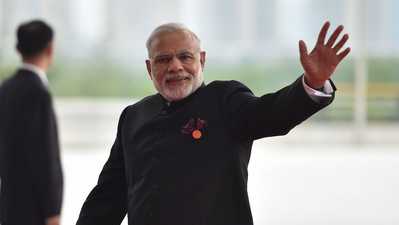 |
India's Prime Minister Narendra Modi is aggressively pushing for a greater share of global trade now that its neighbor to the north (China) is squabbling with the United States. In doing so, India is hoping to regain some economic momentum, kick-start employment, and reverse its slowing economy.
For those readers whose knowledge of India is limited to the next Bollywood musical, India's economy has been in the doldrums. It is still growing at a 5 percent clip, which may sound high to some, but it is at the lowest level in six years. The country's unemployment rate is presently at 8.19 percent, versus 6.27 percent last year.
Despite the poor performance of the economy, Modi was re-elected last year with an even larger majority. He is the leader of the largest political party on the planet, the Indian People's Party (BJP), with 180 million members strong. Modi is considered by most to be a populist and in the same camp as President Trump when it comes to the economy and in his anti-Muslim "Islamophobia."
But India, which was one of the largest and fastest growing economies in the world, has been hit by the global downturn in manufacturing, as well as depressed agriculture and basic materials prices. As a result, consumer spending has slowed, and given the country's population (1.36 billion), that downturn is a big problem. The U.S-China trade war, however, has opened up a new opportunity for India.
Vietnam, as my readers are aware, has been the biggest winner so far from the fallout of between the U.S. and China. As international companies abandon China to escape U.S. tariffs threats, they have looked to Vietnam as an alternative center of operations. It is business friendly, offers low tax rates, and has a fairly efficient labor force.
This trend has not escaped other countries in the region. Since most observers in Southeast Asia believe that there is no end in sight to the trade wars, several countries are doing what they can to entice some of that business their way. India is one of them.
Last week, Prime Minister Modi surprised the financial markets by announcing a $20 billion tax cut for domestic corporate taxes from 30 percent to 22 percent. In one fell swoop, India has gone from having one of the highest business tax rates in Asia to one of the lowest. In addition, he promised that companies formed after Oct. 1, 2019, will only pay a 15 percent corporate tax rate.
In addition, most economists in India expect India's central bank to cut interest rates again next month in what appears to be a coordinated fiscal and monetary effort to spur the economy. But Modi is leaving nothing to chance. It is therefore no accident, in my opinion, that he appeared alongside Donald Trump in Houston last Sunday.
As 50,000 voters of Indian descent filled a sports stadium, the two leaders heaped praise on one another. For Modi (who also had a private meeting with Trump at the United Nations), he is hoping for help in wooing more American companies to move from China to his country. For Trump, Indian voters in the U.S. are a growing political force. They have historically voted for Democrats, but generally, many Indian voters are business-minded and have benefited from Trump's business tax cuts, and just might be ripe to switch sides, especially with an endorsement from a popular politician from back home.
Indian investors have so far approved of Modi's latest moves, sending their stock markets up almost 7 percent since the tax cut announcements last week. It is too early to say whether Modi's tax cuts will work any better than those of Donald Trump in growing India's economy. In the case of the U.S., corporations used the tax cuts to buy back stocks, pay extra dividends, and generally enrich those who had investments in the stock market, which went to record highs. If Modi's tax cuts produce the same result, you might want to look at the Indian stock market.
Bill Schmick is registered as an investment adviser representative and portfolio manager with Berkshire Money Management (BMM), managing over $400 million for investors in the Berkshires. Bill's forecasts and opinions are purely his own. None of the information presented here should be construed as an endorsement of BMM or a solicitation to become a client of BMM. Direct inquiries to Bill at 1-888-232-6072 (toll free) or email him at Bill@afewdollarsmore.com.
The Independent Investor: The Era of U.S. Oil Independence
 |
Last weekend's surprise drone attack on Saudi Arabia's major oil fields was a disaster, but it could have been worse. Fifty years ago, an attack like that would have sent the world's financial markets into a tailspin and rocked global economies. None of that happened — thanks to the U. S. energy production.
Granted, there was an initial decline in the markets until the damage was assessed and experts concluded that the 5.7 million barrels per day (bpd) of crude production could be put back online within three weeks. The short-fall represented about half of the Saudi's daily production. Yet, the markets rebounded quickly, and for the most part, it is business as usual again in the global markets. An initial $10 per barrel spike in oil subsided quickly. Oil has now given back more than half the price rise.
While Saudi production of 10 million barrels a day is, and will continue to be, an important source of energy supply, U.S. energy production has already surpassed not only Saudi output, but that also of any other energy producer worldwide. This is an enormous stabilizing factor in energy markets today and possibly into the future.
The Department of Energy indicates that U.S. oil production in 2019 will average 12.1 million barrels in 2019, and an additional 12.9 million barrels next year. The shale fields of the Permian region of Texas and New Mexico are largely responsible for that increased production. Those fracking wells should continue to goose production, breaking record after record over the next two years.
The saga of how we became the world leader in energy production is a long story, full of ups and downs, beginning way back in the time of John D. Rockefeller. He formed the Standard Oil Company and by 1879, controlled 90 percent of America's refining capacity. The key drivers in the use of oil at the time were the electric light bulb and the automobile. By the end of World War I, oil-powered ships, trucks, tanks and airplanes impressed on the world how oil had become a strategic energy source and also a critical military asset.
The developed nations of the world used any excuse to capture the global oil output, which was largely centered in the Middle East. During my lifetime, the Organization of the Petroleum Exporting Countries (OPEC) was founded in response to the efforts of Western oil companies (and the governments that backed them) to first control, and then drive down, the price of oil. Over time, the control and ownership of production and pricing shifted from the West to Middle Eastern-producing countries and their national oil companies.
From the beginning, the U.S. has historically viewed OPEC as a threat to its supply of cheap oil. The cartel could (and did) set the world market price of oil wherever and whenever it wanted. This impacted the economies of developed countries causing undue strain and dislocations.
As supplies of energy tightened, world demand for oil continued to grow, and energy prices for both oil and natural gas rose higher and higher. In the 19702, oil became a political football during the first and second world oil embargos. Those events spurred a response from both the private and public sector of the U.S.
It was a combination of luck and cooperation between the Department of Energy (DOE) and Texas wildcatters that launched the United States onto its path to oil independence in the form of fracking technology. The idea dates back to 1947 (in this country) when the first commercial fracking job was accomplished. The real breakthroughs, however, happened more than 30 years later.
That's when The Eastern Gas Shales project, a research effort supported by the DOE in the Appalachian Basin, proved shale rock was rich in natural gas. It was no accident that this was the same year (1979) that the second oil embargo took hold in this country (the first was in 1973-74, in response to U.S. support of Israel during the Yom Kippur War). This second time around, the price of oil doubled, and I remember standing in gas lines for hours, as did many other Americans. There was a general feeling among us of helplessness and anger that, for the first time in a long, long time, we were not in control of our own destiny.
In the meantime, a Houston oilman by the name of George P. Michell was poring over those DOE Eastern Shale analysis and used the results to develop today's fracking technology. The rest is history. The government continued to support fracking by funding research and providing subsidies to all sorts of renewable energy projects.
As a result, fracking has not only boosted productivity in our energy sector but has also reduced costs and single-handedly increased the output of U.S. oil by 84 percent over the last decade. It has also increased the production of natural gas by 39 percent since 2009. We are, by the way, the world's top producer of natural gas as well.
All of this production means that the U.S. is less reliant than ever before on foreign oil. Net OPEC imports of oil and petroleum products fell to 1.5 million bpd so far this year, which is a 75 percent decline over the past decade. By next year, some energy experts believe imports could total just 100,000 bpd and in the final three months, we could become a next exporter at long last.
The morale of this tale is that this country can still accomplish astounding things when we put our mind to it. If only we stopped fighting and started cooperating again, think of what could be accomplished.
Bill Schmick is registered as an investment adviser representative and portfolio manager with Berkshire Money Management (BMM), managing over $400 million for investors in the Berkshires. Bill's forecasts and opinions are purely his own. None of the information presented here should be construed as an endorsement of BMM or a solicitation to become a client of BMM. Direct inquiries to Bill at 1-888-232-6072 (toll free) or email him at Bill@afewdollarsmore.com.
