Friday, May 24, 2013 04:17pm
North Adams, MA now: 48 °   
Send news, tips, press releases and questions to info@iBerkshires.com
The Berkshires online guide to events, news and Berkshire County community information.
SIGN IN | REGISTER NOW   

Home About Archives RSS Feed
The Independent Investor: What the Markets Missed
By: Bill Schmick On: 10:49PM / Thursday September 22, 2011
Important
0
Interesting
0
Funny
0
Awesome
0
Infuriating
0
Ridiculous
0

As disappointed global stock markets plummet in response to the Federal Reserve's latest stimulus initiative, few investors are paying attention to what may be the Fed's real intention behind this new plan: mortgage refinancing.

For the longest time, I have been convinced that the housing market holds the key to economic growth (or lack of it) in the U.S. As such, I have been hoping against hope that one or more of a long line of presidential candidates would actually have the courage and intellect to recognize and address our main problem.

Instead, I hear how "we need to get America back to work" or "we need to roll back all these regulations that are preventing businesses from investing." While all of those jingoistic slogans sound good, none of them address the main issue: how to deal with the trillions of dollars in underwater mortgages and the people who hold them.

The Fed, through QE II, attempted to push interest rates low enough so that borrowers could stave off foreclosure by refinancing their mortgages. The problem is that lenders insist that the market value of homes to be refinanced must be no lower than 25 percent of the mortgage they carry. That's a real "Catch-22" for most borrowers, thanks to the decline in housing values over the last three years.

Their houses are now worth a lot less than that. So mortgageholders are in a bind. They can't sell their property because they won't get back enough to pay off the loan. They can't refinance because the house is worth less than the mortgage and they can't afford the monthly mortgage payments. As the situation drags on, more and more Americans slip into bankruptcy or walk away from their home/mortgage leaving and already weakened financial system to pick up the pieces.

Right now this is just my guess of what the Obama administration may be planning. Over the past week a number of governmental trial balloons have been floated in the media concerning refinancing of up to $1 trillion of mortgage loans on easier terms. It won't be a giveaway, if it occurs, in the sense that to qualify for re-financing, you must be current on your mortgage payments and the loans must have been guaranteed by Fannie Mae, Freddie Mac or the FHA. How would it work?

Homeowners who qualify would get a new 30-year loan at say 4 percent and payoff 100 percent of the old mortgage (presumably carrying a much higher rate of interest). This is called prepaying your loan in the mortgage business. Your bank receives the proceeds and pays off the old loan to Fannie and Freddie. These two government mortgage entities would receive these billions in prepaid mortgages and dispense them to the ultimate mortgage holders in the mortgage-backed securities market.

Now, guess who holds the lion's share of mortgage backed securities in this country? You guessed it, the Fed.

That still leaves Fannie and Freddie with a problem. They need to refinance all these new 30-year, 4 percent mortgages. They are also assuming a lot of risk since lending now, when interest rates are at historical lows, is a dicey business. Who will buy them and how can they protect these new mortgage loans from future losses when interest rates begin to rise? The answer was revealed in Wednesday's Fed announcement.

The Federal Reserve announced that it intends to drive long-term interest rates lower by purchasing long term U.S. Treasury bonds. The Fed said it will also juggle its $2.65 trillion securities holdings by using its enormous cash flow to buy more mortgage debt. In other words, since it will be on the receiving end of all these billions in prepaid mortgage money, it will just turn around and use that cash to buy up billions in these new refinanced mortgages. At the same time, by driving long rates lower through their purchase of long dated Treasury bonds, they effectively remove the risk of rates rising anytime in the near future. The Fed becomes both buyer and seller of this entire refinancing operation.

The beauty of this move, in my opinion, is that the White House will be able to launch a new refinancing program/stimulus plan without going through Congress for approval. Nor will it add to the deficit, since all of these transactions will be run through the Federal Reserve. The Republicans may have gotten wind of this, thus the letter to the Federal Reserve Board just prior to their meeting, warning the Fed members not to do anything further to stimulate the economy.

Well, boys, the Fed just blew you off and you can't do a thing about it.

Is this all a hair-brained scheme of mine born of too much work and too little vacation? Time will tell. But if I'm right, I would expect an announcement fairly soon. I have to hand it to the Obama administration if it is true and they can pull this off. The scope of refinancing they are planning will put $2,000 or more a year into borrower's pockets, which will amount to a huge stimulus program that bypasses Congress and goes straight to the people. I hope I'm right.

Bill Schmick is an independent investor with Berkshire Money Management. (See "About" for more information.) None of the information presented in any of these articles is intended to be and should not be construed as an endorsement of BMM or a solicitation to become a client of BMM. The reader should not assume that any strategies, or specific investments discussed are employed, bought, sold or held by BMM. Direct your inquiries to Bill at (toll free) or e-mail him at wschmick@fairpoint.net . Visit www.afewdollarsmore.com for more of Bill's insights.


Tags: Fed, housing, mortgages, stimulus      
The Independent Investor: Deja Vu
By: Bill Schmick On: 08:20PM / Friday September 16, 2011
Important
0
Interesting
0
Funny
0
Awesome
0
Infuriating
0
Ridiculous
0

"U.S. stocks opened higher Thursday as the Federal Reserve and four of the world's other major central banks agreed to make U.S. dollars more readily available in Europe's struggling financial system."

" ... Early Thursday, investors welcomed the news that the Fed — along with the central banks of England, Switzerland, Japan and the euro zone — is coordinating a program to boost dollar liquidity in the region."

CNNMoney, September 15, 2011, 9:47 a.m.

The markets are climbing in celebration that the central banks of the world are combining and coordinating their immense financial power to bolster Europe's struggling banks. The message the ECB is trying to telegraph to investors is that Europe is not going to allow a Lehman Brothers-type disaster occur within their community. Why then am I so worried?

After all, over the past week, our markets have soared as European leaders have assured the financial markets that Greece will not default, that the country will not be kicked out of the EU, and that Greece will be able to pay their bills on time. If the chancellor of Germany says its true than it must be so, right? Certainly no one can argue with the market's verdict. Investors scrambled to buy European banks with some French and German banks climbing anywhere from 10 percent to 22 percent within minutes of the news.

Something about the news, however, doesn't seem quite right to me. How can I square this bailout initiative with comments by France's Finance Minster Francois Baroin who on the same day insisted French banks are solid and do not need to be recapitalized, despite being heavily exposed to Greece's debts. Baroin said on French radio that the banks aren't having difficulties accessing liquidity. Yet, the Wall Street Journal and credit agency Moody’s downgrade of French banks on Wednesday, contradicts these statements.

There was something else about Thursday's ECB statement that struck a disconcerting note within my memory. I went back to the financial crisis of 2008 and found what I was looking for. But before reading further, I ask readers to go back to the top of the page and read the quote from CNNMoney again. Now read the quote below. Notice the dates.

"The Federal Reserve announced Monday it will offer an unlimited amount of dollars to three other central banks in an unprecedented move to provide liquidity to the global banking system.

" .... After they borrow dollars from the Fed, the Bank of England, the European Central Bank and the Swiss National Bank will provide private financial institutions with one-week, 28-day and 84-day U.S. dollar loans in the latest attempt to unfreeze credit."

CNNMoney, Oct. 13, 2008, 9:09 a.m.

Sounds quite similar to this week's news, doesn't it? My problem is that while both Europe's leaders and our own U.S. Treasury Secretary Timothy Geithner are telling us "don't worry, be happy" it appears the opposite is occurring behind the scenes. Central banks are tripping over themselves to avoid  ... what? I recall in our own country during 2008, the powers to be were saying the same thing about our financial system, just before Bear Sterns, Lehman Brothers and AIG imploded.

So what happened to the stock markets during the October 2008 announcement? The S&P 500 Index climbed from 899 on Oct. 10, 2008, to 1,003 on Monday Oct 13, 2008, an almost 11 percent gain. Two weeks later the index stood at 848 for a 15 percent loss. Now, granted, this is not 2008-2009, although the financial problems within Europe could tip over into a full-blown crisis if allowed to continue.

As for the U.S., 2011 has its own peculiar set of challenges. The economic data continues to weaken and the past data is being steadily revised downward. Employment seems to have skidded to a halt and we may actually begin to see the jobless rate rise in the months ahead. As a result, companies are beginning to guide revenue and earnings expectations lower as well.

Of course the markets are ignoring all that bad news because investors are convinced that the Federal Reserve will announce some fabulous plan to turn all of this around on Aug. 20. But, in the meantime this investor will continue to stay defensive and watch Europe closely.

Bill Schmick is an independent investor with Berkshire Money Management. (See "About" for more information.) None of the information presented in any of these articles is intended to be and should not be construed as an endorsement of BMM or a solicitation to become a client of BMM. The reader should not assume that any strategies, or specific investments discussed are employed, bought, sold or held by BMM. Direct your inquiries to Bill at (toll free) or e-mail him at wschmick@fairpoint.net . Visit www.afewdollarsmore.com for more of Bill's insights.


Tags: Fed, Europe, financial crisis, central bank      
@theMarket: Fed Passes the Ball to Congress
By: Bill Schmick On: 01:03PM / Saturday August 27, 2011
Important
0
Interesting
0
Funny
0
Awesome
0
Infuriating
0
Ridiculous
0

By now everyone knows the outcome of Ben Bernanke's speech at Jackson Hole on Friday. For those looking for a cure-all from the chairman of the Federal Reserve, his speech was a disappointment.
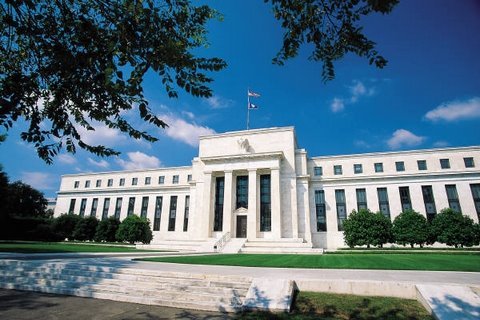
Overall, the markets were not nearly as disappointed as one might imagine. I suspect the smart money (see Thursday's column "Can the Fed Save the Markets") was not expecting much in the way of new programs. Of course, Chairman Bernanke promised to take another look at the economy on Sept. 20, when next the FOMC meets, but don't hold your breath.

Although the Fed still has some tools it could use if necessary, the Fed is not omnipotent when it comes to stimulating the economy. There is, of course, quite a bit that Congress, the Senate and the White House could do and the chairman made it clear that the ball was now in their court. He also warned those who are hell bent on cutting spending in congress to be careful what they vote for. He warned that the economy is as fragile as an egg shell right now.

To underscore that point, the second-quarter GDP was revised down again on Friday to only 1 percent from 1.3 percent just a few weeks ago. At that rate, we are teetering between a recession or sub-par growth. I still give a double-dip recession less than a 50 percent chance, in my opinion, but more ineptitude in Washington or a new, negative shock from Europe could tip us over the edge.

The stock market is at an extremely precarious level right now. The averages could go either way, but I believe there is still more downside risk than upside potential over the next few weeks. As a result I remain defensive and nothing that I have seen this week has changed my mind.

Some investors were encouraged when Warren Buffet announced he was taking a multibillion dollar stake in Bank of America. Yet investors should remember that Buffett is a long term investor and is not fazed if the prices of stocks he invests in subsequently go lower, in some cases, much lower, before finally rebounding. And in some cases, his investments do not pan out at all.

I would continue to use any rallies to reduce your most aggressive equity holdings and instead focus on dividend and income investments. Now, even the Fed is looking to our dysfunctional government leaders for new initiatives to reduce unemployment and increase economic growth and that does not give me a warm, fuzzy feeling.

The stock market is in the middle of a bounce right now and I expect that both volatility from Europe and additional selling pressure from concerned investors will drive the averages back to their recent lows. There is a high probability that those lows will fail to hold.

As for this weekend's arrival of Hurricane Irene on the East Coast, experts are predicting that it could cost billions in damages not to mention loss of life. Hurricane Katrina was considered one of the costliest natural disasters to hit America in years. It caused $125 billion in damages and lopped 0.05 percent off the nation's GDP. Let's hope and pray that Irene does not prove to be that bad. The last thing we need is another economic catastrophe. But as the saying goes, when it rains, it pours.

Bill Schmick is an independent investor with Berkshire Money Management. (See "About" for more information.) None of the information presented in any of these articles is intended to be and should not be construed as an endorsement of BMM or a solicitation to become a client of BMM. The reader should not assume that any strategies, or specific investments discussed are employed, bought, sold or held by BMM. Direct your inquiries to Bill at (toll free) or e-mail him at wschmick@fairpoint.net . Visit www.afewdollarsmore.com for more of Bill's insights.


Tags: Fed, recession, weather      
Independent Investor: Can the Fed Avert Another Selloff?
By: Bill Schmick On: 11:23PM / Thursday August 25, 2011
Important
0
Interesting
0
Funny
0
Awesome
0
Infuriating
0
Ridiculous
0

The safe bet would be to write about something else because by the time you read this Federal Reserve Bank Chairman Ben Bernanke will have already given his speech in Jackson Hole, Wyo., scheduled for Friday morning. I'm betting that whatever he says won't be enough to save the stock market from further decline.

The stock market has been climbing over the last week in anticipation that the Federal Reserve will, like last year, announce another monetary stimulus program similar to QE II. There are several problems in betting on that outcome in my opinion.

No. 1 is investor's knee-jerk expectation that the government will save the stock market every time we have a selloff of 10 percent or better. We have become conditioned to expect some sort of governmental intervention ever since the 2008-2009 financial crises. That's when the TARP Plan was passed, followed by the stimulus plan, the extension of the Bush tax cuts and the cut in payroll taxes, not to mention last year's QE II announcement almost exactly a year ago today.

The second problem is that the Fed has already done quite a bit to stimulate the economy with mixed results. Their announcement of just a few weeks ago that they will keep interest rates low until mid-2013 is actually an extension of QE II, (call it QE 2 1/2). I doubt that they will be willing to move much beyond their present efforts until the economic data clearly indicates further weakening.

There has been some talk that the Fed might change its focus from buying short-term U.S. Treasury bonds to buying long-term U.S. Treasury bonds. I am at a loss to understand why they would want to do that. Lowering long-term rates would theoretically make borrowing cheaper. An implicit assumption is that lower rates would encourage long-term investment in plant and equipment. The problem with that theory is that large corporations already have record amounts of cash to invest but are still not investing in long–term projects. They believe there is simply too much uncertainty within our political system, our regulatory environment and in the economy to warrant additional investment right now.

As for smaller corporations, those that represent the majority of America’s work force, only those businesses that don’t really need to borrow are eligible for loans. It is not the level of interest rates that prevent banks from lending. It is the uncertainty that loans to small businesses will be paid back that has created an almost complete cessation of new lending in that arena. It has already been shown (via QEII) that banks are not willing to lend no matter how low rates fall.

In any case, it is not our economy that has been driving markets lower. The financial problems in Europe are what have most investors spooked. Make no mistake, Europe's problems are serious and their leaders have yet to come up with a decisive, comprehensive plan to deal with their financial problems. The Fed's actions here won't resolve the problems on the other side of the Atlantic.

In summary, unless the Fed pulls a bull-sized rabbit out of their hat tomorrow, the markets will swoon. Let's see what happens.

Bill Schmick is an independent investor with Berkshire Money Management. (See "About" for more information.) None of the information presented in any of these articles is intended to be and should not be construed as an endorsement of BMM or a solicitation to become a client of BMM. The reader should not assume that any strategies, or specific investments discussed are employed, bought, sold or held by BMM. Direct your inquiries to Bill at (toll free) or e-mail him at wschmick@fairpoint.net . Visit www.afewdollarsmore.com for more of Bill's insights.


Tags: QEII, Fed, sell off      
Page 1 of 1 1  
News Headlines
Cultural Pittsfield This Week: May 24-30
iBerkshire Tag Sales: May 25-27
STEM Growing in Berkshire County
North Adams School Project Sets 'Aggressive' Schedule
Returning Soldier Surprises Charitable Stamford Preschooler
Ephs Defeat Emory for Sixth Straight NCAA Title
North Adams Hosts Goodrich Children's Literature Fest
Pittsfield Cyclocross Returns to Common
Holocaust Survivor Issues Call to Action
Earth Removal Permit Approved for Clarksburg Golf Course
Bill Schmick is registered as an investment advisor representative and portfolio manager with Berkshire Money Management (BMM), managing over $200 million for investors in the Berkshires. Bill’s forecasts and opinions are purely his own and do not necessarily represent the views of BMM. None of his commentary is or should be considered investment advice. Anyone seeking individualized investment advice should contact a qualified investment adviser. None of the information presented in this article is intended to be and should not be construed as an endorsement of BMM or a solicitation to become a client of BMM. The reader should not assume that any strategies, or specific investments discussed are employed, bought, sold or held by BMM. Direct your inquiries to Bill at 1-888-232-6072 (toll free) or email him at Bill@afewdollarsmore.com Visit www.afewdollarsmore.com for more of Bill’s insights.


Categories:
@theMarket (102)
Independent Investor (138)
Archives:
May 2013 (6)
May 2012 (2)
April 2013 (6)
March 2013 (7)
February 2013 (7)
January 2013 (6)
December 2012 (8)
November 2012 (4)
October 2012 (6)
September 2012 (8)
August 2012 (7)
July 2012 (6)
June 2012 (9)
Tags:
Stimulus Unemployment Europe Interest Rates Markets Debt Retirement Stock Market Currency Federal Reserve Banks Congress Energy Crisis Rally Greece Bailout Taxes Oil Europe Fiscal Cliff President Pullback Jobs Metals Economy Election Commodities Qeii Fed Markets Debt Ceiling Recession Euro Deficit
Popular Entries:
The Independent Investor: Understanding the Foreclosure Scandal
The Independent Investor: Don't Fight the Fed
The Independent Investor: Does Cash Mean Currencies?
@theMarket: QE II Supports the Markets
@theMarket: Economy Sputters, Stocks Stutter
@theMarket: Markets Are Going Higher
The Independent Investor: How Will Wall Street II Play on Main Street?
The Independent Investor: General Motors — Back to the Future
The Independent Investor: Will the Municipal Bond Massacre Continue?
The Independent Investor: Why Are Interest Rates Rising?
Recent Entries:
The Independent Investor: What Happens If You Can't Afford Obamacare?
@theMarket: 1995 Redux?
The Independent Investor: Sticker Shock in Housing Market
The Independent Investor: Online Education Is Not a Panacea
@theMarket: The Goldilocks Market
The Independent Investor: Where Others Fear to Tread
@theMarket: Five for Five
The Independent Investor: R2D2 and the Stock Market
The Independent Investor: Insider Trading Alive & Kicking on Capitol Hill
The Independent Investor: Japan: The Rising Sun, Part II


View All
Sullivan Elementary Memorial...
Sullivan Elementary School celebrated Memorial Day on...
St. Joseph Prom 2013
St. Joseph Central High School held their 2013 prom at The...
Spec. Mitchell Daehling...
Fallen soldier Mitchell Daehling was honored by hundreds...
Softball: Mt. Everett at...
5/21/13 The Mount Everett girls softball team traveled to...
Senior Citizen Prom 2013
The Drury High School Senior Citizen's Prom was held on...
Baseball: Monument at Drury
5/20/13 The Drury baseball team lost to Monument Mountain...
Steel Rail Half Marathon
About 500 people ran the Steel Rail Half Marathon, which...
U-14 Boys Soccer
5/18/13 The North Adams U-14 Boys Soccer team NA Rovers...
Drury High Prom 2013
Drury High School held its prom on Saturday night at the...
McCann Tech Prom 2013
McCann Technical School held its senior prom Saturday night...
MCLA Graduation 2013
MCLA held the 2013 commencement on Saturday.
Mount Everett High Prom 2013
5/17/13 Mount Everett High School held its senior prom...
Third Thursday May 2013
Third Thursdays returned this week. The Pittsfield festival...
Softball: Drury at Pittsfield
5/16/13 The Drury girls softball team traveled to...
Torchia SB League
5/15/13 The Pat Torchia Softball League, played Wednesday...
Williams College Children...
Jennifer Marlowe's prekindergarten class visited North...
Sullivan Elementary Memorial...
Sullivan Elementary School celebrated Memorial Day on...
St. Joseph Prom 2013
St. Joseph Central High School held their 2013 prom at The...
Spec. Mitchell Daehling...
Fallen soldier Mitchell Daehling was honored by hundreds...
Softball: Mt. Everett at...
5/21/13 The Mount Everett girls softball team traveled to...
Senior Citizen Prom 2013
The Drury High School Senior Citizen's Prom was held on...
| Home | A & E | Business | Community News | Dining | Real Estate | Schools | Sports & Outdoors | Berkshires Weather | Weddings | Berkshires Map |
Advertise | Recommend This Page | Help Contact Us | Privacy Policy| User Agreement
iBerkshires.com is owned and operated by: Boxcar Media 102 Main Street, North Adams, MA 01247 -- T. 413-663-3384 F.413-473-8799
© 2000 Boxcar Media LLC - All rights reserved