
| Home | About | Archives | RSS Feed |

The Independent Investor: ESG and the World of Investment
 |
Over the last few years, investments that focus on environmental, social, and governance issues, or ESG, have been confused with socially responsible investing or SRI. There is a big difference between the two investment styles.
The simplest way to understand the differences between the two is the profit motive. ESg investments are focused on making money as a primary objective. They do so by identifying specific risks or opportunities now and in the future and investing accordingly. SRI investors, on the other hand, are willing to forego profits in companies that do not meet their ethical standards. They value ethics more than profits in the investment world.
For example, if an individual decides they do not want tobacco, energy, or firearms companies in their portfolio, then, despite the possibility that one, or all three sectors, might generate better returns than the market overall, these companies would be excluded from future investments. If, as a result, their portfolio returned less than the market (or fell further than the market overall in a downturn), the ethical return of knowing you are a socially responsible individual far outweighs the monetary return.
An ESG investor may exclude the same three investments, but for entirely different reasons. If, from an environmental point of view, an investor believes that future government restrictions, increasing carbon taxes, and civil or criminal lawsuits (as a result of pollution and oil spills) make the financial returns of energy companies a poor investment versus other areas, oil and gas stocks might be excluded from an ESG portfolio.
Many investors, of course, want it both ways — to see their money invested in stocks or funds that are profitable and to reflect their social values. Easier said than done, however. In the past, the SRI world could be quite risky, and one person's values and portfolio choices could be much different from another's. Religion, personal values, or even political beliefs can sometimes create contradictions.
You may be anti-conflict, for example, and want to avoid firearm stocks, while having no problem with buying mining stocks in Africa, despite atrocious human rights violations there. You could be a hunter and want guns in your investment portfolio but reject alcohol and tobacco stocks on religious grounds.
Many socially responsible investment choices have been in companies and sectors that were overly dependent upon government tax breaks and credits just to achieve an acceptable level of profitability (think solar, water, and wind). If, as has happened many times in the past, governments chose to remove their support for political or budget reasons, these companies could collapse. Other issues involved liquidity, high expenses, and transparency,
But times are changing, and some of these areas are finally coming into their own. Last year, for the first time, exchange traded funds assets began to see a sizable increase in ESG investing. More than $20 billion was invested and, while that is still only 0.4 percent of the $4.5 trillion invested in ETFs, it is growing. Better still, the premise of these ESG funds seems to be working.
Nine of the largest ESG mutual funds in the United States outperformed the S&P 500 Index last year. Seven of them topped their market benchmarks over the last five years, which is no small accomplishment given the strong performance of the overall market during that time period. According to Bloomberg, assets managed by the 75 retail funds in its ESP survey were up 34 percent to $101 billion in 2019.
It just so happened that these fund managers during that time invested heavily in the technology and financial services sector, since both areas have historically been in low-pollution emission areas. Those same companies were the darlings of the overall market as well. Companies that are advising other companies on how to become more energy efficient, or helping to minimize nasty environmental impacts on society have also done well. Health care was another sector where ESG investments paid dividends.
This kind of investing is also a good fit for those who are saving for retirement, since most money managers consider sustainability investing as a long-term investment The jury is still out on how well ESG will do in the years to come but for those who might want their cake and eat it too, I believe the ESG approach trumps SRI at this stage of the game.
Bill Schmick is registered as an investment adviser representative and portfolio manager with Berkshire Money Management (BMM), managing over $400 million for investors in the Berkshires. Bill's forecasts and opinions are purely his own. None of the information presented here should be construed as an endorsement of BMM or a solicitation to become a client of BMM. Direct inquiries to Bill at 1-888-232-6072 (toll free) or email him at Bill@afewdollarsmore.com.
The Independent Investor: Intellectual Property Has Not Always Been So Important
 |
America's intellectual property (IP) is worth more than $6.6 trillion and employs 45 million Americans and hundreds of millions more worldwide. It is estimated that IP-intensive industries account for one-third of the country's total Gross Domestic Product and 52 percent of U.S. merchandise exports. It is why we, as a country, are fighting so hard to protect these rights today.
The figures above come from the U.S. Chamber of Commerce. If anything, they understate the value of IP to all of us. So what, exactly is IP? Generally, it is any product of the human intellect that the law protects from unauthorized use by others. Inventions, literary and artistic works, symbols, names, and images used in commerce, really; just an endless list of things that people created that makes the world what it is today.
It is usually divided into two categories: industrial property, which includes patents for things like inventions, trademarks, designs, etc. and copyrights that cover most of the artistic world, including everything from television shows to the latest bestselling books.
Our founding fathers thought that IP was so important to the future of this country that they made it a point to protect the rights of authors and inventors in the U.S. Constitution. However, protecting these property rights has not always been the priority it should have been in our nation's history. The most recent example is the on-going trade dispute we are having with China over intellectual property and technology transfers.
A cynical investor might ask why, after over two decades of accelerating trade between our two countries, are these issues only coming up now? If IP is such a vital component of our national wealth, why did it take Donald Trump to shine a spotlight on a business practice that has been going on for more than 20 years, not only in China, but in a good part of the rest of the world as well?
Well, in the case of China, it was the price of doing business. There was nothing sneaky or underhanded about it. The Chinese were straightforward in what they wanted when they first opened the doors to their economy in the Nixon/Kissinger era. The message was clear — if you want to do business in China and sell to our billions of consumers, in exchange, we want to understand, learn, and license the intellectual property behind your products.
So why did we agree to those conditions? During those days, the markets were rewarding companies that managed to plant the first flag on Chinese soil. It was considered a "strategic advantage" to beat your competitors into China. Every company in the world wanted a piece of the action and to be first to crow over a foothold in the country. It was (and still is) the fastest-growing consumer market in the world. Visions of billions of additional hamburger or DVD sales filled the trade journals of the day.
The uncomfortable truth is that our U.S. corporations gladly transferred their secrets to Chinese companies in exchange for that new business.
And don't think our government was not complicit in helping U.S. companies gain an advantage in China. They knew exactly what was going on, in my opinion. And now, only after the horse has already left the barn, are we trying to slam the stable door shut. In hindsight, we have to ask ourselves this question:
"Was giving away our industrial property and looking the other way as our technology was pilfered worth the additional sales we received from the Chinese?"
Evidently not, if you listen to the rhetoric. The media, the public and of course, the outrage of politicians on both sides of the aisle are well known. The inconvenient truth is that we always had the opportunity to "just say no," but we didn't. We said nothing.
Sure, you can blame China for being unfair in the first place, as if business is ever fair or unfair (unless you lose). But from the Chinese point of view, as a country striving to raise itself up by its bootstraps 30 years ago, was it unreasonable or unfair? To me, it was simply a smart business tactic. They recognized the greed and profit motive of capitalistic societies and exploited it for their own benefit.
Bill Schmick is registered as an investment adviser representative and portfolio manager with Berkshire Money Management (BMM), managing over $400 million for investors in the Berkshires. Bill's forecasts and opinions are purely his own. None of the information presented here should be construed as an endorsement of BMM or a solicitation to become a client of BMM. Direct inquiries to Bill at 1-888-232-6072 (toll free) or email him at Bill@afewdollarsmore.com.
The Independent Investor: Can We Afford 4 More Years of Trade Wars?
 |
The Phase One trade deal with China was signed with a great deal of pomp and circumstance this week. While happy that trade tensions on both sides have been reduced, the vast majority of Wall Street players saw the deal as a win for China.
After almost three years of threats, bluster and on-again-off-again tariffs, we are right back where we were before Donald Trump was elected. Yes, China has agreed to purchase an additional $200 billion in U.S. goods over the next two years, but the trade deficit was always the wrong metric when comparing our overall trade with China.
Trade imbalances are caused by capital flows. Don't take my word for it, just ask any economist in the world. In addition, the U.S. dollar is the currency of choice around the world and our U.S. Treasury debt is also considered the safest in the world. Those two factors create an environment where foreign investors use dollars earned from exports to purchase U.S. assets and not U.S. goods.
The president's entire focus on trade imbalances has been bogus from the start. One can only assume that either he does not understand that key point, or that his political base can't grasp anything more than a simplified and erroneous concept of trade imbalance as the source of all our problems with China.
In theory, under this new deal, U.S. exports should increase to $263 billion this year and as much as $309 billion in 2021. That should provide the president with good optics on the campaign trail. The lion's share of the $200 billion in the deal would be in manufactured goods, followed by energy, services and agricultural goods. If the truth be told, much of what China needs from us is on this list.
They want more oil and LNG from America to counterbalance their energy suppliers in the Middle East. U.S. financial services and insurance have long been on China's shopping list since these are areas they need in order to broaden and add competition to their own sectors. Telecom, cloud computing, and intellectual property are also on the list. As for food imports, all of the goods they have agreed to import are in short supply in their country.
Supposedly, some provisions on intellectual property enforcement and protections against forced technology transfers have been included in the Phase One deal. It remains to be seen whether or not these points have any teeth or are just "understandings" between the two countries.
As I have written before, the really tough issues have been rolled back and await a Phase Two agreement. The president has already warned that this will take time and probably won't happen before the November elections. Peter Navarro, an assistant to the president and one of the administration's most hawkish on China, wants China to stop subsidizing its state-owned enterprises. He also wants China to halt what he called "cyber intrusions" that hack into American businesses and steal our trade secrets.
Clearly, intellectual property protections and technology transfers, along with state subsidies, are going to mean changing some of the fundamental tenants of the Chinese economic and political system. That could take years to achieve, even if the Chinese were willing to do so.
In the meantime, the threat of tariffs and more tariffs remains on both sides and will act as a barrier and a weight not only on both countries' economies, but also on the rest of the world. There is already concern that the president will now turn his sights on Europe and once again threaten tariffs on their imports as well.
Fortunately for us, throughout the last few years we have enjoyed moderate economic growth and robust employment. Those factors shielded most of our economy (but not the agricultural or manufacturing sectors) from the worst of Trump's trade tirades. What would happen if, over the next four years, conditions change and/or the economy fell into recession? Could the world and the U.S. economy survive four more years like the last three?
Bill Schmick is registered as an investment adviser representative and portfolio manager with Berkshire Money Management (BMM), managing over $400 million for investors in the Berkshires. Bill's forecasts and opinions are purely his own. None of the information presented here should be construed as an endorsement of BMM or a solicitation to become a client of BMM. Direct inquiries to Bill at 1-888-232-6072 (toll free) or email him at Bill@afewdollarsmore.com.
The Independent Investor: China's role in Iran
 |
The de-escalation of the potential conflict between Iran and the United States sent markets higher this week. It could have turned out much differently. The question is why did the situation defused so rapidly, and who really is responsible for that outcome? I'm thinking it was China.
Taking out the number two guy in Iran, Maj. Gen. Qassem Soleimani, in a U.S. drone attack last week was a highly provocative move. The world expected push-back from Iran and feared a tit-for-tat escalation on both sides. That didn't happen. Sure, the Iranians did lob a dozen-plus missiles at two military bases across their border into Iraq, but relatively little damage resulted from that attack.
The following morning, the president seemed to offer an olive branch to the Iranians. It wasn't quite a kiss-and-make-up moment, given we slapped more economic sanctions on them, but it was dovish enough to calm the nerves of global investors.
Investors feared that, at the very least (after last year's Iranian drone attack on Saudi Arabian oil facilities), Iran would respond by either more of the same or attempting to shut down shipping through the Strait of Hormuz. For those readers who aren't familiar with that strategic piece of real estate, the Straits accounts for 35 percent of all seaborne oil traffic, or about 20 percent of oil traded worldwide.
Of all the major powers that could have been hurt by such an action, China stands out as the potential number one casualty in a war of escalation. China is the world's top importer of oil, buying 41 million tons, or more than 10 million barrels a day, with Middle Easten imports accounting for over 45 percent of that total.
China's imports of Saudi oil are at record levels (up 53 percent since 2018), thanks to the decline in Venezuela's output and the impact of America's sanctions against Iran. As of this year, Saudi Arabia replaced Russia as China's number one importer of energy. Iraq is also an important supplier and, although Iran‘s oil exports to China have declined by more than half, they are still substantial.
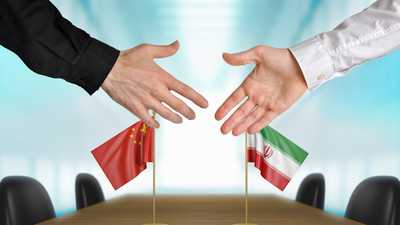
Given China's reliance on this energy pipeline, ensuring that the Straits of Hormuz remains open is as much in their strategic interest as it is in our own. And when China speaks, Iran listens. Readers may fail to realize how deep and long political and economic relations have existed between these two countries. The two nations, for example, were instrumental in the development of the ancient Silk Road of Marco Polo fame.
In the modern-day era, the break in diplomatic relations between Iran and the U.S. in 1980 only brought Beijing and Tehran that much closer. Trade blossomed in the decades since with petroleum products exchanged for imports of clothing, vehicles, electronics, chemicals, household appliances, telecommunications equipment and, from a strategic perspective, arms and influence. Since 2010 (the sanction era), when the U.S. and the United Nations imposed all sorts of sanctions on Iran to deter the country from building nuclear weapons, Iran's dependence on China escalated.
Bridges, subways, ports, highways, schools, hospitals and so much more in infrastructure projects have been planned, engineered and built in Iran, thanks to China. As in other nation states throughout the world, China has used their expertise and funding in infrastructure projects to cement economic and political ties to countries like Iran.
On the diplomatic front, China, along with Russia, has been against sanctions and trade embargos levied on Iran that hurt their own economic interests. But, at the same time, they do not want to see an Iranian nuclearized threat in the Middle East either.
As such, China has long been willing to be the negotiator behind the scenes, trying to forge peaceful solutions to the issues at hand. Just a week prior to the U.S. assassination of Soleimani, the Chinese, Iranian and Russian navies were conducting joint exercises. A week later, China's Foreign Minister, Wang Yi, was on the telephone with Iran, Russia and France while Yang Jiechi, the country's top diplomat was urging Secretary of State, Mike Pompeo, not to start a regional war in the Middle East.
I would expect that next week's signing of the Phase One China trade agreement here in the U.S. will be accompanied by further diplomacy by China in reducing tensions between the U.S. and Iran, so stay tuned.
Bill Schmick is registered as an investment adviser representative and portfolio manager with Berkshire Money Management (BMM), managing over $400 million for investors in the Berkshires. Bill's forecasts and opinions are purely his own. None of the information presented here should be construed as an endorsement of BMM or a solicitation to become a client of BMM. Direct inquiries to Bill at 1-888-232-6072 (toll free) or email him at Bill@afewdollarsmore.com.
The Independent Investor: Why Is Inflation so Low?
 |
The inflation rate has not been a cause of concern in this country for well over a decade. On the contrary, economists have been worried that the opposite might occur, a bout of deflation.
Throughout the last decade, inflation has averaged no more than 1 1/2 percent, which is well below the Federal Reserve Bank's targeted inflation rate of 2 percent. Historically, that is highly unusual, given how economics are supposed to work. Central banks around the world (although they don't like to admit it), have no idea why the inflation rate is as low as it is. Neither do global economists, or Wall Street strategists.
World economies continue to grow, and interest rates remain at historically low levels, the previous correlations between inflation and economic growth have somehow gone awry. It's as if the basic economic laws of supply and demand no longer apply.
Usually, when economic activity is rising, there is more demand for goods and services, which pushes up prices on almost everything. In order to produce more, there is also a greater demand for workers. But in a historically low unemployment rate environment like we have now, companies can't find skilled workers. As a result, wages should have risen dramatically to keep and/or attract workers.
Here in the U.S., wages are one of the key variables in determining the inflation rate. And yet, while wages have increased about 3.1 percent year-over-year, this has had little impact on the inflation rate. Those demand pressures in any other cycle would have had a much greater impact on the inflation rate, but not this time.
There are several theories going around to explain this phenomenon. As a result of a decadelong low rate of inflation, for example, people now expect inflation to remain low and stable. Therefore, there is no reason to buy that widget now because the price may actually go down (not up) in a few weeks or months.
Globalization may also be partially to blame. Greater trade in goods and services, and tighter connections between financial markets worldwide, may be influencing the U.S. inflation rate more than we know. If, for example, another region's economy is slowing, or simply not growing as fast as our own, there could be a dampening effect on prices and wages worldwide.
Continued breakthroughs in technology, as well as continued global competition in labor markets, could also be improving productivity, capping wage growth, and in the process, keeping inflation lower than in the past.
And let us not forget the source of all this data on inflation: the world's governments. Statistics are based on data and the means and methods of acquiring and compiling this information is constantly evolving. Who is to say that the government's numbers accurately reflect the real inflation rate?
Think of how the U.S. government's official Consumer Price Index (CPI) differs from the real world of prices that we face every day at the supermarket, or the hospital, or in tuition fees for our kids. In any case, there are few, if any, arguments that inflation is about to spike in the year ahead.
Bill Schmick is registered as an investment adviser representative and portfolio manager with Berkshire Money Management (BMM), managing over $400 million for investors in the Berkshires. Bill's forecasts and opinions are purely his own. None of the information presented here should be construed as an endorsement of BMM or a solicitation to become a client of BMM. Direct inquiries to Bill at 1-888-232-6072 (toll free) or email him at Bill@afewdollarsmore.com.
