Ski area operators throughout Massachusetts are rushing on two fronts as they work on improvements and programs to attract more visitors this winter.
The second campaign is to defeat a proposed state law which would require helmets for all kids 12 and under.
Brian H. Fairbank, president and CEO of Jiminy Peak, admits that he is in a perhaps contradictory position. He is overseeing construction of the $5 million Village Center, with one of the two buildings featuring facilities for up to 350 children.
On the other hand, he is working with other Bay State resorts to prevent passage of Senate Bill 1376.
“The helmet law would not improve safety on the slopes, but it would hurt Massachusetts ski areas and the local communities which depend on them,†said Fairbank, past chairman of the National Ski Areas Association.
The bill is also being opposed by the national ski association, as, if passed in Massachusetts, similar action could be taken in the rest of the nation.
Michael Berry, executive director of the Denver-based association, said, “One of our best arguments against a helmet mandate is, of course, that mandates are not needed, as the ski industry is already proactive on helmets for kids.â€
Fairbank said the statistics show that only 2.5 percent of ski and snowboarding accidents involve the head, unlike in biking.
Jiminy, and virtually all winter resorts, have helmets for sale and for rental use.
“Our staff will advise parents to use their own judgment on helmets, but we will provide relevant information on their use,†said Fairbank, who suffered a major knee injury when hit by a 7-year-old girl on the slopes a few years ago.
Fairbank said the helmet mandate would see groups heading to adjacent New York, Vermont, New Hampshire and Maine to avoid the $100 to $200 cost of helmets.
In addition, the mandate would require extensive training of ski area personnel, with the resort being liable if a child wearing a helmet were injured.
“A helmet mandate would be counter productive,†said the association’s Berry. “The primary safety consideration for all skiers and boarders should be responsible conduct.â€
He said there were 37 accidental deaths on the slopes in the United States last winter, down from 45 the previous season.
By comparison, Berry said, there were 800 bicycle deaths and 1,200 swimming deaths in 2001, as well as 701 recreational boating deaths in 2000.
And he said, while helmets are increasingly used in biking, head injuries have actually increased in the past 10 years. He also said ice hockey studies have suggested a link between the wearing of helmets and the sudden rise in aggressive behavior and neck injuries.
Berry also stressed that the nation’s most prominent student of alpine sports injuries, Dr. Jasper Shealy, has statistics on the sport covering more than 20 years and does not support helmet mandates.
Not all resorts follow the ski association’s line, however, as the nation’s most favored resort, Vail in Colorado, last winter announced that all kids 12 and under must wear helmets while in ski school.
At Okemo Mountain in Ludlow, Vt., one of the East’s top resorts, there are no requirements for helmets, although all publicity photos of kids shows them with helmets.
“We don’t discourage helmet use, but we are against a mandate,†said Okemo public relations director Pam Cruickshank.
In other ski safety news, the National Ski Area Association Journal reports that shorter, shaped skis could be linked to the sharp decline in recent years of knee injuries.
On the other hand, the rate of lower-leg injuries has increased in the last 10 years.
Despite various improvements in release (not safety) bindings and a major increase in price (up to $400), there are still risks in skiing.
And while Dr. Shealy reported that present helmets are not effective at speeds over 12 miles per hour, a recent study shows the average speed for adult skiers and boarders was 27 mph.
The NSAA Journal for August also reported that the past season was the best ever, with 57.6 million skier/snowboarder visits. The Northeast count was up 14.8 percent.
Fairbank stressed that the ski industry is not against helmets but opposes helmet mandates.
The helmet bill was filed by state Sen. Charles Shannon, D-Winchester, on behalf of the parents of an 11-year-old Medford girl who suffered brain injuries after hitting her head on the frozen granular surface at Nashoba Valley Ski Area four years ago.
The National Ski Patrol has a “fairly neutral†stance on the subject and feels “it’s a matter of personal choice.â€
Although skiing and boarding could start as early as late October at resorts such as Killington, there’s several weeks of fall or Indian summer weather for outside activities.
Sunday will see the 27th annual Great Josh Billings RunAground in South Berkshire, and golfing conditions are at their peak on every course.
Tennis has tapered off, but the North Adams Community Tennis Association is holding competitive matches every Sunday evening at 5 through Oct. 12. Call 663-5380.
All events hold somewhat of a risk. Look at former tennis great Jim Courier. He was a commentator at the U.S. Open with a broken arm — suffered in a golf cart accident.
John Hitchcock of Williamstown writes frequently about the area sports scene.
If you would like to contribute information on this article, contact us at info@iberkshires.com.
Your Comments
iBerkshires.com welcomes critical, respectful dialogue. Name-calling, personal attacks, libel, slander or foul language is not allowed. All comments are reviewed before posting and will be deleted or edited as necessary.
No Comments
Lanesborough Town Meeting to Vote Budget, Bylaws & Vehicle Purchases
By Breanna SteeleiBerkshires Staff
LANESBOROUGH, Mass. — Tuesday's annual town meeting includes a $14 million operating budget, new short-term rentals, accessory dwelling units and sign bylaws, and free cash article appropriations.
Voters will gather at Lanesborough Elementary School on June 9 at 6 p.m. to decide on 20 warrant articles.
The fiscal 2027 budget is up a little over 10 percent. Some of the main increases are the Mount Greylock Regional School District and McCann Technical School: the McCann assessment is up more than 30 percent based on factors including enrollment and the school renovation project, and Mount Greylock's is up 11 percent.
Article 11 is for the town to vote to approve from free cash the sum of $16,298.48 for the McCann Technical School roof and window replacement project so as not to impact the budget. Article 3 is appropriate $7,586,284 for Mount Greylock Regional School assessment.
Another notable increase was in life and health insurance, showing an increase of about 26 percent.
Ambulance Director Jen Weber is planning 24-hour coverage, which means more staff and a hike in her budget. One of the articles asks the town to appropriate $234,100 to operate the Ambulance Enterprise Fund for salaries and expenses.
Many town departments are looking for new vehicles. The Fire Department is looking to replace its outdated 1996 fire engine. There are two articles related to the truck at a total of $813,366. Article 12 would transfer $225,000 from free cash into the Fire Truck Stabilization Fund; Article 13 would transfer $605,000 from the fund and authorize the borrowing of $208,366.08.
The total includes a $100,000 contingency cost to cover any additional costs if a 2026 model-year chassis cannot be secured before new emissions standards go into effect in 2027.
The board at its last meeting moved the $225,000 transfer to come before the borrowing article, changing the stabilization number. If the $225,000 is not voted on, then they will amend the next article's number on the floor, subtracting the $225,000. This shows the borrowing number significantly lower.
Article 17 asks for the transfer of $80,000 from free cash to replace a police cruiser.
Police Chief Rob Derksen's aim is to replace one vehicle every other year, meaning the oldest vehicle gets replaced about every 10 years.
He stressed that if delayed this year, the town may have to double up in a future year to get back on schedule, and that paying later usually costs more. The article will ask for $80,000 from free cash, the vehicles used to be funded by the BHRD.
Lastly, the Highway Department is looking to replace a 2014 International dump truck that will be a total of $330,000 and will take two to three years to receive.
Money will be used from last year's approval of $250,000 from free cash for the replacement of a 2012 highway front-end loader that was underspent $49,261. Town meeting is being asked to approve a transfer of $53,274.85 from free cash and the use of $227,464 from funds from the Sale of Town Real Estate to fund the balance.
Other free cash proposals include $1,200 to purchase software to support tracking and ongoing maintenance schedules of town-owned vehicles; $42,000 for the replacement of the Highway Department's storage shed roof, $200,000 to reduce the tax levy.
Cassidy Flynn scattered five hits in a complete-game effort in the circle as Lenox upset top-seeded Hoosac Valley, 3-2, in the quarter-finals of the Division 5 State Tournament. click for more
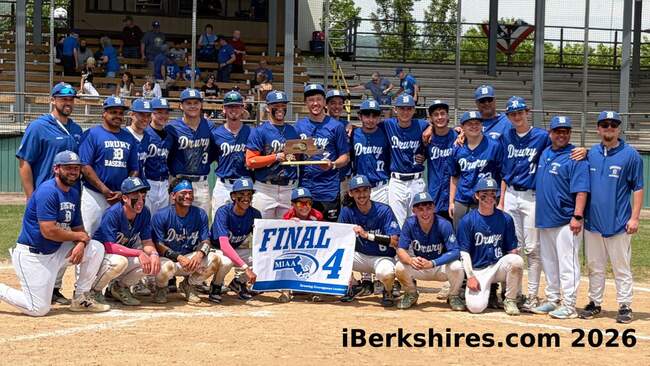
Brayden Durant struck out seven and walked one in a complete-game effort on the mound Saturday to pitch the Drury baseball team to a 6-0 win over Keefe Tech in the quarter-finals of the Division 5 State Tournament at Joe Wolfe Field. click for more
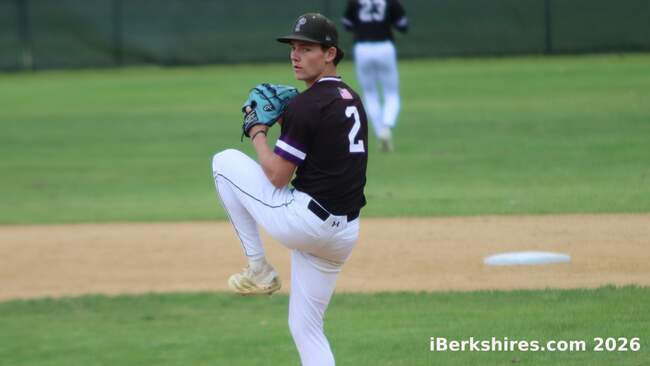
Jason Codey struck out 13, walked two and allowed just an infield single as the Generals earned a 7-1 win over Wahconah to claim their third straight regional title. click for more
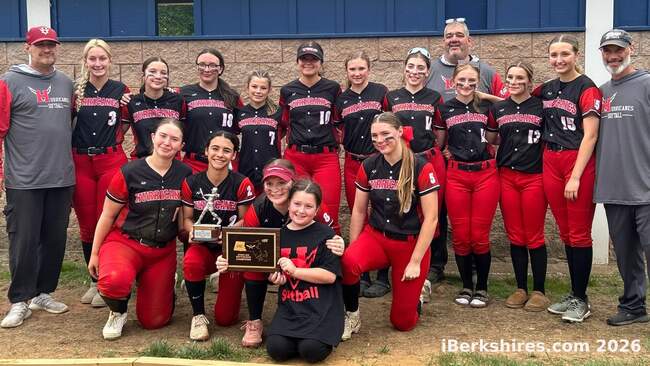
Gracelyn Wright struck out eight, and Genevieve Lagess went 3-for-5 with four runs batted in as the Hurricanes beat Monson, 17-3, to claim their first Western Mass title in four years. click for more
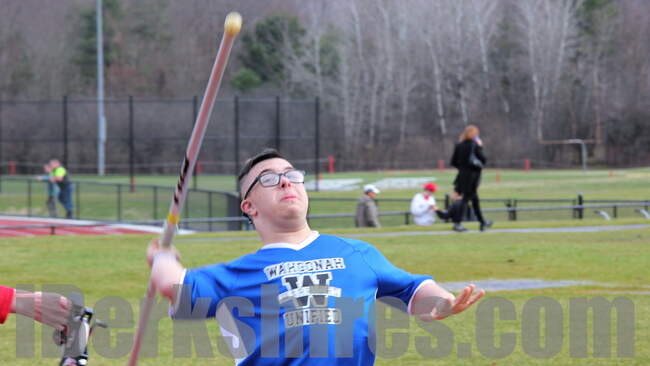
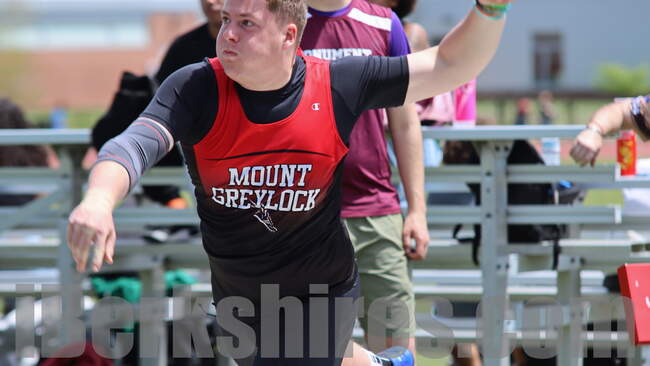
For the boys, Ward Bianchi helped lead the way with a win in the shot put and a second place in the javelin as the Mounties finished 16 points ahead of runner-up Pittsfield (pending the results of the pole vault, which were unavailable at 11 p.m. Friday night). click for more