Bill criminalizes mortgage fraud, protects consumers
Boston – Monday, June 11, 2007 – Today Governor Deval Patrick filed legislation to criminalize mortgage fraud as part of a comprehensive plan to prevent predatory lending and protect families facing foreclosures. The bill follows several regulatory changes already put in place by Governor Patrick to address the rising tide of foreclosures in Massachusetts. In April, the Commonwealth established a hotline for consumers and began assisting homeowners in crisis.
“We must help homeowners facing foreclosures,†said Governor Patrick. “The problem is complex and requires a comprehensive approach that provides for greater education and information for consumers before securing a mortgage; a more responsive legal framework for homeowners facing foreclosure, and clear consequences for those who engage in mortgage fraud. Massachusetts homeowners and their families deserve no less.â€
Today’s legislation, “An Act Implementing the Division of Banks Mortgage Summit Recommendations,†implements recommendations from the Mortgage Summit Working Group that was convened in response to rising foreclosure rates. The Working Group, led by Commissioner of Banks Steven L. Antonakes, included nearly 50 participants from government agencies, non-profit organizations, and the mortgage lending industries who convened to develop a comprehensive foreclosure prevention strategy.
This legislation increases protections for consumers and provides penalties for mortgage fraud.
The bill includes the following provisions:
· Criminalizing mortgage fraud. In response to rising instances of mortgage fraud, the bill would define mortgage fraud in statute and create criminal penalties for violations.
· Prohibiting abusive foreclosure rescue schemes. With many people facing the threat of foreclosures, unscrupulous individuals and groups have preyed upon consumers’ fears of losing their homes by promising to allow homeowners to stay in their home in exchange for signing over the property. Many people who fall victim to this scheme think that they are making mortgage payments when in fact they are paying rent. This bill would prohibit such agreements unless the purchaser is a direct relative.
· Requiring a Notice of Intent to Foreclose and Right to Cure. The bill sets out a right to cure for a consumer that is in default and requires the holder of a mortgage to inform the consumer of this right in addition to the intent to foreclose if the consumer does not cure the default.
· Prohibiting a lender from making an adjustable rate subprime loan unless the borrower opts-out. In reviewing default rates and foreclosure information, subprime fixed rate loans have performed well and allowed consumers with impaired credit to reestablish their credit history. Subprime adjustable rate mortgages (ARMs), on the other hand, have very high default rates and higher foreclosure rates. This bill would prohibit any lender from making a subprime ARM unless the consumer affirmatively opts-out of the fixed rate product and presents a certificate indicating that they have received homebuyer counseling.
· Establishing a central repository of foreclosure information at the Division of Banks. The bill would require lenders and servicers to send a copy of the Notice of Intent to Foreclose and Right to Cure to the Division of Banks as well as the details of any final foreclosure. In addition, the bill requires the Division to establish a database of foreclosure information to track geographic and industry trends relative to foreclosures.
Several other provisions of the legislation address other lending and foreclosure issues identified by the Mortgage Summit Working Group.
Since April, when Governor Patrick first instructed the Division of Banks to seek case-by-case foreclosure delays for homeowners who filed complaints, more than 400 people have reached out to the Division. Just under half of those individuals were already in foreclosure and needed immediate relief. The Division was able to secure 30- to 60-day stays in the foreclosure process in most of those cases. Due to these stays, many individuals and families were able to refinance or are in the process of refinancing their loans, were able to modify their loan terms, have received credit counseling, or were able to sell their homes. In addition, homeowners who contacted the Division and were in financial distress but not yet in foreclosure were partnered with counseling agencies that offer comprehensive services that can help them change direction and hopefully prevent foreclosure from occurring.
In addition, the Division of Banks is also continuing work on the other Working Group recommendations. These include implementing regulatory changes that increase licensing and education requirements for mortgage lenders and brokers to eliminate disreputable firms and practices, and building on the partnerships between government, non-profit organizations, and the mortgage industry to improve the support for homeowners and monitoring of the industry.
If you would like to contribute information on this article, contact us at info@iberkshires.com.
Your Comments
iBerkshires.com welcomes critical, respectful dialogue. Name-calling, personal attacks, libel, slander or foul language is not allowed. All comments are reviewed before posting and will be deleted or edited as necessary.
He was on the Board for Ameriquest mortgage-
One the nations worst predatory lenders. So I guess he knows best how to deal with these scumbags
Funny, no one forced me to take out a mortgage or buy a home when I couldn't possibly afford one. It's not rocket science to know what your income is,what your expenses are, and what is left over for things like a mortgage. It's time to take a hard look at some of these borrowers, the so called "victims". In truth, many felt they were entitled to own a home, despite not saving for a down payment, no reserves and no steady income to afford the mortgage. Others felt they were entitled to the trips, cars and wide screen tv's, and thus depleted all the equity in their homes to get this. Now they feel entitled that tax payers should bail them out of their own financial mess, and government officials are all too happy to lend a hand for their own political gain.We don't need more government regulation from people looking for their next vote. We need our government officials to step up to the plate and ask their constituents to grow up and be responsible adults!
I'm wondering when the rising borrower fraud will be addressed...how many buyers claim to be purchasing/refiing their primary residence and are actually flipping properties...how many times have borrowers taken out the maximum funds from their property, default on the first payment, and disappear...shouldn't there be a balance in how fraud is addressed...but MA is so pro-consumer, I doubt you will ever see prosecution of these types of frauds.
Perfect Home Living applauds the efforts of the Governor and those who have stepped up to the plate in the interest of consumer protection. The problem of fraud within today’s housing market has reached epic proportions and without this type of committed effort from government, financial lending institutions and the grass roots movement the problems stemming from real estate fraud and predatory lending will continue.
So often the criminal aspect comes first and then the education – it would seem that the Mortgage Summit Working Group is working to put the education of the general public first – thereby limiting opportunities for criminal elements to continue to thrive.
I work to help folks facing the possibility of foreclosure every day.
One premier way of doing so is to work out a short sale with the lender (the lender agreeing to sell for less than the amount owed) so that the current owner can sell the property to a new owner. This can be extremely effective in helping to sell a house, especially where the loan is "upside down" in the falling real estate market.
The difficulty is, that the banks typically take a really long time to negotiate a short sale offer, often more time than is available in the foreclosure process. The banks have so many pending files to work on that their infrastructures are overloaded, and the time to work on an offer runs out. Sometimes, they cannot even begin to address the offer until the auction date has been set. They then need to arrange for a broker's opinion or an appraisal (often assignments for this are declined by the broker or appraiser due to overload of work, and reassigned multiple times). Then the lender forecloses with a viable offer on the table, the owner has a foreclosure on their property and credit report, the lender has a probable REO, to be listed and further provide deflated pricing for future comps, and the cycle worsens.
I have gotten calls from lenders after the foreclosure auction is done and the property is in their REO department, to address the offer made prior to the foreclosure. And the homeowner already has a foreclosure on their record. I have seen auctions where the lender takes the property back for less than the offer that was made prior to the auction. This is not a win for anyone!
I applaud the Governor's effort to impose a delay on the foreclosure process. This will in many cases provide the needed time to get a short sale done and allow a win for all: the homeowners, who can avoid having the foreclosure on their credit; the bank, the expenses and reduced value from an auction or REO (said to be 40%); the buyer, who just wants a new home. Doesn't that make sense?
In cases where the homeowner has a temporary difficulty and will soon be able to make the payments, the current process makes no sense at all. Giving them some more time could make a huge difference.
To impose a delay of 30-60 days can be a huge help with many of these situations. Affording more time to negotiate a short sale and get the property sold.
In some states, there is a redemption period in which the homeowner has the ability to cure the default and keep their home. Could this be implemented in Massachusetts?
from: Annie Collyer, Sherwood Real Estate of New England. LLC.
Late last month, the Conservation Commission greenlit some tree pruning on the property. New windows and a new door can be seen in the front of the building.
"It's a substantial renovation that's currently underway here," Brent White of White Engineering said, speaking on behalf of the applicant and owner, Huajie Zhu.
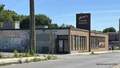
A fire gutted the longtime Wahconah Street supermarket in 2023, and the following year, Zhu purchased the property for $460,000 two years ago to build a restaurant with hibachi in the existing footprint of the more than 100-year-old building.
White explained that the project has been ongoing for over a year, and the Community Development Board granted the property a waiver to reduce the minimum required number of parking spaces so that additional spaces aren't needed.
He noted that, looking at the site plan, there is very little room to do so. A mirror will be installed near the sharp turn on Bel Air Avenue to alleviate traffic concerns.
Pruning will be done on trees in the southeast corner of the existing paved parking lot, as a number of branches are hanging over. The new owners also intend to patch, sealcoat, and re-stripe the parking lot.
A fire tore through the building less than an hour after the supermarket closed for the day three years ago. An automatic sprinkler system is required for the new use.
Cassidy Flynn scattered five hits in a complete-game effort in the circle as Lenox upset top-seeded Hoosac Valley, 3-2, in the quarter-finals of the Division 5 State Tournament. click for more
Brayden Durant struck out seven and walked one in a complete-game effort on the mound Saturday to pitch the Drury baseball team to a 6-0 win over Keefe Tech in the quarter-finals of the Division 5 State Tournament at Joe Wolfe Field. click for more
Jason Codey struck out 13, walked two and allowed just an infield single as the Generals earned a 7-1 win over Wahconah to claim their third straight regional title. click for more
Gracelyn Wright struck out eight, and Genevieve Lagess went 3-for-5 with four runs batted in as the Hurricanes beat Monson, 17-3, to claim their first Western Mass title in four years. click for more
For the boys, Ward Bianchi helped lead the way with a win in the shot put and a second place in the javelin as the Mounties finished 16 points ahead of runner-up Pittsfield (pending the results of the pole vault, which were unavailable at 11 p.m. Friday night). click for more