Nobel Prize Winner Harold Varmus to Discuss Health, Science and the Developing World
Print Story | Email Story
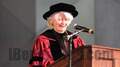
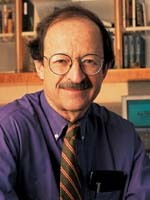
Dr. Harold Varmus
WILLIAMSTOWN, Mass. - On Monday, Nov. 2, at 8 p.m., Dr. Harold Varmus will visit the Williams College campus to deliver the annual Weiss lecture on Medicine and Medical Ethics. Varmus' lecture is titled "Health and Science in the Developing World." The Weiss lecture is sponsored by the Oakley Center for Humanities and Social Sciences.

The event is free and open to the public.

Since Jan. 2000, Varmus has served as president of the Memorial Sloan-Kettering Cancer Center in New York City, guiding the institute in research and development to improve the care of patients with cancer. Varmus also currently serves as co-chair of President Obama's Council of Advisors on Science and Technology.

Varmus is recognized for his research on cancer genes and on the replication cycles of retroviruses and hepatitis B viruses. In 1989, Varmus and colleague J. Michael Bishop won the Nobel Prize for Physiology or Medicine for the isolation of cellular genes controlling growth and development, which are often mutated in cancer. Varmus' current work involves developing mouse models of human cancer.


Prior to his position with the Memorial Sloan-Kettering Cancer Center, Varmus served as the director of the National Institutes of Health from 1993 to 1999 after being appointed to the position by former President Bill Clinton. Before 1993, Varmus conducted research as a member of the faculty at the University of California, San Francisco, Medical School.

Varmus has served as advisor to the federal government as well as to pharmaceutical and biotechnology firms and academic institutions. He is involved in initiatives regarding science in developing countries. Varmus has written more than 300 scientific papers, as well as five books, including his 2009 memoir titled "The Art and Politics of Science."

Varmus received his bachelor's degree in English from Amherst College, and attended Columbia University's College of Physicians and Surgeons before beginning is career.

If you would like to contribute information on this article, contact us at info@iberkshires.com.

Williamstown Planning Board Narrowing in on Subdivision Bylaw Changes

By Stephen DravisiBerkshires Staff
WILLIAMSTOWN, Mass. — The Planning Board late last month discussed specific features of what it plans to pass as a new subdivision control bylaw this year.
 
The board long has discussed the complex set of regulations as being out of date and cumbersome to both potential developers and the board itself, which has needed to hear requests for waivers of outdated rules for the handful of residential subdivisions that have been proposed in town in recent years.
 
This spring, the town engaged consultants from Northampton's Dodson and Flinker Landscape Architecture and Planning to go through the existing bylaw, compare it to more contemporary regulations in other communities and help craft a revised bylaw.
 
Unlike the zoning bylaw, where amendments require approval of town meeting, the subdivision control bylaw is a creation of the Planning Board, which can make changes on its own after a public hearing process it hopes to complete this year.
 
At a special Planning Board meeting on May 26, Dillon Sussman of Dodson and Flinker and his colleagues walked the board through a dozen different decision points that the board must resolve — either by leaving the bylaw as is or making a change — and offered suggestions based on best practices.
 
All of the issues are technical and ranged from the fundamental, like how the bylaw will define types of subdivisions, to the highly specific, like what turning radii will be required in new streets that are constructed to serve planned developments.
 
One example of a topic that came up in the recent approval of a four-home subdivision off Summer Street is stormwater management.
 
View Full Story

More Williamstown Stories