GREAT BARRINGTON - Seven months after unveiling their strategic plan for helping develop the "creative cluster" in the region, the Berkshire Creative Economy Project's founders last week held a briefing on the project's success thus far.
Calling the growing creative economy "one of the most important economic engines in the county," Laurie Norton Moffatt, the director and CEO of the Norman Rockwell Museum, and Ellen Spear, president and CEO of Hancock Shaker Village, updated a small crowd about the progress of the project at Bard College at Simon's Rock.
"We're moving into the implementation phase now," said Helena Fruscio, the program coordinator for the project's recently formed Berkshire Creative Economy Council.
This new phase means moving forward with specific actions that will fulfill the council's mission "to stimulate new job growth and economic opportunity in the region by sparking innovative collaborations between artists, designers, cultural institutions and businesses."
Berkshire Creative
Announced along with the Berkshire Blueprint action plan for economic development on March 9, Berkshire Creative's report outlined the importance of allowing artists, nonprofits and businesses to work collaboratively on supporting the region's creative endeavors. An attempt to recognize the potential of the cultural renaissance, the report calls for specific actions that will prove the sustainability of the creative economy.
"We have great benefits here in Berkshire County because we've had a creative class hidden in the hills here for years," said Spear at the briefing.
According to the report, the creative economy is defined as "the enterprises and people involved in the production and distribution of goods and services in which the aesthetic, intellectual and emotional engagement of the consumer gives the product value in the marketplace."
During last week's briefing, Norton Moffatt and Spear said the creative economy accounts for 10 percent of the job base, providing employment for 6,000 people in the county.
"Because of our unique attributes in Berkshire County, we've been able to drive cultural tourism," said Norton Moffatt. "That's another 15 percent of the job base."
Since releasing the report, the project's main focus has been the formation of working groups designed to perpetuate the creative economy's scope and influence. From the working groups – whose concentrations include organizing countywide celebrations of art, connecting entrepreneurs with budding creators and educating the community on the future of the creative economy – a coordinated movement toward promoting this new model will be established.
As one of the pioneers of this type of business model, Berkshire Creative faces unique challenges in attempting to forge a new landscape.
"We're still in the infancy of coordinating this effort and this isn't just a local movement. Not only is it a statewide issue, there are nationwide conferences on the creative economy. Where we may be ahead of others, though, is that we have an implementation plan, a strategic plan," said Norton Moffatt.
"The line we're walking is completely new. There's no models. We're really at the forefront of it. That's what makes it exciting but challenging at the same time," said Fruscio.
Originally funded by a $150,000 John Adams Innovation Institute grant through the Massachusetts Technology Collaborative, the project has continued to grow throughout this year, receiving a $100,000 Massachusetts Cultural Council matching grant in August.
As the project moves forward, it has specific goals:
●Develop a unified Berkshire brand
●Educate the community about the economic potential of its creative sector
●Identify collaborative opportunities
●Attract investment
"We have to send the message that this is an opportunity to think a new way," said Norton Moffatt.
For more on the Berkshire Creative Economy Project, go to www.berkshireedc.com/
If you would like to contribute information on this article, contact us at info@iberkshires.com.
Your Comments
iBerkshires.com welcomes critical, respectful dialogue. Name-calling, personal attacks, libel, slander or foul language is not allowed. All comments are reviewed before posting and will be deleted or edited as necessary.
No Comments
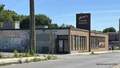
Former Harry's Supermarket Under Construction for Restaurant
Late last month, the Conservation Commission greenlit some tree pruning on the property. New windows and a new door can be seen in the front of the building.
"It's a substantial renovation that's currently underway here," Brent White of White Engineering said, speaking on behalf of the applicant and owner, Huajie Zhu.
A fire gutted the longtime Wahconah Street supermarket in 2023, and the following year, Zhu purchased the property for $460,000 two years ago to build a restaurant with hibachi in the existing footprint of the more than 100-year-old building.
White explained that the project has been ongoing for over a year, and the Community Development Board granted the property a waiver to reduce the minimum required number of parking spaces so that additional spaces aren't needed.
He noted that, looking at the site plan, there is very little room to do so. A mirror will be installed near the sharp turn on Bel Air Avenue to alleviate traffic concerns.
Pruning will be done on trees in the southeast corner of the existing paved parking lot, as a number of branches are hanging over. The new owners also intend to patch, sealcoat, and re-stripe the parking lot.
A fire tore through the building less than an hour after the supermarket closed for the day three years ago. An automatic sprinkler system is required for the new use.
Cassidy Flynn scattered five hits in a complete-game effort in the circle as Lenox upset top-seeded Hoosac Valley, 3-2, in the quarter-finals of the Division 5 State Tournament. click for more
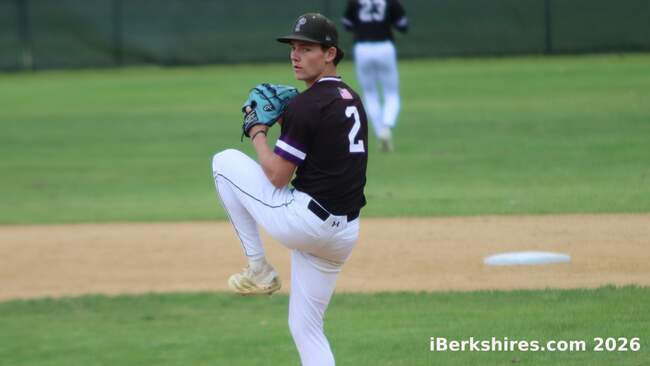
Brayden Durant struck out seven and walked one in a complete-game effort on the mound Saturday to pitch the Drury baseball team to a 6-0 win over Keefe Tech in the quarter-finals of the Division 5 State Tournament at Joe Wolfe Field. click for more
Jason Codey struck out 13, walked two and allowed just an infield single as the Generals earned a 7-1 win over Wahconah to claim their third straight regional title. click for more
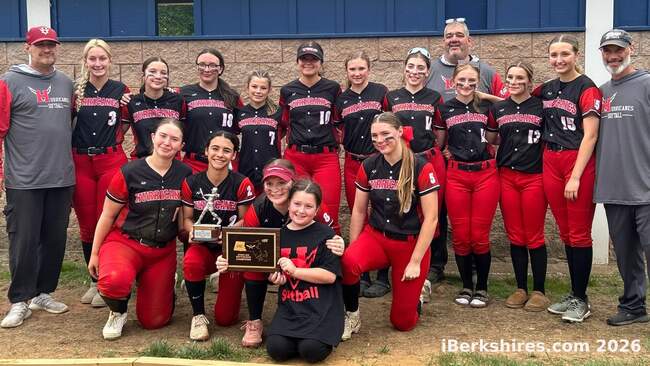
Gracelyn Wright struck out eight, and Genevieve Lagess went 3-for-5 with four runs batted in as the Hurricanes beat Monson, 17-3, to claim their first Western Mass title in four years. click for more
For the boys, Ward Bianchi helped lead the way with a win in the shot put and a second place in the javelin as the Mounties finished 16 points ahead of runner-up Pittsfield (pending the results of the pole vault, which were unavailable at 11 p.m. Friday night). click for more