The Sterling and Francine Clark Art Institute announced today a new initiative that will bring the Clark's education philosophy to a broader, national audience of educators. The Center for Education in the Visual Arts (CEVA) will serve as a resource for education professionals from schools, museums, and academia by offering workshops and symposia, providing opportunities for information sharing, and promoting research in visual arts education. It was also announced that Michael Cassin, curator of education at the Clark since 2000, will serve as director of CEVA.
"The Center for Education in the Visual Arts will extend the Clark's educational reach beyond the Berkshire region and help advance visual arts education through training and the generation of ideas and model approaches," said Michael Conforti, director of the Clark. "We are excited to begin this initiative that will have a lasting impact on how people engage with works of art."
The Clark's successful docent summer school, a week-long training program that brings museum docents and volunteer guides from around the country to the Clark, provides a model for one of the programs CEVA will offer in its first year. While following a similar outline to the existing program, the new program will be geared toward museum educators. One-day docent training workshops will also be offered at museums around the country, and a two-day symposium will bring together experienced educators from museums and schools, as well as those in the field of research and education technology.
CEVA will examine and evaluate the effectiveness of the range of visual art education methods currently in use, including online and other distance learning opportunities. The center will work with educators to extend and integrate the Clark's education philosophy into their urban and rural institutions and communities.
The Clark's education philosophy differs from many museums in that it emphasizes interactive engagement with the audience as opposed to the traditional one-way flow of information from presenter to audience. While many museums are embracing the move to a more interactive education style, the Clark's approach is more flexible and less pre-determined resulting in a fuller, more personal and meaningful experience for the audience. The approach stimulates cultural, social, and historical awareness that carries beyond a particular work of art.
"It's genuinely amazing to watch students go from an initial lack of interest to real engagement with a work of art," said Cassin. "What excites me the most about leading this initiative is the opportunity to be part of that process not only through direct interaction with students, but also by working with other educators to make that transformative process more widely available."
The Clark currently offers a variety of interactive, thematic gallery talks relating to different areas of school curriculum, including history, science, creative writing, and French language and literature, as well as studio art and art history. Gallery talks can also be customized to meet the specific requirements of an educator or group. "Start with Art," a program for preschoolers and their parents, offers activities that are specifically designed to meet the special learning requirements of younger children and encourage engagement between the parent and child.
Before coming to the Clark, Cassin worked in the education department of The National Gallery, London, and was, for nearly 10 years, head of education at The National Galleries of Scotland, during which time he also served as a member of the Scottish Museums Council Education Advisory Panel. Cassin has lectured widely on museum education at national and international conferences, has contributed many articles on the subject to museum publications, and is currently the representative for North America on the board of the International Council of Museums' education committee. His publications include More Than Meets the Eye, a book about art for young people, and Art and..., which makes connections between the visual arts and other curriculum subjects.
The Clark
Set amid 140 bucolic acres in the picturesque Berkshires, the Clark is one of the few major art museums in the United States that also serves as a leading international center for research and scholarship. In addition to its extraordinary collections, the Clark organizes groundbreaking special exhibitions that advance new scholarship and presents an array of public and educational programs. The Clark's research and academic program includes an international fellowship program and regular conferences, symposia, and colloquia. Its programs draw university and museum professionals from around the world. The Clark, together with Williams College, sponsors one of the nation's leading master's programs in art history and encompasses one of the most comprehensive art history libraries in the world.
If you would like to contribute information on this article, contact us at info@iberkshires.com.
Your Comments
iBerkshires.com welcomes critical, respectful dialogue. Name-calling, personal attacks, libel, slander or foul language is not allowed. All comments are reviewed before posting and will be deleted or edited as necessary.
No Comments
Lanesborough Town Meeting to Vote Budget, Bylaws & Vehicle Purchases
By Breanna SteeleiBerkshires Staff
LANESBOROUGH, Mass. — Tuesday's annual town meeting includes a $14 million operating budget, new short-term rentals, accessory dwelling units and sign bylaws, and free cash article appropriations.
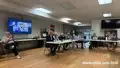
Voters will gather at Lanesborough Elementary School on June 9 at 6 p.m. to decide on 20 warrant articles.
The fiscal 2027 budget is up a little over 10 percent. Some of the main increases are the Mount Greylock Regional School District and McCann Technical School: the McCann assessment is up more than 30 percent based on factors including enrollment and the school renovation project, and Mount Greylock's is up 11 percent.
Article 11 is for the town to vote to approve from free cash the sum of $16,298.48 for the McCann Technical School roof and window replacement project so as not to impact the budget. Article 3 is appropriate $7,586,284 for Mount Greylock Regional School assessment.
Another notable increase was in life and health insurance, showing an increase of about 26 percent.
Ambulance Director Jen Weber is planning 24-hour coverage, which means more staff and a hike in her budget. One of the articles asks the town to appropriate $234,100 to operate the Ambulance Enterprise Fund for salaries and expenses.
Many town departments are looking for new vehicles. The Fire Department is looking to replace its outdated 1996 fire engine. There are two articles related to the truck at a total of $813,366. Article 12 would transfer $225,000 from free cash into the Fire Truck Stabilization Fund; Article 13 would transfer $605,000 from the fund and authorize the borrowing of $208,366.08.
The total includes a $100,000 contingency cost to cover any additional costs if a 2026 model-year chassis cannot be secured before new emissions standards go into effect in 2027.
The board at its last meeting moved the $225,000 transfer to come before the borrowing article, changing the stabilization number. If the $225,000 is not voted on, then they will amend the next article's number on the floor, subtracting the $225,000. This shows the borrowing number significantly lower.
Article 17 asks for the transfer of $80,000 from free cash to replace a police cruiser.
Police Chief Rob Derksen's aim is to replace one vehicle every other year, meaning the oldest vehicle gets replaced about every 10 years.
He stressed that if delayed this year, the town may have to double up in a future year to get back on schedule, and that paying later usually costs more. The article will ask for $80,000 from free cash, the vehicles used to be funded by the BHRD.
Lastly, the Highway Department is looking to replace a 2014 International dump truck that will be a total of $330,000 and will take two to three years to receive.
Money will be used from last year's approval of $250,000 from free cash for the replacement of a 2012 highway front-end loader that was underspent $49,261. Town meeting is being asked to approve a transfer of $53,274.85 from free cash and the use of $227,464 from funds from the Sale of Town Real Estate to fund the balance.
Other free cash proposals include $1,200 to purchase software to support tracking and ongoing maintenance schedules of town-owned vehicles; $42,000 for the replacement of the Highway Department's storage shed roof, $200,000 to reduce the tax levy.
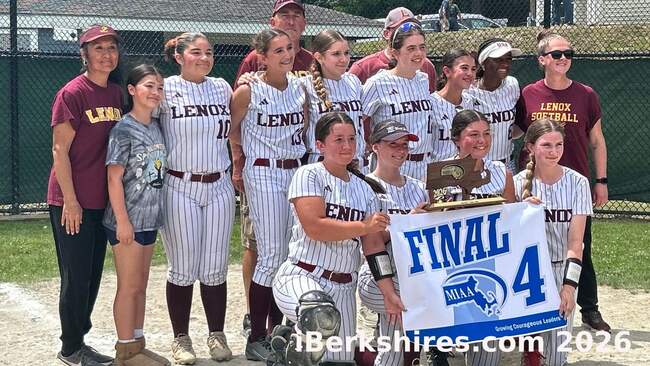
Cassidy Flynn scattered five hits in a complete-game effort in the circle as Lenox upset top-seeded Hoosac Valley, 3-2, in the quarter-finals of the Division 5 State Tournament. click for more
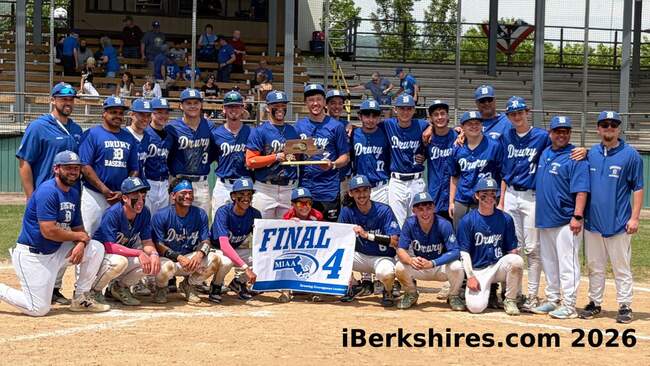
Brayden Durant struck out seven and walked one in a complete-game effort on the mound Saturday to pitch the Drury baseball team to a 6-0 win over Keefe Tech in the quarter-finals of the Division 5 State Tournament at Joe Wolfe Field. click for more
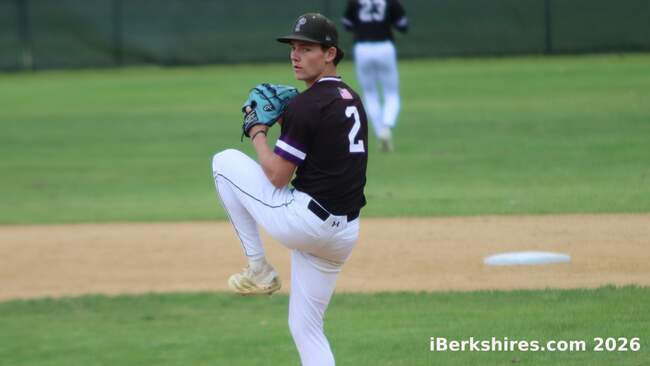
Jason Codey struck out 13, walked two and allowed just an infield single as the Generals earned a 7-1 win over Wahconah to claim their third straight regional title. click for more
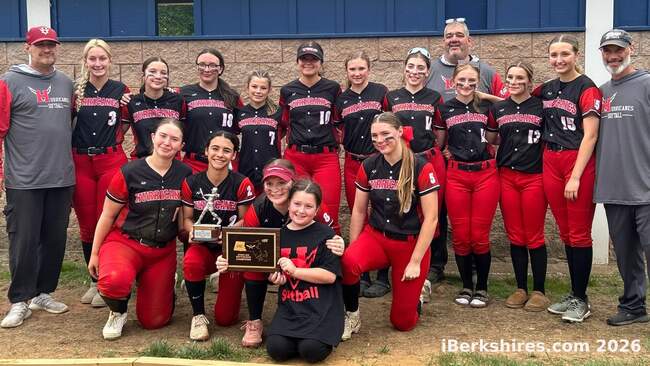
Gracelyn Wright struck out eight, and Genevieve Lagess went 3-for-5 with four runs batted in as the Hurricanes beat Monson, 17-3, to claim their first Western Mass title in four years. click for more
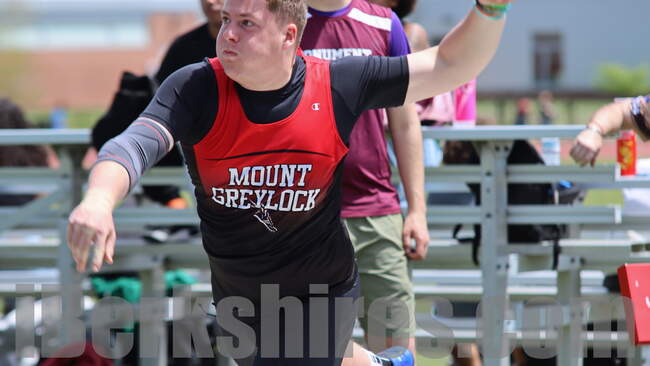
For the boys, Ward Bianchi helped lead the way with a win in the shot put and a second place in the javelin as the Mounties finished 16 points ahead of runner-up Pittsfield (pending the results of the pole vault, which were unavailable at 11 p.m. Friday night). click for more