Independent Investor: Stagflation in the Headlights
 |
Yes, by any yardstick, I'll take a short, sharp couple of quarter's recession over revisiting the pain of the Seventies. The problem is no one is giving you or me the choice.
Stagflation, the simultaneous occurrence of high inflation, high unemployment and slow economic growth, battered this country for 13 years, from 1969 to 1882. Its ultimate demise required a wrenching two-year recession as the Federal Reserve boosted interest rates drastically.
Last quarter's sudden spurt in inflation coupled with an economy that appears to be tipping into recession begs the question is stagflation happening again?
In the 1970s, I remember when OPEC met in Tehran and doubled the price of oil from $5.50 to $11 a barrel. Back then, the Shah of Iran (yes, my child, there was a shah back then) raised prices in order to compensate for the decline of his U.S. dollar-denominated oil exports versus the British pound and to increase defense spending. That oil shock ignited an inflationary spiral that saw all hard assets take off in price while creating long lines at the gas pump around the world. Fast forward to the 21st century.
In 2001, in response to the attack on the World Trade Center, then Chairman of the Federal Reserve Alan Greenspan, at the urging of the White House, drove interest rates to unprecedented low levels. This fueled the housing bubble and home equity loans and set the stage for our present problems.
Since 2003, thanks to the Iraq War, we have seen a quadrupling of fuel prices and a declining dollar. For Americans, it was easier to swallow these gas hikes when your house was doubling in price and you could write a home equity check against it anytime you felt the urge.
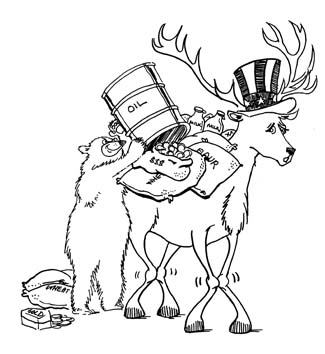
This new oil shock was also tempered by massive and cheap exports from China. Those low-cost goods partially compensated for the increase in energy costs. At the same time, low wages in developing nations have kept a lid on our own wage levels, which has helped to contain inflation as well.
Now, all these bird-brain policies are coming home to roost. After years of double-digit growth, China is confronting sky-rocketing inflation in everything from the price of pork to the hourly wage in Guangdong province's sweat shops. Their exports are getting pricier by the day. At the same time, the bubble has burst here at home.
As the Fed desperately cuts rates again and again to combat the growing credit crisis (expect another big cut this month) inflation pressures build and build. Employment this month saw the largest decrease in five years while even our president finally conceded that the economy is slowing.
Given the realities of higher inflation, increasing unemployment and slowing economic growth is it any wonder that stagflation is a topic of conversation? Yet, that doesn't necessarily mean we are facing a repeat of the Seventies. It depends on our response to these issues.
I've argued that much of our present-day inflation is imported, fueled by a war no one wants. At the same time, Americans, thanks to both the credit crisis and subprime lending, are no longer on a buying binge so demand for goods and services are already declining. Consumer liquidity is also falling (homeowner equity fell below 50 percent for the first time since 1945).
Back in the day, we snuffed out stagflation by jacking up interest rates, causing a deep recession and letting the chips fall where they may. Today, a similar policy, my friends, would be an unmitigated disaster for this country in the context of lost jobs, lost wages and lost homes.
It is better that we suffer through a period of recession and forget about stimulus packages and other electioneering ploys. Those kinds of "fixes" were tried in the Seventies and only prolonged and exacerbated the potential for stagflation. Recessions, contrary to statements from well-meaning politicians on both sides of the aisle, are not the result of policy failures.
Recessions, my dear reader, are a natural part of business cycles. They are the economic pressure valves when growth is overheating. We only get into trouble when we refuse to accept that. That's not to say we can't try and mitigate the fallout. Believe me, I am no John Galt but I have read and do agree with some of the tenets of Ayn Rand's opus "Atlas Shrugged."
From my own experience, I can tell you it's not pleasant to lose your job or have to tighten your belt because of recessions. But it's the reason this country created unemployment insurance and job re-training.
Hopefully, whoever gets the country's top job in November will have the foresight and ability to understand the tightrope this country is presently walking. So far, I am not encouraged.
Day after day, I wait for one of the frontrunners from either party to put forth a plan that makes sense. Maybe it's time we demand one.
Bill Schmick is a registered investment adviser representative and portfolio strategist with Berkshire-based Dion Money Management, managing over $800 million for middle class Americans from coast to coast. Direct your inquires to Bill at 1-877-850-7942, Ext. 146 (toll free), or e-mail him at wschmick@dionmm.com. You can also visit www.afewdollarsmore.com for more of Bill's insights.