Lawmakers Eye Williams Endowment
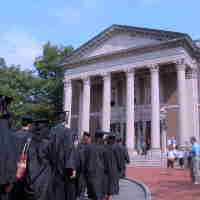 |
Rep. Paul Kujawski, D-Webster, is calling for a 2.5 percent annual assessment on endowments in excess of $1 billion. The assessment would affect at least nine universities and colleges in Massachusetts, including Williams College.
"I think it's a very bad idea. I think it's an opportunistic robbery attempt by the state Legislature," said Town Manager Peter Fohlin. "It's unfair and ill advised."
Williams College is a major employer and attraction in North Berkshire. Its sprawling campus lies in the heart of the town and some 2,000 students live within walking distance of its commercial district for much of the year.
Williams reported an endowment of nearly $1.9 billion; Harvard University has the biggest endowment, at $34 billion. Educational institutions are nonprofits and exempt from being taxed.
Kujawski told The Boston Globe that "It's mind boggling that one entity not paying taxes has $34 billion. How do you justify that?"
According to The Globe, this may be the first time a state has raised the issue, although Congress has been making similar noises.
While stiff opposition to the proposal is expected, according to The Globe, it drew a surprising amount of debate recently in the House, which approved further study.
"I think it's a really bad idea," said James Kolesar, head of Williams' public affair office, in a phone interview.
He didn't think the measure was going anywhere after speaking to some members on Beacon Hill. "It appears it may be uconstitutional," he said, because it would be tailored to target a specific class.
The purpose of the endowment, Kolesar said, is to keep the college in perpetuity.
And since Williams, like other institutions, maintains its endowment through the generosity of donors, taxing gifts could dry up donations.
Lawmakers say the assessment on any amounts over a $1 billion could bring in up to $1.4 billion a year. Opponents say any measure along those lines could undercut the very meaning of nonprofit and hamper colleges' abilities to offer financial aid and programs and to raise funds.
Williams, which is in the midst of a multimillion-dollar construction spree and a $400 million alumni fund drive, has controlled its tuition, increased its finanical aid - providing grants, rather than loans, to reduce students' debt upon graduation.
"The goal is to provide a stable program that maintains current excellence — a program that is not subject to swings in funding (up or down) because of market fluctuations," according to the college.
While some colleges have been perceived as not doing enough for their surrounding towns, that's not true of Williams, said Fohlin.
"Williams College is very good to the town of Williamstown," he said. "We have an excellent working, collaborative relationship. This is witnessed by the parking lot being built on Spring Street in excess of $400,000 at no cost to the Williamstown taxpayer."
The private college also allows free access to area residents to many of its facilities and invited speakers, conferences and seminars and has provided funding and other support to the local school system.
For a state that's facing a billion-dollar budget shortfall and rising price tag for its landmark health-care reform, colleges with flush endowments may look like easy pickings.
But Fohlin described it as "plundering" and warned that taxing Williams would be the town's loss.
"I am confident that any money that leaves Williamstown for Boston will not return to Williamstown," he said.