Williams Improves Energy Consumption with Solar Power
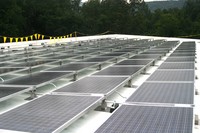 |
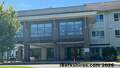
| The 26.88 kW Library Shelving Facility Solar Modules |
The new 26.88 kilowatt photovoltaic system consists of 96 4-by-6-foot panels taking up an area of more than 2,000 feet on the new facility’s roof.
"It's a good step forward in Williams' pursuit of alternative energy sources and sustainability” said Stephanie Boyd, director of the Zilkha Center for Environmental Initiatives. Boyd went on to explain the center's intent to help the college reduce its greenhouse gas emissions by 2020 to 10 percent below 1990 levels, which represents a 50 percent reduction from the 2006 benchmark.
Boyd said the new array is part of Williams' campaign for greener buildings. Other buildings the college intends to make more environmentally efficient are the Stetson-Sawyer Library, new campus academic complex, and the Weston Field athletic complex that is scheduled for expansion next fall. These buildings will all be LEED certified (Leadership in Energy and Environmental Design) by the U.S. Green Building Council. One feature of these green buildings is that energy use can be monitored in real time and compared to the consumption rates of less eco-friendly buildings. <L2>
These new panels, in addition to the 7.2 kW array on the college's Science Center, give Williams 34 kW of paneling ,making the college the second-largest user of solar energy in the area ― surpassing the 24 kW array located at Williamstown Elementary School and following behind the Massachusetts Museum of Contemporary Art's 50 kW array. <R3>
"The solar modules also help support our local economy," said the installer of the panels, Christopher Kilfoyle of Berkshire Photovoltiac Services. "BPVS uses solar modules made in Massachusetts; we get our solar modules from Billerica and our power inverters from Lawrence."
Some other benefits Kilfoyle mentioned are that the 170-pound modules are tested for extreme weather conditions and only need maintenance every 20 years to keep them at peak performance. The panels also benefit from tax incentives in Massachusetts and are expected to have an infinite lifespan.
The cost of the new installation to Williams was around $260,000, with some of that expense covered by the $92,670 rebate awarded from the Massachusetts Technology Collaborative through the Commonwealth Solar program, and is expected to have an annual output of 29,559-kilowatt hours of solar power. The Commonwealth Solar program estimates that the output of this system is equivalent to planting 76 trees a year.
State Sen. Benjamin B. Downing, D-Pittsfield, and Rep. Daniel E. Bosley, D-North Adams, announced that Williams would receive the Commonwealth Solar grant from the MTC, saying "This award recognizes the commitment to renewable energy Williams College has demonstrated by incorporating solar power on campus."