That's Life: In the Grip of Election Fever
 |
Craig Ferguson, host of "The Late, Late Show," which airs on CBS every weeknight, has shown signs of the angst that often accompanies election fever.
Making an entrance on the show the other night, Ferguson frowned and barked, "I'm mad." Veering from his usual style of entertaining viewers with self-deprecating humor, he took to task a number of people involved in the presidential campaigns.
He wanted to know, for instance, why candidates' families are purposely paraded in front of the public if they are supposed to be "off limits."
Ferguson, a Scotsman who was sworn in as an American citizen in February, also berated people who do not vote.
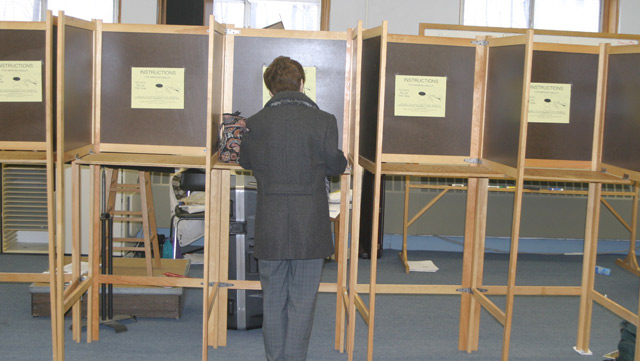
Ferguson's remarks were not directed at me: I have never passed up a chance to exercise my right to vote.
Whether we think of voting as a duty or a privilege, it is a right for which our forefathers fought long and hard to attain, and many of our troops shed blood and died to protect.
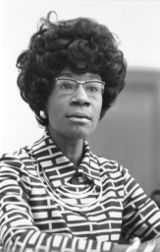 What's this about historic elections? Shirley Chisholm's name was thrown into the ring for the Dems in 1972. And Margaret Chase Smith, below, got the nod from GOP backers in 1964. Neither made it onto the final tickets. What's this about historic elections? Shirley Chisholm's name was thrown into the ring for the Dems in 1972. And Margaret Chase Smith, below, got the nod from GOP backers in 1964. Neither made it onto the final tickets.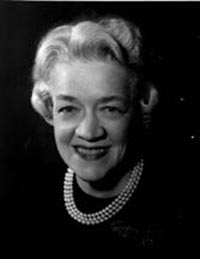 |
In later years, women proved that the "the weaker sex" was a misnomer, campaigning vigorously for seats in the House of Representatives and the Senate. And they proceeded to successfully serve not only as members of Congress, but as members of the cabinet and Supreme Court Justices as well. Now Alaska Gov. Sarah Palin is a candidate for vice president on the Republican ticket. If elected, she will be the first woman to hold that office.
Will women who had supported Hillary Clinton in what turned out to be a fruitless bid for the Democratic Party's nomination for president be swayed by gender to cross party lines and vote for Palin? That's a question that has spawned polls, guessestimates and rumors.
There was a time when women typically deferred to the men in their lives in political matters.
My mother voted for certain candidates, because they had won my father's approval. But that changed when my two sisters and I grew old enough to vote and kept abreast of what was happening in the political arena. At home, as we compared candidates' qualifications, their stance on various issues, etc., Mother formed her own opinion of who would do the best job. She discovered she and Father were on different sides of the political spectrum, and she began casting her ballot for the candidate of her choice not Father's.
Father was so far to the right, he would have labeled Bill O'Reilly a liberal. We four women were registered independents who bent a bit to the left. Outnumbered, Father virtually banned the "discussion" of politics at home. I suppose it was a form of self-defense, as our "discussions" sent Father to the medicine cabinet, looking for Tums and aspirins.
My Uncle Charlie, president of a local filmmaker's union, was always eager to talk about politics. He was very knowledgeable, and I found it enlightening to listen to his views.
When we visited Uncle Charlie and dear, sweet Aunt Lillian, she would put the tea kettle on the stove as soon as we arrived. Later, as we sat at the kitchen table, sipping tea and chatting, Uncle Charlie seized any opportunity to interject current political issues.
Once when Mother complained that the price of meat was "ridiculously high," Uncle Charlie remarked that people in the lower-income brackets were unable to "make ends meet. The minimum wage should be increased."
 We women were an attentive audience but Father would invent excuses for leaving the kitchen: "I'm going outside to smoke a cigar," "My back is killing me. I have to stretch out on the sofa."
 Here and now, I will not ignore any candidates in this historic election of 2008, because of their sex or the color of their skin. But I will disregard the candidates' sex and race when I am deciding for which one I will vote.
And I am determined to not be distracted by accusations and outrage that emanate from political camps in regard to insignificant matters. I have important matters to ponder, including how each candidate would address such compelling issues as the economy, the energy crisis, the environment, the war on terror, and the safe return of our troops now stationed in Iraq.
In this stage of election fever, I feel as if my head will explode.
There is no known cure for election fever; it just has to run its course. Based on my experience, I believe relief will come on Tuesday, Nov. 4.