Williams College to Host Distinguished Judicial Roundtable
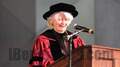
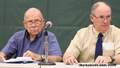
WILLIAMSTOWN - The W. Ford Schumann '50 Program in Democratic Studies at Williams College will sponsor a Judicial Roundtable featuring U.S. District Judge Consuelo B. Marshall of the Central District of California, U.S. District Judge Alexander Williams of the District of Maryland, and A.J. Kramer, federal public defender for the District of Columbia. The roundtable titled "Racial Disparities in the Criminal Justice System" will take place on Monday, Oct. 20 at 8 p.m. in Griffin Hall, room 3, on the Williams College campus. The event is open to the public and free.Marshall has been a federal judge since 1980, appointed by then-President Jimmy Carter and from 2001-05 served as the district's first female chief justice. She is also the first woman to have been hired as an attorney in the Los Angeles City Attorney's Office. Marshall has served as commissioner for Juvenile Court of the Los Angeles Superior Court and as judge for the Civil and Criminal Division of the Inglewood Municipal Court and for the Criminal Division of the Los Angeles Superior Court. She received her undergraduate and law degrees from Howard University. She was the 2007 recipient of the California Women Lawyers' distinguished jurist award and is often lauded for her influence as a mentor and barrier-breaker. She chairs the Federal Bar Association's Bench/Bar Relations Committee and the Ninth Circuit Fairness Committee.
Williams has served as a Federal Judge on the U.S. District Court for the district of Maryland since 1994. Previously, he served two terms as the elected State's Attorney for Prince Georges County, Md. and has taught law at Howard University. Judge Williams has traveled extensively abroad, lecturing on the First Amendment and on the Racketeer Influenced and Corruption Organizations Act (RICO). He was part of a joint inspection team sponsored by the U.S. Department of Justice and the U.S. Department of State to address the issue of justice in Liberia following its civil war. Williams was among the founders of the African Judicial Network, a website for African nations to share information and promote discourse on judicial independence. Judge Williams is a graduate of Howard University, where he received his B.A. in government, an M.A. in religious studies and ethics, and a J.D.
Kramer has been the Federal Public Defender for the District of Columbia since 1990. An experienced career public defender, he served as an Assistant Federal Public Defender in San Francisco and as Chief Assistant Federal Public Defender in Sacramento prior to his current position. He received his undergraduate degree from Stanford University and his law degree from Boalt Hall School of Law at U.C. Berkeley. Kramer is a Fellow of the American College of Trial Lawyers, and teaches at the National Criminal Defense College and the Western Trial Advocacy Institute.