Bosley: Economy and Budget Cuts
 |
Massachusetts is now seeing the effects of the global economic problems, which stem from the housing crunch, stock market downturn and banking failures. These effects and tough economic times call for calculated cuts in spending across government. In light of these cuts, I will continue to work with leaders of the House, Senate and the governor's office to analyze the implications of these cuts and find solutions that are the best served for residents of the 1st Berkshire District and citizens across the commonwealth.
We in the Legislature must do our best to make sure that these cuts are spread evenly and do not affect at-risk populations, such as elders, veterans and low-income residents, any more than is necessary to maintain a balanced budget as constitutionally required, and that they will not affect local aid. Because we were conservative in our revenue projections, Massachusetts is in a better fiscal position than other states.
The shortage in tax collections, which comprise a significant portion of our revenue in Massachusetts is currently calculated at 2.82 percent compared to double-digit shortfalls in California, Arizona and Nevada.
In my conversations over the last few days with House Speaker Salvatore DiMasi, D-Boston, it is clear that we will do our best to work with the governor to mitigate effects of the proposed as much as possible. However, such cuts are necessary in light of recent revenues. There are no easy choices or quick fixes to this economic situation.
In my role as the chairman of the Committee on Economic Development and Emerging Technologies, I believe we should continue to cultivate our state's future by supporting our educational institutions, while sustaining existing and new businesses in the state through precise and tailored investments in industries across the state. Our ability to weather this financial crisis depends on our ability to invest in and grow our economy. Only through economic growth can we grow our revenues to continue to invest in our communities and services our constituents rely on.
In assessing and implementing the budget cuts, the Patrick administration was mindful in its decision to attempt to devise new revenue sources and reduce spending in a manner that would not impact Chapter 90 (local aid) and Chapter 70 (education) funding.
Some cities and towns across the commonwealth have already faced a Proposition 2 1/2 override. Local aid and Chapter 70 money for public schools are the life-blood of our communities. I have seen what can happen when those funds are cut - it forces up property taxes, and it still leads to deep cuts in public services. It is the worst of both worlds - higher property taxes and diminished services. Our ability to live within our budget and continue to invest in our economy is critical. In these difficult times, it is important to do the best we can to make tough choices in order to make the best of a bad situation.
In their negotiations between the governor and his cabinet, each executive office pledged to reduce its spending by 7 percent while the Legislature has committed to cutting costs by 10 percent - the implications of which include hiring freezes and salary freezes. Everything from state agencies to local community organizations whose funding was reduced must now reassess their programs and services so that they may continue to serve their community without completely diminishing their effectiveness.
Looking ahead, I pledge to do everything in my power to make sure that my constituents and the commonwealth as a whole are able to weather the current storm. Our ability to be creative and innovative in our economy is a trade mark of Massachusetts and puts us in a much better position than many other states to weather this fiscal crisis.
It is important for everyone to know that their elected officials are working hard to make sure that our state recovers quickly, continues to provide basic necessary services, and returns state government to operating as effectively and efficiently as it can.
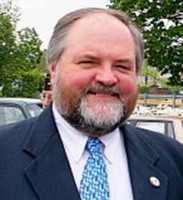
State Rep. Daniel E. Bosley, D-North Adams, represents the 1st Berkshire District.