High Cost of Caring, Positive Goals Topics at Breakfast Forum
 |
Whether by choice or not, caregiving can be a strain not only emotionally and physically, but financially as well.
"Rosalind Carter had a wonderful quote," said Jacqueline A. Metsma, a financial and long-term care planner with TrueNorth, at Gala Restaurant on Tuesday morning. "She said there are four kinds of people, people who are the caregivers, the people who will be the caregivers, the people who have been the caregivers and the people who will receive care.
"I think we will find ourselves in one of those roles, or more than one, as we go through our lives."
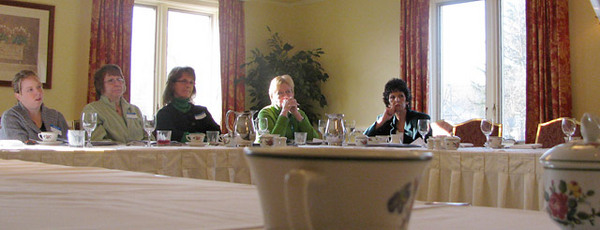
Eschewing a podium set up in the small banquet room, Metsma sat in a chair closer to the dozen or so women attending the first of two breakfast forums on women's issues sponsored by Berkshire Business and Professional Women and hosted by the Orchards hotel.
Stepping in for personal trainer Joanna Ezinga, who had had to cancel her talk, Metsma discussed the need for long-term care insurance for a growing demographic trying to juggle careers, children, college tuition and aging parents — often at the same time.
For women, who still only make 78 cents on average for every dollar a man makes, financial sacrifices such as leaving the work force to raise children or take care of parents, can have long-term effects. Less time employed means less Social Security and less in pension benefits affected by an already lower wage.
"It's something that impacts women so, so much," she said.
It's a conundrum affecting many: how to keep ailing and elderly family members in their homes while also preparing for that day when you, too, might need help.
Don't count on the government, said Metsma. The worsening economy has meant budget cuts to elder-care resources like Elder Services of Berkshire County and Medicare offers limited help for long- or short-time care in skilled nursing facilities. For Medicaid, you have to have spent all but $2,000 of your assets before you qualify (although married couples are allowed $110,000 so the healthy spouse won't be turned out the family home) and it doesn't offer home health care.
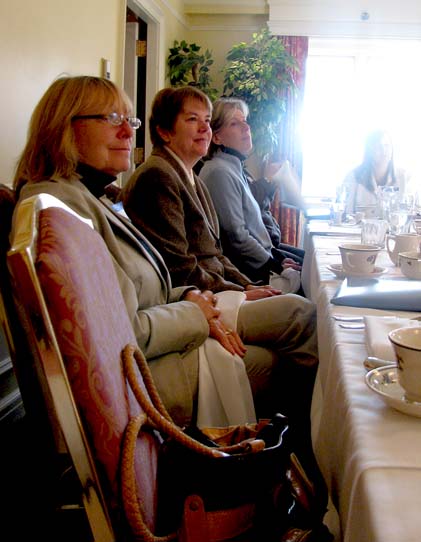 Eva Amuso, left, Jacqueline Metsma, middle, gave a presentation on long-term health care, and Laura Macionus. |
"My clients tend to have gone through this with their parents," she said. "They say, 'I never want my kids to go through this.' "
You can self-insure, said Metsma, but the average cost is more than $85,000 annually for nursing homes and $26,000 for home care, all of which is expected to quadruple over the next 25 years. Compared to that, long-term health insurance can make sense, she said.
Ending on an Upbeat Note
The morning's second speaker, Christine Singer, president of Your Perfect Best: Workshops for Success, proved a perfect bookend to Metsma, with an upbeat presentation for a group left pondering their own mortality.
Singer, who also is executive director of United Cerebral Palsy, lead the women through a quick overview of the characteristics of a high-performing team.
Going around the room, Singer had each woman tell what they were most worried about right now. The answers ranged from getting through the day, to finances to layoffs to retirement to exhaustion to children. One woman wasn't worried about anything, the one next to her, about everything.
Singer said it was important to take what you're worried about and turn it into a positive: set a goal, find a purpose, make a plan. Understanding, of couse, that the plan you make may have to be realigned from time to time.
"You may want to do something different than what you're doing now," she said, for example, but now might not be the time for a career change. Instead, find the postive as she's told her own son, "Be happy you have a job."
No matter what you're doing, "assess your ability to make your workplace better for all," said Singer. Be helpful, encouraging, and listen to and respect co-workers' opinions. Deal with the little things, don't ignore them.
But watch out for complaining co-workers. "That's a major thing, because you can easily be brought down by a negative co-worker," she said. Let them gripe for a few minutes but don't let them go on and on; stay away from them if they don't stop.
Teams should work together toward their goals, she said. "This is a time to have more communication not less."
Most importantly, you should not only thank people but learn to accept their thanks gracefully. Give sincere praise, said Singer. "Don't ever forget to show someone how appreciative you are."
And don't forget to celebrate yourself, she told the group, having each write themselves a little note of appreciation that she promised to mail in the future. It's something to look forward to, she said.
"Take time to celebrate even when it's difficult," said Singer, sending them off into their day with sunny outlook.
The next forum is Tuesday, March 24, beginning at 8 a.m. at Gala. The cost is $15 and the topic will be the mortgage crisis and Berkshire real estate.