Financial Bullett Points: Creating a Household Budget
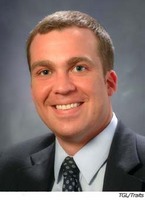
By Brendan BullettiBerkshires Columnist
Print Story | Email Story
Brendan Bullett
As a financial adviser, I work each day with my clients to help them organize and allocate their financial resources. In this column, I hope to use my available resources to offer you some possible solutions to assist you in meeting your financial goals.

Given the economic events of the last 18 months, one of the most important ways to make sure that you and your family are on the right financial track is to establish and maintain a realistic household budget.

It is very common for people to ask the question at the end of each month, "Where did my money go?" The best way to answer that is to create a household budget. A budget is essentially a financial plan that looks at money coming in and going out during a certain time period. I feel that the easiest and most manageable time period to use is a monthly budget.

However, before you start to create your budget, the first thing that you want to do is make a list of your financial goals. You may want to break this list into two categories, short-term goals and long-term goals. Short-term goals may include buying a new car, taking a vacation, or doing upgrades to your home. Long-term goals may include saving for your retirement or saving for your child's college education. Once you have determined your goals, you can start to create your budget to help you meet them.

The first step in creating a budget is determining your income and expenses. To track your expenses you should create two categories, fixed and discretionary. The fixed category should include anything that occurs on a regular basis such as your mortgage or rent and utility bills. The discretionary category may be a little harder to come up with. You may have to look back at your bank records to see where you spend money on such things as food and entertainment. Please keep in mind that any money you save should be included under your discretionary expenses. Determining your income should be somewhat easier as most people have a set amount of money they earn each month. This can obviously fluctuate if you work overtime one month or earn an unexpected bonus.

Once you have figured out all of your income and expenses, compare the two totals. To meet your goals and have a healthy financial future, you should spend less than you make. If you are currently doing this then you are on the right track and just need to decide on the best way to spend your extra income. If you are spending more than you earn, you will want to evaluate your expenses, especially the discretionary category. This is not a cause for great concern. Instead think of it as the starting point on your new financial map.

It is important to monitor your budget on a regular basis and make updates when major changes occur. However, please don't feel that every penny of every month needs to be accounted for. Your budget needs to be flexible or else it will likely not work. As we all know, unexpected expenses are a part of life!

My last suggestion is to make sure everyone in your family is on the same page regarding your financial goals. Everyone needs to do his or her part in order for the budget to be maintainable. Regular family meetings can help make sure your budget is a success.

Remember, in rough economic times one of the most prudent courses of action is to head back to the basics. The foundation to a healthy financial future is to create a household budget and do your best to stick with it.

Brendan Bullett is a registered representative of and offers securities through True North Financial Services Inc., member FINRA, SIPC, and a financial adviser with True North Financial Services Inc., and a registered investment adviser. For questions or comments, he can be reached at 413-664-4025 or bbullett@truenorthfs.com.

If you would like to contribute information on this article, contact us at info@iberkshires.com.

Lanesborough Town Meeting to Vote Budget, Bylaws & Vehicle Purchases

By Breanna SteeleiBerkshires Staff

LANESBOROUGH, Mass. — Tuesday's annual town meeting includes a $14 million operating budget, new short-term rentals, accessory dwelling units and sign bylaws, and free cash article appropriations.

Voters will gather at Lanesborough Elementary School on June 9 at 6 p.m. to decide on 20 warrant articles.

The fiscal 2027 budget is up a little over 10 percent. Some of the main increases are the Mount Greylock Regional School District and McCann Technical School: the McCann assessment is up more than 30 percent based on factors including enrollment and the school renovation project, and Mount Greylock's is up 11 percent.

Article 11 is for the town to vote to approve from free cash the sum of $16,298.48 for the McCann Technical School roof and window replacement project so as not to impact the budget. Article 3 is  appropriate $7,586,284 for Mount Greylock Regional School assessment.

Another notable increase was in life and health insurance, showing an increase of about 26 percent.

Ambulance Director Jen Weber is planning 24-hour coverage, which means more staff and a hike in her budget. One of the articles asks the town to appropriate $234,100 to operate the Ambulance Enterprise Fund for salaries and expenses.

Many town departments are looking for new vehicles. The Fire Department is looking to replace its outdated 1996 fire engine. There are two articles related to the truck at a total of $813,366. Article 12 would transfer $225,000 from free cash into the Fire Truck Stabilization Fund; Article 13 would transfer $605,000 from the fund and authorize the borrowing of $208,366.08.

The total includes a $100,000 contingency cost to cover any additional costs if a 2026 model-year chassis cannot be secured before new emissions standards go into effect in 2027.

The board at its last meeting moved the $225,000 transfer to come before the borrowing article, changing the stabilization number. If the $225,000 is not voted on, then they will amend the next article's number on the floor, subtracting the $225,000. This shows the borrowing number significantly lower.

Article 17 asks for the transfer of $80,000 from free cash to replace a police cruiser.

Police Chief Rob Derksen's aim is to replace one vehicle every other year, meaning the oldest vehicle gets replaced about every 10 years. 

He stressed that if delayed this year, the town may have to double up in a future year to get back on schedule, and that paying later usually costs more. The article will ask for $80,000 from free cash, the vehicles used to be funded by the BHRD.

Lastly, the Highway Department is looking to replace a 2014 International dump truck that will be a total of $330,000 and will take two to three years to receive.

Money will be used from last year's approval of $250,000 from free cash for the replacement of a 2012 highway front-end loader that was underspent $49,261. Town meeting is being asked to approve  a transfer of $53,274.85 from free cash and the use of $227,464 from funds from the Sale of Town Real Estate to fund the balance.

Other free cash proposals include $1,200 to purchase software to support tracking and ongoing maintenance schedules of town-owned vehicles; $42,000 for the replacement of the Highway Department's storage shed roof, $200,000 to reduce the tax levy.

View Full Story

More Stories