Williams Prof Looks at Japanese Writer's Science Influence
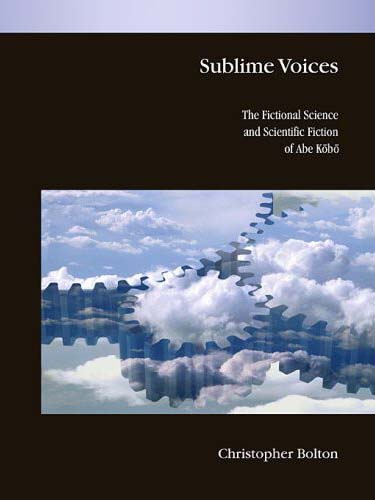 WILLIAMSTOWN, Mass. — "Sublime Voices: The Fictional Science and Scientific Fiction of Abe Kobo," by Christopher Bolton, associate professor of comparative and Japanese literature at Williams College, mines the scientific influence on the fictional works of famed postwar Japanese writer Abe Kobo (1924–1993).
Perennially nominated for the Nobel Prize in Literature, Abe stretched the definition of narrative prose to include technical language from the worlds of biochemistry, geology, mathematics, and computer programming. Originally trained to become a doctor, Abe put his interest in science to work in his novels, creating literature that was revolutionary to his contemporaries and which carved a space for modern authors writing in the "slipstream" between genre science fiction and more traditional forms of literary fiction.
Published by Harvard Asia Center, the book suggests that Abe Kobo's works establish that the truth of science may be just as quirky as fiction, and that the exploration of the ways in which science and fiction interact may be a catalyst for breaking down narrow ideas of rationalism.
In his close readings of Abe's novels and fictions, Bolton argues that Abe's prose overturned not only assumptions about literature but also the ways in which society perceives science.
Bolton grounds his analysis by comparing Abe's novels and essays with a range of critical traditions from British empiricism to poststructuralism. One common thread through these critical schools of thought is the sublime, the feeling of fearful power and excitement that often helps to explain the great commonalities and conflicts between science and fiction.
Bolton explores Abe's attraction to parody as well as to Russian critic Mikhail Bakhtin's concept of heteroglossia, the proliferation of different voices and speeches within a text. By extracting the lessons of these concepts in addition to sublimity, Bolton builds an image of the author through his texts and establishes the importance of Abe's works in the critical slippage between scientific truth and fiction.
Bolton is the author of a number of published articles and translations, and is an associate editor of "Mechademia," an annual forum for academic criticism of anime, manga, and fan arts. He co-edited a collection of essays on Japanese science fiction titled "Robot Ghosts and Wired Dreams: Japanese Science Fiction from Origins to Anime," published in 2007 by the University of Minnesota Press.
He received his bachelor of arts degree from Harvard University and his doctorate in Japanese from Stanford University in 1998.