Mount Greylock Seeks to Avoid Costly Building Upgrades
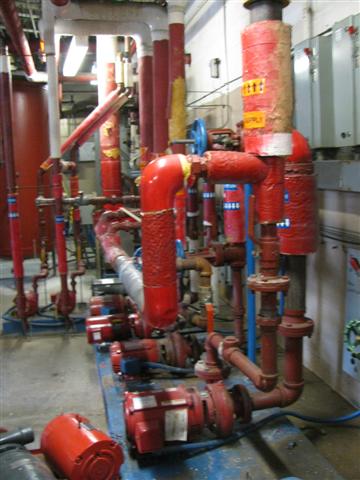 iBerkshires file
Replacement of the regional school's 40-year-old heating system may have to be cut back to avoid invoking a costly state law. |
School Committee member Robert Ericson, who's taken on the task of project manager for the replacement of the boiler system and reconstruction of two locker rooms, said Tuesday night that the total $2.4 million project appears to exceed to 30 percent of the building's value.
That could invoke a state law requiring the district to bring the entire 50-year-old building up to current code at a cost of millions more.
Ericson said the town's building inspector assessed the value at $7.7 million, nearly $1 million below the last valuation done for a feasibility study in 2006. That puts the project about $100,000 over the 30 percent mark.
"I went and spoke to the assessor about it ... and the philosophical answer was school buildings have no real value and don't sell well," he said. "His opinion was the school building is worth no more than the cost of tearing it down and getting rid of it."
Any new construction or remodeling in Massachusetts must be up to current code, including the Americans with Disabilities Act, according to 521 CMR 3.3.
"When the work performed on a building is divided into separate phases or projects or is under separate building permits, the total cost of such work in any 36-month period shall be added together in applying 521 CMR 3.3, Existing Buildings."
That would require installing a sprinkler system that would require a 2.5 million gallon water tank, among other costly projects in the 183,000 square-foot building.
Committee members questioned whether the five boilers for the heating system could be combined with the $1.3 million project to fix the collapsing ceilings in two locker rooms.
"It seems like the boilers are movable assets while the ceilings are structural repairs," said committee member Carrie Green. "We're not sinking money into the building the same way."
Committee member Jack Hickey said the use of "fair cash value" takes into account the replacement value, which for Mount Greylock would mean $50 million "give or take a million." Less a 40 percent depreciation, the value should be far more than $7.7 million.
"I really think we ought to question the number that the assesor has done and I think we also need to question the logic that's being put forth," he said, noting the funds were being used to keep the building functioning and useful for years to come.
An independent appraisal was authorized earlier by the board but has not yet taken place. Ericson said the assessors' view was that it may not be credible. Committee member Ronald Tinkham disputed that, saying the district had both a local option to request abatement and the mechanism at the state level to call in a mediator.
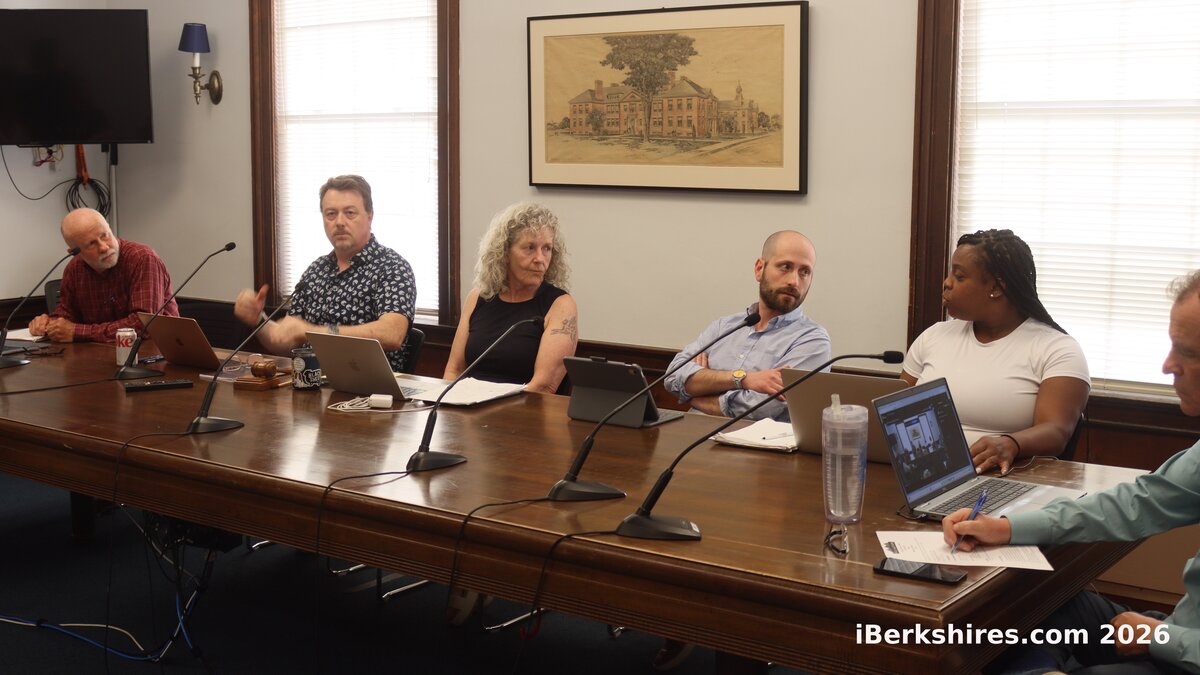
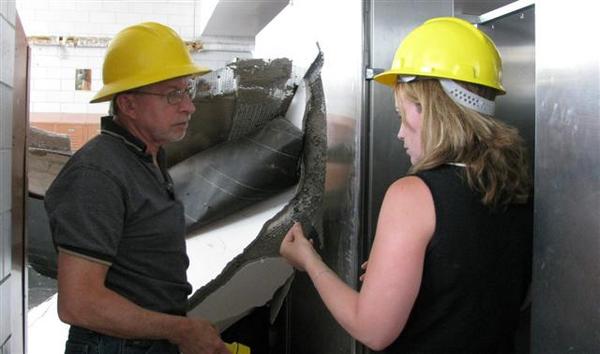 Committee member Robert Ericson speaks with SBA Executive Director Katherine Craven last year about the collapsed ceilings. |
"Right now, I'm struggling to find the scope that can be taken out of these projects," said Ericson, adding the easiest way would be to eliminate the fifth boiler, leaving the school with four. Two boilers have been installed and are operating.
The board referred the matter to the school district's counsel and will move forward with the independent appraisal. Chairman David Archibald and other committee members will meet with the town's assessors.
The school district will take out $1.2 million bond toward the work. The School Building Authority is expected to cover more than half the cost.