Feed the Berkshires Researching Local Food Production
 |
Many of us are trying to eat healthy and often that means eating local. The Berkshires are known nationwide for fresh, local food and beautiful scenic farmland. But do we really know what we have? And maybe more importantly, do we know how to protect and support the production of local foods in our region?
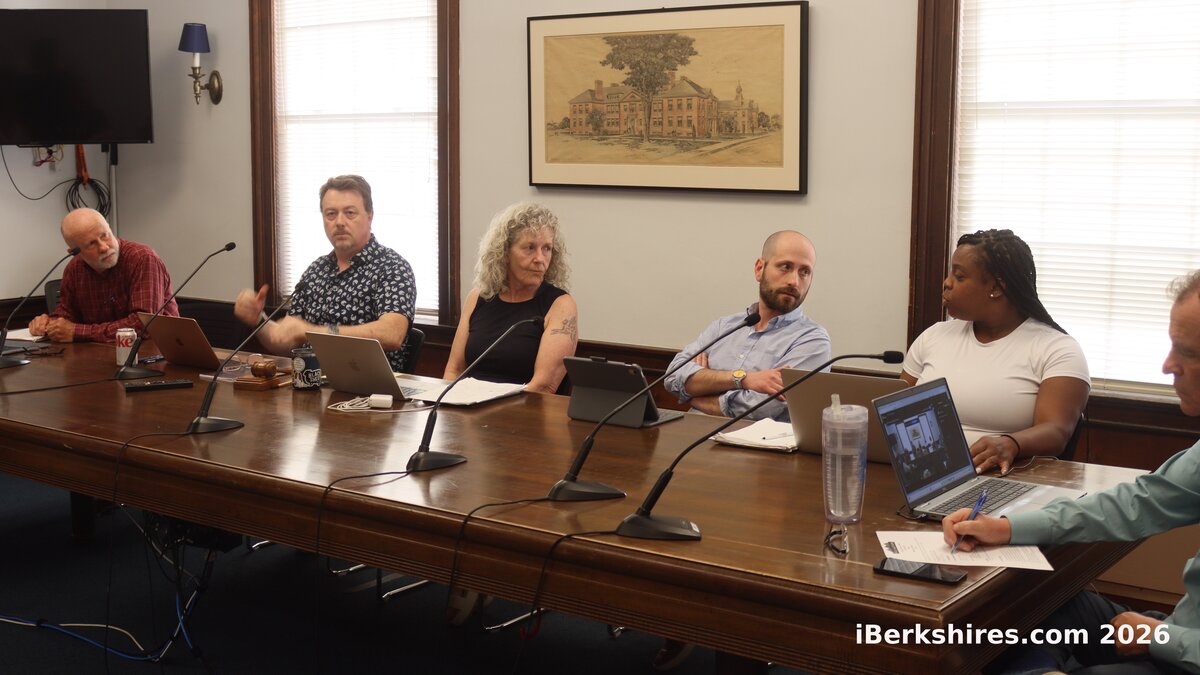
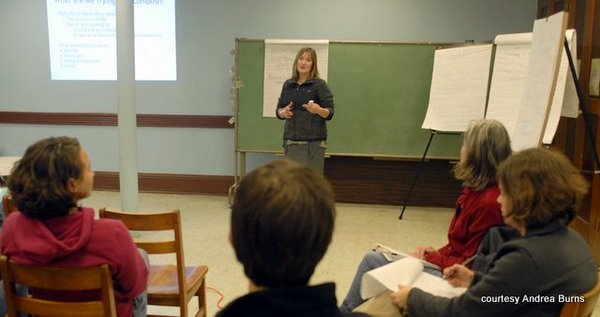
As part of Sustainable Berkshires' developing community plan for our region, the new Feed the Berkshires group held a training session for volunteers in the basement of First Baptist Church on Nov. 14. The meeting was facilitated by Berkshire Regional Planning Commission Senior Planner Amy Kacala and members of the farm activist, non-profit Glynwood Institute's staff, including Andrea Burns and Virginia Kasinki, Glynwood's director of community programs.
Originally called Keep Farming, the group will be working to add to the regional plan over the next one to two years.
Volunteer members of the group will be working to gather accurate information about local food availability, use and production in eight Northern Berkshire communities: Adams, North Adams, Savoy, Cheshire, New Ashford, Williamstown and Florida.
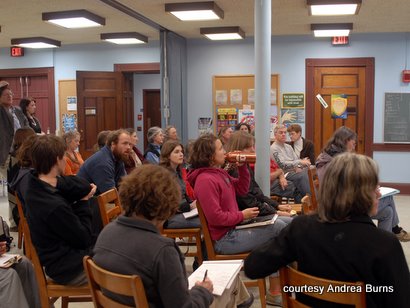 More than 30 volunteers attended the training session to map out plans for acquiring data on local farming and food needs. |
The first stages of the project will involve gathering information about supply and demand for local food in grocery stores, at community pantries, in restaurants and in schools. The agricultural economics group will be surveying local farmers about their current needs and challenges, their crops, their market and the ability to make a living as a small farmer in the Berkshires.
There will also be research projects launched on health and nutrition in the eight communities, natural resources and opportunities for distribution of local products to local consumers.
Keep Farming has been working with the communities of the Southern Berkshires for nearly a year. The concerns of communities in the south are not the same as those in the north; for one thing, Northern Berkshire residents often consider food grown in Vermont or New York State as local.
Kasinki said the Northern Berkshire community has a unique way of thinking about what is local and what is not. While the Southern Berkshires' Keep Farming initiative was firm that their interest would stop at the Massachusetts border, people in the Northern Berkshires are accustomed to thinking of Southern Vermont and eastern New York as part of the local range.
For now, the goal of Feed the Berkshires is to help protect, sustain, support and encourage local food production. They are particularly focused on increasing support to small farms and producers. The first step is to see the landscape as it is now.
Kasinki summed up the goal of the project with a series of questions: "What do you have here? What's your foundation to grow on? Does your community have the same goals you have? Can we get there?"
Feed the Berkshires is working to support community health, community planning and the local economy by getting local food onto the plates of the people who live in our region and making sure everyone can afford to grow, serve and eat it.
Stephanie Farrington is a freelance writer in North Adams. You can reach her at stephanie.farrington@gmail.com.
Tags: agriculture, Feed the Berkshires, Sustainable Berkshires,