Pittsfield Slows Pace On Senior Tax Work Off Program
|
The City Council eventually tabled the discussion until they could have more information about the senior tax work off program. |
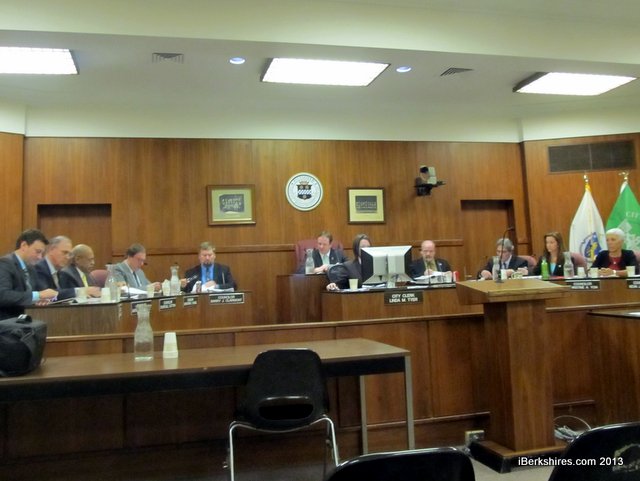
PITTSFIELD, Mass. — A plan to let senior citizens work off their taxes hit a snag Tuesday when the City Council took no action — opting to table it until the councilors could get information.
The program is designed to let up to 100 seniors work off up to $1,000 off their property taxes. However, liability, the types of jobs they would have, who oversees the volunteers and the impacts on the federally funded RSVP (Retired Senior Volunteer Program) the city already has in place were all questioned but resulted in no answers.
The council voted 8-3 in favor of tabling the discussion.
Councilor at Large Barry Clairmont, who presented the petition, argued for adopting the state legislation that makes the new program possible. Adopting the law would give the mayor the ability to develop a program tailored to the city's needs.
"This is trying to help seniors on a fixed income who are struggling to pay their property taxes," Clairmont said adding that the city's program sets a strict income level and would allow those with the lowest incomes into the program first.
Clairmont said the law would not have to implemented immediately or at all if the city opts to go another direction. But adopting the legislation now would be "harmless" and move the program along to become available for 2014.
While Councilor at Large Melissa Mazzeo agreed that seniors need assistance, she said this program isn't it. Mazzeo instead advocated for lowering the minimum age for an already existing tax abatement program.
The proposed program comes with a lot of liability and effort to get it started, she said, adding she doesn't want the city to put a law on the books that it may never use.
"There are more things that are problematic with this," she said.
Liability was a major concern for a few other councilors because those invited into the program would be classified as employees and could claim unemployment against the city's insurance. Additionally, if something happened to the volunteer while on the job, the city's insurance would have to cover that as well.
Plus, councilors do not know what kinds of jobs the volunteers will have. Ward 5 Councilor Jonathan Lothrup described the program as a "budget allocation" because the city will lose at least $100,000 in tax revenue, but with the program under the mayor, those volunteers could be used to supplement staff in city departments.
Lothrup said the volunteers would be used during peak times, such as in the city clerk's office during the census when mailings need to be prepared. However, the hours the volunteers can work would not be enough to replace a full-time city employee. Volunteers would work for 125 hours, thus earning the maximum amount at $8 an hour toward their tax bills.
But Mazzeo said the RSVP program already has some 500 volunteers for most of those opportunities. They would be ineligible for this program because RSVP is federally funded and many may change programs — thus hurting an already productive program.
Ward 6 Councilor John Krol, however, said the programs can't be compared because RSVP doesn't take income into account and Clairmont advocated for as many volunteer programs as possible.
"I think we can get the program kicked off," Clairmont said.
After more than an hour of debate and questioning, Clairmont, Krol and Ward 1 Councilor Christine Yon were the only ones to oppose tabling the discussion.
In other business, the council voted in favor of adding cooking and baking to home occupations. According to City Planner C.J. Hoss, the Board of Health has been approving the kitchens but the zoning wasn't in compliance in residential areas.
The move allows cooking and baking as a home business provided the kitchen goes through proper permitting and inspections.
"I was concerned with the health aspects of this," Yon said and then recapped all of the inspections needed to continue operations, which was "very strict and I am comfortable with the health aspect now."
Hoss said there are about a dozen commercial kitchens in residential homes in the city currently by special permit.
Tags: property taxes, RSVP, tax abatement, volunteers,