Letters: The Perfect Conservation Land
 |
To the Editor:
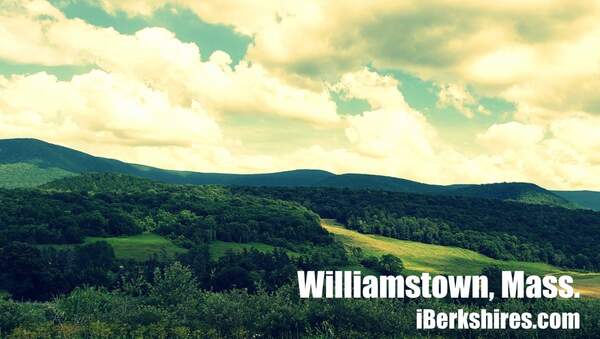
The Lowry property in Williamstown is not, as some might say, "free land"; it is, rather, the "perfect conservation land."
It has a crucial agricultural use. Haying the land enables Kim Wells' East Mountain Farm to exist and contribute to the community and lets us stuff our faces. We should respect our local farmers. It is also a part of a wildlife corridor from the Hoosic River to Mount Greylock providing a habitat for bear, bobcat, fox, deer, groundhogs, and a variety of birds. It provides unparalleled views of the Purple Valley which are astonishingly portrayed in the Williams' Milham planetarium's ceiling perimeter. It is also used daily by town residents and is in the middle of Williamstown's most densely populated area. It does everything that conservation land is supposed to do. The nearby condominiums are also a perfect example of a successful non-subsidized affordable housing project.
While it was originally purchased for consideration as a high school site, that plan was quickly dismissed as being impractical. On May 12, 1987, the town voted 311 yes to 92 no in favor of the following warrant article, Article 25: To see if the Town of Williamstown will vote to transfer to the care, custody, and management and control of the Conservation Commission for all purposes included in G.L. CH. 40, Section 8C as it now reads or may hereafter be amended the following parcel of land: The so-called Lowry Property consisting of approximately 30 acres ... ."
At that same town meeting, the Burbank and Stone Hill properties were also voted to be placed under the Conservation Commission's protection. However, these parcels were voted under a separate motion from the Lowry motion because the town moderator made a surprise announcement, the equivalent of a modern-day, October surprise, that the Lowry property and only the Lowry property would require a two-third's vote to be successful. That successful two-third's vote forever overrode the argument that the land was intended as a school site. Lowry pulled an amazing 77.2 percent of the vote of the people of Williamstown. It was now fully intended to be conservation land.
In 1987, the concept of assigning conservation restrictions in perpetuity was generally not used and was a best an idea in its infancy. It was a day when citizens and politicians operated with trust and honor. Any statement that the lands managed by the Conservation Commission are not conservation land not only is utterly absurd, but it is also an insult to our town's beloved Conservation Commission.
What about recent statements that the town has been putting acres and acres of land under conservation over the last 10-20 years? The Lowry property was voted to be placed under conservation restriction by its voters, people and citizens, and is publicly accessible town-owned conservation land. Those other acres referenced by Anne Skinner and the town manager were put under conservation restrictions by the Williamstown Board of Selectmen, not the people. Hold the Selectmen accountable for these mostly private, restricted conservation properties. These two scenarios are wholly separate issues.
What about other possible uses for the Lowry property? Housing? Not so much! The Lowry property is essentially a landlocked parcel of land best suited for conservation land. Building a road and sewer line to merely reach and access the Lowry property would be very, very expensive and not an efficient use of taxpayer and public money, and that would be just the edge of a bottomless money pit.
When the town obtained Lowry, its intended access, which is actually owned by the town, was at the corner of Adams and Stratton roads. This is a 70-foot wide strip of land. It is now sandwiched between a house and a medical building. This strip of land is now a wetland and also has a steep angled ascent to the bulk of the property. This had been intended to be the primary, original Lowry access.
There is also a 50-foot right-of-way, which now fully borders a private house and its land. With only a single form of access, a reasoned consideration of Williamstown's zoning and subdivision bylaws can only conclude that this 50-foot right-of-way may be insufficient to create safe turning radii and provide for required sidewalks, utility and road access to safely build 41 houses on the Lowry property. Stratton Road is a heavily traveled "collector street." This section of Stratton Road has steep hills and several blind grades.
Creating a new major intersection which will intersect Stratton Road to access the Lowry property should be required to be a "collector street." A collector street requires a 60-foot right-of-way. A 50-foot right-of-way is insufficient. While 41 homes in a subdivision is slightly less than the typical 50-home trigger for requiring a collector street, its density, location and Stratton Road's topography should require and meet the definition for requiring a collector street. This is a significant public safety issue.
In addition, having only a single narrow 50-foot right-of-way road access to the property creates a dead end street. Per our zoning/subdivision bylaws dead-end streets should ordinarily have no more than 12 homes built on them, not 40-50 homes. Again, this is a crucial public safety issue, for all concerned.
Another issue is the proximity of the existing driveway of the Stratton Hills Condominiums, which houses more than 50 units. While the driveway is not a legal accepted street, it otherwise meets the definition of a collector street. With Stratton Road being a major collector street, building another collector street too close to the Stratton Hills entrance may be expressly prohibited by the town's bylaws or at minimum will create an additional serious traffic safety issue.
One of the traditional reasons why towns want to meet the state's 10 percent affordable housing goal is to prevent a developer from coming into the town and announce that it was going to invoke Chapter 40B of the Mass General Laws and use that process to build affordable housing using a comprehensive permit which could bypass some of the town's zoning and subdivision bylaws and processes.
What is the difference between this scenario and the town of Williamstown bypassing its own zoning bylaws using Chapter 40B and building affordable houses on the town's own precious conservation land? The answer is the former would use private funds and private land while the latter would use millions and millions of dollars of taxpayer money ($$$$) to develop an unsafe subdivision on a landlocked parcel of land. Something to think about.
The Adams, Stratton, Cobbleview, Longview, Luce, Candlewood, Windflower neighborhood is perhaps Williamstown's most densely populated neighborhood. Adding traffic from another 40-50 homes and another several hundred daily trips generated on these roads would add significant unsafe congestion to the streets. It would also require a costly stop light to be installed in order to safely access Route 2.
Then there are the potential erosion and water problems that may be created by any large scale building project from the high ground above on the Lowry property. Roads, roofs and pavement create runoff. A commissioned 1991 drainage study by Camp, Dresser, and McKee noted many significant water issues in the Luce-Stratton Road. This study was conducted long before Williamstown allowed the North Adams Airport Commission to cut many trees in the area. I, for one, already have very significant erosion problems on my land created by existing development. There is also a protected intermittent stream to be considered which then flows behind Cobbleview Road towards Adams Road. What horrors would a new subdivision unleash?
Let's talk about the Spruces. Did the town really do everything possible during and during the last 10-20 years to help the residents of the Spruces? Author Naomi Klein writes about disaster capitalism in her highly acclaimed book "The Shock Doctrine." Are the Spruces living proof of her theories?
The town manager recently said he decided and announced that the Spruces would be eliminated the day after Tropical Storm Irene hit there, long before any homes were condemned by the town. The Spruces units never counted as any kind of a housing goal; they were only people doing the best they could. People like you and me. Other towns, like Danvers, have fought to get their mobile homes count as affordable housing. Why not Williamstown?
The deal offered to Spruces residents to move to the Lowry property may require them to pay the town $20,000 with low rent guaranteed for only one year. They would likely be renters and have no home equity. The so-called Irene cottages proposed for the Lowry property are merely conceptual and as of March 19, 2013, not even one has ever been built. Would it make sense to buy 41 untested units in one fell swoop? In addition, Spruces residents may have to reveal their personal finances and apply to live in subsidized housing project. The Spruces had mobile home rent control but were not an income-based housing project. Perhaps not all would even qualify. Some may not want to live in a subsidized project.
Next: Affordable Housing: Massachusetts has a major initiative called The Compact Neighborhoods Program, in addition to its Housing Development Initiative Program. These programs focus on funding and creating in-fill housing in the center of town. Williamstown's chronic obsession with building on the Lowry property seems fully at odds with these statewide affordable housing funding programs.
Rather than a top-down affordable housing program led by people living in expensive houses, a consumer-driven, educated, enabling bottom-up approach may be the most cost-effective, environmentally sensitive one, with the least impact on traffic and town services, and one which will also serve to preserve the town's stock of existing affordable housing and properties before that, too, is soon lost at a rate higher than our affordable housing creation track record.
When Williamstown is talking about creating affordable housing it always seems to forget those of modest means who already live here when it talks about floating bonds, which are forms of tax overrides, in addition to the Proposition 2 1/2 tax overrides to build schools, fire stations, and town garages and other amenities. Remember, those recently built eight units the town built on the site of St. Raphael's church? Ironically, the rent already has been increased because the town's property taxes increased. Go figure.
Then, there is the Community Preservation Act. The Community Preservation Act exists for the purposes of: 1. The acquisition and preservation of historic resources, 2. The creation, reservation and support for community housing, and 3. The acquisition, creation and preservation of open space. "With respect to community housing, the Community Preservation Committee shall recommend, wherever possible, the reuse of existing buildings or construction of new buildings on previously developed sites." (from: Chapter 22 Williamstown Bylaws).
The CPA requires that a minimum of 10 percent of the funds be set aside for conservation purposes each year. Yet Williamstown has not funded any conservation projects in years and currently is holding an unused $188,000 that has been set aside for conservation projects. Not only has the town been failing to meet spending its required CPA mandate, using CPA funds granted to the Affordable Trust Fund Committee to remove conservation land from its intended use appears to be totally at odds with the purposes for which the Community Preservation Act was established and adopted by the town of Williamstown. Such efforts may be illegal or at minimum improper, unethical or lacking in wisdom. Rather than creating or preserving open space, the town is using Community Preservation funds to destroy open space.
In summary, the Lowry property would be the envy of any town or community in the commonwealth. It is "perfect" conservation land. It should remain as conservation land.
Any attempt to build 40-50 units there not only would be foolhardy, it would also violate the town's zoning and subdivision bylaws and would create a public safety and ecological nightmare in the neighborhood for all concerned.
Oh, did I mention those cold winter chilly winds that blow across Lowry?
Finally, serious efforts and assistance should be provided to help those people in the Spruces remain in their homes safely, with dignity and without intimidation for the long-term future.
Anything less, would be uncivilized.
Ken Swiatek
Williamstown
April 1, 2013
Tags: affordable housing, conserved land, letters to the editor, lowry property,