Clark Research & Academic Program Appoints New Director
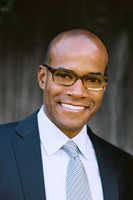 |
| Darby English |
WILLIAMSTOWN, Mass. — The Sterling and Francine Clark Art Institute has appointed Darby English, associate professor in the Department of Art History at the University of Chicago, to serve as the next Starr Director of the Research and Academic Program.
English will lead the program's international agenda of intellectual events and collaborations and will oversee the Clark's library and its active residential scholars' program, all based on the institute's 140-acre campus.
"Darby English brings a dynamic perspective to the work of the Clark's Research and Academic Program, rooted in his knowledge of the field of art history — both its traditions and its new critical perspectives," said Michael Conforti, director of the Clark. "He will build upon the Clark's extraordinary record of accomplishment achieved during Michael Ann Holly's 14 years as director."
Holly announced plans in June 2012 to conclude her tenure as Starr director in the summer 2013. Holly is widely recognized for her leadership in conceptualizing and pioneering RAP's international series of programs and events. She will remain active in numerous Clark programs and activities in Williamstown and New York.
"The Clark is both a meeting ground and a forum for exchange and debate," said English. "The Research and Academic Program is fueled by the international scholars who come to Williamstown as Fellows and as participants in its scholarly programs and by its many collaborations with academic programs across the world. I couldn't be more thrilled by this opportunity to enhance the Clark's long-established reputation for intellectual leadership in the field."
English graduated from Williams College in 1996 with a degree in art history and philosophy and earned a doctorate in visual and cultural studies from the University of Rochester (N.Y.) in 2002. He has served on the University of Chicago's faculty since 2003, teaching modern and contemporary art and cultural studies. He served as the assistant director of the Research and Academic Program from 1999 through 2003.
English is the author of "How to See a Work of Art in Total Darkness" (MIT Press, 2007), which has been called a "groundbreaking and lucid book [that] expands the social and intellectual context for recent African-American art." [Maurice Berger, research professor, University of Maryland Center for Art, Design and Visual Culture].
English is also a co-editor of "Kara Walker: Narratives of a Negress" (MIT Press, 2003; republished Rizzoli, 2007). He is currently completing work on a new book, "1971: A Year in the Life of Color," which studies social experiments with modernist art undertaken over a period just prior to that year.
He is the recipient of fellowships, grants, and awards from the Institute for Advanced Study, the National Humanities Center, the National Endowment for the Humanities, the Andy Warhol Foundation for the Visual Arts/Creative Capital Foundation, the Getty Research Institute, and the College Art Association, among others. In 2010, English received Chicago's Llewellyn John and Harriet Manchester Quantrell Award for Excellence in Undergraduate Teaching, the nation's oldest such prize.
A seven-member search committee, led by Charles W. "Mark" Haxthausen, the Robert Sterling Clark Professor of Art History at Williams College, oversaw the international search that resulted in English's selection.
"We had an extraordinarily strong pool of highly qualified candidates for the Starr Directorship," Haxthausen said, "which underscores the respect and appreciation the scholarly community holds for RAP's role as a major international forum for the discipline."
The Clark is one of the few institutions in the world with a dual mission as both an art museum and an independent center for research and higher education in the visual arts. The Research and Academic Program is internationally recognized as one of the leading centers for research in the visual arts and has established collaborations with partner institutions including the Getty Research Institute; the Institut National d’Histoire de l’Art (France); Institute of Art History of the Estonian Academy of Arts; Power Institute at the University of Sydney; University of the Philippines Diliman; Asia Art Archive (Hong Kong); Asian Civilizations Museum (Singapore); and the University of Witwatersrand (South Africa), among others.
Tags: Clark Art,