A Tree Stays in Williamstown
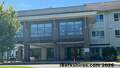
 The landscape design was modified to save a favorite tree behind the Manton Research Center. The landscape design was modified to save a favorite tree behind the Manton Research Center. |
WILLIAMSTOWN, Mass. — The parking lot is gone. The tree remains.
Visitors to the Clark Art Institute this summer will notice more changes than ever as the South Street museum continues the transformation of its campus.
One big change: no more parking behind the Manton Research Center.
Instead, the area between the red-brick Manton and the new Visitor, Exhibition and Conference Center is undergoing a transformation that will include a 1.5-acre tiered reflecting pool and new green space.
And, thanks to one Clark employee, it also will include a small patch of old green space.
"Michael Ann Holly, the director of our research and academic program, has an office that overlooks that tree," Clark spokeswoman Vicki Saltzman said Monday in explaining the lone tree that sits untouched amid all the construction work. "This tree has been her friend for many years."
When the Clark's massive construction and renovation project turned to the removal of trees that once lined the former parking lot, Holly took action.
"She called (Clark Director) Michael Conforti and said, 'We can't let them take that tree,' " Saltzman said.
The heavy equipment was silenced while museum officials made hurried calls to the landscape architects directing that phase of the project. Eventually, it was determined that the project — which will include new plantings when finished — could be modified to accommodate the existing specimen.
"Literally, she saved the tree," Saltzman said. "It's Michael Ann's tree now."
Visitors won't get anywhere near the tree this summer.
And many of them will not be parking anywhere near the Manton, where the Clark's featured exhibition, "Winslow Homer: Making Art, Making History," opened this week.
Although two small parking lots on the southeast side of the Manton (including a handicapped lot right outside the door) remain intact, the main visitors lot has been moved to the north side of the new center.
Come next July, when the Tadao Ando-designed visitors center is scheduled to open, museum patrons will enter through the new addition en route to the refurbished 1955 neoclassical main building.
This summer, neither the visitors center nor the "white building" will be open to the public, but the Clark has a solution to ease visitors' trips from the parking lot to the Manton: golf carts.
Saltzman explained that the courtesy vehicles will be zipping around the campus all summer to shuttle patrons between the galleries and either the new visitors' lot or the slightly older lot up at the Stone Hill Center, which also is linked to the main campus by a footpath through the woods.
During a press event for the opening of the Clark's Homer and George Inness exhibits, Saltzman and senior curator Richard Rand offered some details about the "Clark Next" that will be the focus of summer 2014.
► Although most of the work on the 1955 building is refurbishment that will not be readily apparent to visitors, art lovers will benefit from expanded gallery space created by the relocation of office and kitchen facilities that previously ate up real estate in the white building. And the Homer and Inness shows are a precursor for how that space will be used; the plan is to include permanent exhibition space for the Clark's collection of American art, including the new Inness paintings donated by the Martucci family and on view this summer.
► The "white building" will have one new addition, a glass enclosure designed by Ando to usher visitors into the new entrance at the rear of the building.
► Sixty-five percent of the work on the VECC has been completed, and Clark personnel are starting to get a sense of how the spaces are going to look, Saltzman said.
 Books, books and more books were moved out of the Manton library to make way for its refurbishment. Books, books and more books were moved out of the Manton library to make way for its refurbishment. |
► This week, the museum was moving 250,000 volumes out of the Manton's library to prepare for refurbishment of the building. The research center closed on June 1 with plans to reopen by Sept. 1.
► Although the Clark is still deciding how best to use the upstairs gallery space in the Manton, the research building still will include public space. The downstairs auditorium will remain in tact; though it will be spruced up a little, according to Saltzman. And the dining space across the hall from the auditorium will be utilized as exhibition space for works on paper.
Between the 1955 building, the special exhibition space at the VECC, the Manton and the Stone Hill Center, which opened in 2008, the Clark hopes to finally have enough exhibition space to meet its growing demand.
"It's very well used and very well loved by the community, and as the collection grows, we're slowly running out of room," Clark Curator of Prints, Drawings and Photographs Jay Clarke says in a promotional video explaining the expansion.
In the same video, Conforti explains that the Pritzker Prize-winning Ando was selected to helm the project because he had the right touch to blend the "discordant" styles of the 1955 building and the Manton. Ando also employed his experience in blending architecuture to fit the surrounding environment.
"It enhances the notion that the Clark is a great thing that just happens to be there," Conforti says in the film.
While work continues on the Clark campus, many of the museum's best known impressionist works continue their world tour. Saltzman reported Monday that the recently closed show in Tokyo welcomed more than 215,000 visitors in 90 days.
On Friday, the Clark's "road show" opened in Kobe, Japan.
"It was the first chance for us to see our paintings in an Ando space, and they looked spectacular," Saltzman said. "It's very exciting for us."
Tags: building project, Clark Art, renovation,