EMS: Courage And Compassion In Action
By Shawn GodfreyPrint Story | Email Story
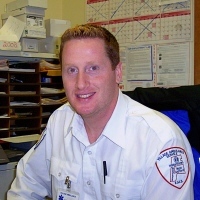
Shawn Godfrey is a certified paramedic and the Village Ambulance Service operations manager.
The Pen Is Mightier Than The Needle Welcome to "EMS:Courage and Compassion In Action," a weekly column written by Village Ambulance Services Operations Manager and paramedic Shawn Godfrey. Godfrey's columns will appear on Monday and will focus on the reality of the emergency services medical profession. Paramedics will often use medical information provided at the scene to help determine the patient’s acute illness and overall pre-hospital treatment plan. But what if the patient is unconscious or simply unable to convey this vital information? Furthermore, if a specific condition is determined, the paramedics are faced with not knowing the safest or, in some cases, most ethical treatment regimen to follow, such what the patient’s wishes are regarding medical care when they die. There may be unknown medication allergies. In brief, we often use information to talk for our patients when they are unable to talk for themselves. Here is a scenario to help further delineate this point: Emergency Care Without Delay The ambulance is dispatched for a “woman fallen; no further information obtained.” After arriving at the scene, the paramedics find the victim laying facedown on the sidewalk, unconscious but alive, with only a small laceration discovered on her forehead. Her skin is pallor and profusely sweating, and a rapid twitch is noted to her left eyelid. There are no friends or family at the scene to provide the patient’s medical information, and the only piece of data collected is from a passerby who states he merely saw the woman fall. After gently repositioning the woman on her back, opening her airway, and confirming an adequate breathing and pulse rate, the paramedics provide supplemental oxygen and begin searching for signs and symptoms that could explain the reason for the fall and subsequent unconsciousness. While conducting the physical assessment component of the woman, the paramedics discover a medical alert bracelet with Insulin Dependant Diabetic engraved on its underside. In her handbag, they also find a detailed list of prescribed medications, including the doses, compliance schedules, and refill dates. After establishing intravenous access and moving her to a long backboard for precautionary spinal immobilization, the patient is transferred into the back of the ambulance. En route to the emergency department, the woman is given the standard treatment for unresponsiveness. The paramedics immediately test the woman’s blood glucose level (BGL) by injecting a small droplet of her blood into a hand-held electronic meter, known as a glucometer. After sixty-seconds, the BGL level reveals: 20 (a blood sugar of 60 in a non-fasting state is low for many people) which, if left untreated, can lead to permanent brain injury. The paramedics immediately administer an intravenous form of sugar (treatment for low blood glucose level requires a fast acting sugar given by mouth, or for severe reactions, like this one, it is given in an intravenous form) and closely monitor the patient for positive changes. During transport, the patient’s condition begins to improve, and by the time the ambulance arrives at the emergency department, the patient’s BGL is 118 (a blood sugar between 80 and 120 in a fasting state is considered normal), her vital signs are stable, and she fully regains consciousness, answering questions appropriately with no cerebral deficiencies evident. Because vital patient information, like the medical alert bracelet, implied a history of diabetes, the paramedics were immediately prompted to test the woman’s blood glucose level (BGL) and treat the condition without delay. Helping EMTs Help You Although the extent of medical information may vary from person to person, everyone should carry a few basic items of information. Although it may not seem significant, medical information of even the smallest detail can prove life saving. Here are a few ideas you and your family may find useful: Medical/Surgical History: A single sheet of paper listing your current and past medical/surgical conditions. This can easily be carried in a purse or wallet and should be kept with you at all times. Keep it brief, but concise. Prescribed Medications: Carry a comprehensive list of your prescribed medications. Be sure to include how often you take the medication and the dosage. Many medications, like blood thinners, blood pressure pills, diuretics, and antiepileptic medicines can determine how you are cared for during an emergency. Medication Allergies: Like prescribed medications, a detailed list of all medication allergies is equally important. Some people experience life-threatening allergies to commonly used medications, so it is crucial for health care providers to know this information before treating you. Be sure the list specifically distinguishes between medications taken and medication allergies. For example, delineate the allergy list using a different colored pen or font. Telephone Numbers: It is important to list not only family members in case of emergencies, but also any other health care providers you consult with. These contacts may provide valuable and helpful information during an emergency. Children’s Information: Parents should carry copies of their children’s medical information; however, if a child is older and is engaged in independent activities, he or she is encouraged to carry their own medical records and contact phone numbers. The list should also include a record of their childhood immunizations, weight and height, and, if applicable, vitamin and mineral use. Emergency medical treatment often involves difficult and expensive procedures, requiring immediate decision making between the clinicians, family members, and/or guardians. Updating and keeping your own medical information is one of many ways you can actively participate in your care and ensure that you are given efficient, effective, and safe treatment, not only in the emergency setting, but during routine medical visits as well.
If you would like to contribute information on this article, contact us at info@iberkshires.com.

Former Harry's Supermarket Under Construction for Restaurant

By Brittany PolitoiBerkshires Staff

PITTSFIELD, Mass. — Construction is underway to transform the former Harry's Supermarket into a restaurant

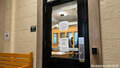
Late last month, the Conservation Commission greenlit some tree pruning on the property. New windows and a new door can be seen in the front of the building. 

"It's a substantial renovation that's currently underway here," Brent White of White Engineering said, speaking on behalf of the applicant and owner, Huajie Zhu. 

A fire gutted the longtime Wahconah Street supermarket in 2023, and the following year, Zhu purchased the property for $460,000 two years ago to build a restaurant with hibachi in the existing footprint of the more than 100-year-old building. 

White explained that the project has been ongoing for over a year, and the Community Development Board granted the property a waiver to reduce the minimum required number of parking spaces so that additional spaces aren't needed.  

He noted that, looking at the site plan, there is very little room to do so. A mirror will be installed near the sharp turn on Bel Air Avenue to alleviate traffic concerns. 

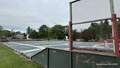
Pruning will be done on trees in the southeast corner of the existing paved parking lot, as a number of branches are hanging over. The new owners also intend to patch, sealcoat, and re-stripe the parking lot. 

A fire tore through the building less than an hour after the supermarket closed for the day three years ago. An automatic sprinkler system is required for the new use. 

View Full Story

More Regional Stories