EMS: Courage And Compassion In Action

By Shawn GodfreyPrint Story | Email Story
Shawn Godfrey is a certifed paramedic and the operations manager of the Village Ambulance Service in Williamstown, Mass..
My Opinion? Headstrong Williamstown - There is an old adage, “Beauty is in the eye of the beholder.” In my opinion, this axiom can also apply to the implementation and enforcement of a law: “The validity and sensibility of a law is in the eye of the beholder.” What is a reasonable and necessary law to one individual may be an unreasonable and unnecessary restriction to another. Take for example the law surrounding mandatory motorcycle helmet use. The opinions and arguments are as varied and controversial as the many types and styles of helmets available on the market. Many motorcyclists and researchers differ in their views of the usefulness of head protection. Some believe it protects the riders from injury, while others believe wearing a helmet may actually increase the risk of injury. Several documented internet studies report that most motorcycle-related fatalities are caused by critical head trauma, while other research concludes that at least two-thirds of all motorcycle-related fatalities are caused by severe chest and abdominal trauma, diminishing and, perhaps, negating the helmet controversy altogether. A Brief History Of Helmet Law Let me start by saying, I always wear a helmet while riding my motorcycle and I strongly advocate the use of a helmet for all motorcyclists. However, despite the overwhelming data to support the life-saving benefits of wearing a helmet, I do believe it is unconstitutional for the Commonwealth of Massachusetts to impose a mandatory law that all motorcyclists wear a helmet. In 1966, the U.S. federal government claimed it would eradicate funding from any State that did not implement a mandatory helmet law. By 1976, 47 States had complied with this federal government directive. However, in 1976 the government repealed the law, ruling it unconstitutional. Most states softened their helmet law, although Massachusetts continues to recognize and enforce the law. Part of this law reads: "Every person operating a motorcycle or riding as a passenger on a motorcycle or in a sidecar attached to a motorcycle shall wear protective head gear conforming with such minimum standards of construction and performance as the registrar may prescribe, and no person operating a motorcycle shall permit any other person to ride as a passenger on such motorcycle or in a sidecar attached to such motorcycle unless such passenger is wearing such protective head gear..." Helmets Have Their Place: On Your Head From an emergency medical provider’s standpoint, I firmly believe helmets work in reducing motorcycle-related injuries and fatalities. This has been proven several times, not only through what I have witnessed clinically, but through state fatality data that illustrated the comparison of deaths and injuries before and after helmet laws were enacted. The most accurate reflection of a state’s helmet law is through the comparison of that state’s motorcycle crash-related fatalities before and after enactment or repeal a helmet law for all riders, including passengers. With all laws, you either obey them or pay a penalty. If you do not agree with a specific law, you can either lobby to have it amended or changed, or relocate somewhere where the laws are more amenable to you. Serena Speaks:"My Helmet Saved My Brain" Here is one motorcyclist’s account to help demonstrate my point regarding the importance of helmet use: "Two months into riding...dolled up, excited, my dream to ride with people like me, went on the group charity run. One mile out and CRASH! Unbelievable, hurt bad, ambulance, bike damaged, embarrassed, angry, tears, alive . . . grateful. Waiting for repaired bike, going to get right back on, dreams don't die. I had new knowledge; was afraid; excited; humbled; in need of more experience." "I have a fractured collar bone, fractured nose, bruised ribs, and bruises all over. My leather jacket & jeans saved my skin, my boots saved my feet, my gloves saved my hands, and my helmet saved my brain. I did not have a full face helmet and that's where I was cut and needed stitches, and the road rash on my right side of my face was very bad. I will wear a full face helmet from now on. I will mend, the bike is being fixed and I am very lucky and thankful to be alive." "I am back to work, though I am still quite sore. I am 51 years old, so I think this is craziness in my "normal mind." Why would someone want to take these risks? In my "crazy mind" I say 'let’s get back on and live life the way I want to!'" "The crash was more mental to me, because it was "just one more bad thing" that went wrong in my life. But that's life. I've rearranged my thoughts, looked at the good that came from this and I'm ready to fly once again." Use Your Head As More Than A Helmet-Holder When purchasing a motorcycle helmet be sure that it has been certified by the Federal Department of Transportation (D.O.T). All certified helmets should display a tag, usually found on the padded inner lining, or a sticker, usually found on the back outer-shell, indicating endorsement by the D.O.T.. Unfortunately, the D.O.T. certification standards are rather dated (many are based on 1972 standards), so the responsibility rests on the helmet manufacturer to ensure their helmets meet D.O.T specifications. The D.O.T does not independently conduct safety testing of helmets. Another reputable safety organization is the Snell Memorial Foundation. This foundation provides a rigorous set of helmet testing criteria, and is widely considered "the standard" in helmet safety technology. Unlike the D.O.T, Snell offers its testing and certification services to helmet manufacturers in exchange for testing and licensing fees. Fit And The Field Of Vision You cannot select a helmet based solely on its color or the material it's made from. There are many things that need to be considered before purchasing a helmet. Believe it or not, choosing a helmet color is more important than one might think. Bright colors are far more noticeable and stand out better, even at night, while dull or dark colors are not as easily visible, even during daylight hours. Consider a brightly-colored helmet that allows for easier detection by motorists and pedestrians. The shape of the helmet is another often overlooked safety factor. People come in a variety of shapes and sizes, including their heads. While some people have long, thin heads, others have round or oval-shaped heads. Trying on a helmet for a proper fit is the only true indicator that it fits your head correctly and comfortably. The weight of the helmet should be evenly distributed so that the head and neck can easily support the helmet. Do not purchase a helmet that is too heavy or may easily fatigue the neck and shoulder muscles. In terms of on-the-road driving safety, the number one factor to consider when purchasing a motorcycle helmet is your peripheral vision. Because of their size and/or construction, many helmets simply do not enable a motorcyclist to adequately use their peripheral field of vision. Having a greater degree of peripheral visibility allows for quicker reaction time and maneuverability out of potentially dangerous situations. Select a helmet that provides the most visibility possible. The most common mistake a motorcyclist can make is purchasing a helmet based solely on its “look” or “brand name.” All safety and comfort decisions should be made using a collective process. Spend some time researching a helmet and you are bound to find a product you will not only be happy with, but safe with for years to come. Please, Do Your Own Homework Please note that I am not a motorcycle helmet or motorcycle safety expert. I am a non-professional rider with approximately 15 years experience. This column contains many statements which are based on my opinions and not meant to be viewed as fact. According to significant data, helmets, when worn appropriately, are vital pieces of safety equipment which can increase your chance of surviving a crash. You should be well-informed in selecting and employing the use of a motorcycle helmet, and should not use this column as your sole source of information.
If you would like to contribute information on this article, contact us at info@iberkshires.com.

Williamstown Board Opts to Negotiate with College on Water St. Lot

By Stephen DravisiBerkshires Staff

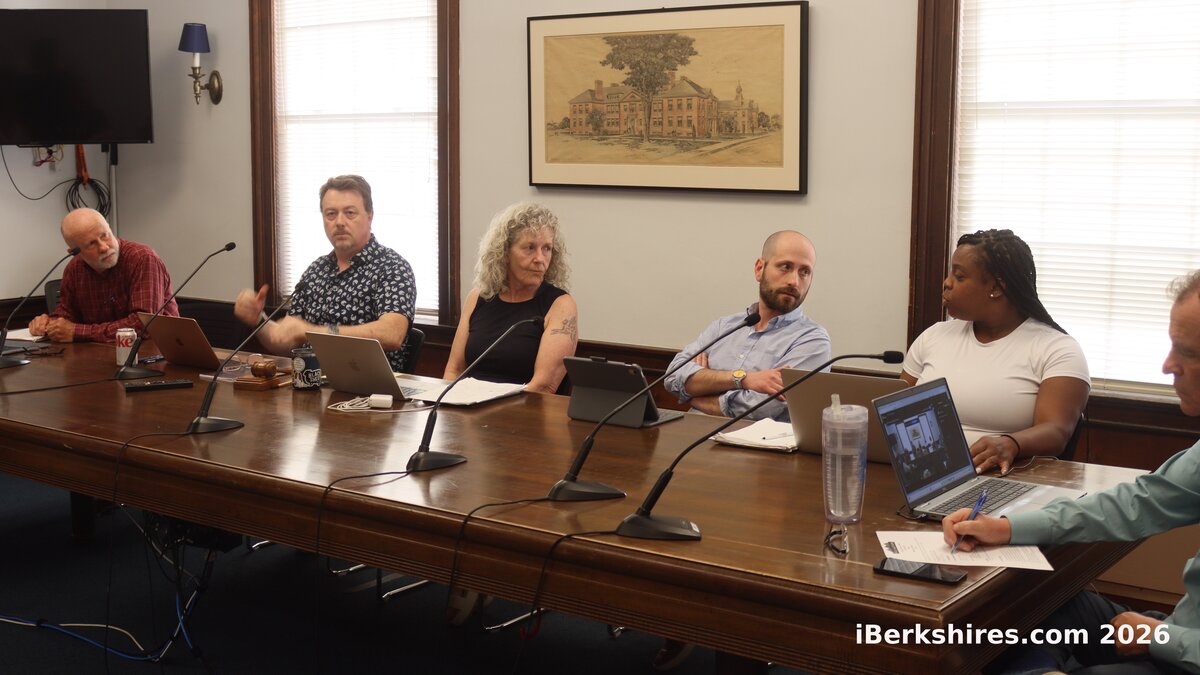
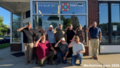
Newly elected board member Nate Budington, far left, participates in his first in-person meeting along with, from left, Matt Neely, Stephanie Boyd, Peter Beck, Shana Dixon and Town Manager Robert Menicocci.
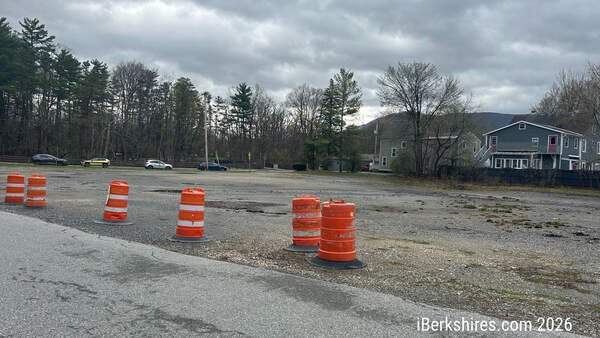
WILLIAMSTOWN, Mass. — The Select Board on Monday decided to enter into negotiations with Williams College on the sale of the vacant town-owned lot at 59 Water St.
 
But the board members made it clear that the college's proposal to acquire the lot is a starting point, not a final deal that the elected officials would accept.
 
"For the sake of continued conversation, I'm in favor of [awarding Williams the site], but if this process wasn't continued with the opportunity for further negotiation, I wouldn't vote to continue this," Peter Beck said. "I think that next step is necessary for us to get to a yes on this."
 
"I think there's wide agreement on that," Matthew Neely said just before the 5-0 vote to enter talks with the college.
 
Williams was the sole respondent to a town-issued request for proposals to develop the former town garage site, currently a dirt lot.
 
The college's stated intent is to build a new Facilities office and create up to 170 parking spaces at 59 Water Street. That use will allow the college to redevelop the current Facilities building site and parking lot as part of a reconception of the school's indoor athletic and recreation facilities.
 
Under the terms of the RFP, the college's proposal was subjected to review by an ad hoc advisory committee to the town manager, who brought the question to the Select Board. That board will have the final say on any purchase and sales agreement.
 
View Full Story

More Williamstown Stories