EMS: Courage and Compassion in Action
By Shawn GodfreyPrint Story | Email Story
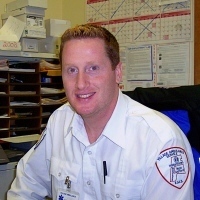
Shawn Godfrey is a certified paramedic and the operations manager for the Village Ambulance Service Inc., Williamstown.
Things That Make You Go 'Boom' By far, the most important patriotic holiday listed on the American calendar is the 4th of July. Defining American pride and glory, the 4th of July celebrates the most significant period in America’s history. It is the Independence Day of America - the day when true democracy was born. To help commemorate the holiday, magnificent firework displays are held all over the country. Each year, thousands of spectators flock to witness these brilliant expressions of patriotism, whether at a large supervised venue or at a backyard barbecue. Fireworks are one of the oldest and most beautiful ways of celebrating our country’s birthday. Historically, 4th of July fireworks were primarily manufactured to detonate in patriotic shades, exploding in the colors of red, white, and blue. Nowadays, every conceivable color, including orange, green, yellow, and purple are used in the production of fireworks. Although fireworks can be a colorful and exciting way to celebrate the holiday, and no matter how big or small the display, safety measures to prevent firework-related injuries MUST be followed at all times. The Consumer Products Safety Commission Offers These Real Life Reports to Help Delineate the Importance of Fireworks Safety: •A 5-month-old male was struck in the forehead by an aerial shell that was launched sideways. •The brother of an 11-year-old male victim lit a fountain firework that ignited other fountain fireworks. One went into the victim's tennis shoe resulting in burns to his foot. •A 12-year-old male victim struck in the eye by a rocket that had been launched by one of his friends, resulting in eye surgery. •A 4-year-old female was hit in the face by an aerial shell that tipped over and traveled horizontally instead of going into the air, seriously burning her face. •A 4-year-old male victim's father was lighting multiple aerial shell type devices. When one tipped over, it broke into pieces and then exploded. One piece hit the victim on his thigh, resulting in first degree burns. •A 14-year-old male victim was holding a bottle rocket in each hand. When he lit the rocket in his right hand, the other rocket also ignited, giving him third degree burns on his hand. •An 8-year-old male picked up a ground popper that had been thrown on the ground. It then exploded, lodging particles in his eye. •A 12-year-old male found a fountain type firework in the woods. He lit it and it exploded, immediately causing first degree burns to his face. •A 5-year-old male was injured while watching fireworks launched by his neighbor. Some debris from the fireworks got in his eye. •When people were lighting fountain type fireworks, a spark flew about 25 yards into another box of fireworks. The box exploded, showering sparks on the 5-year-old male victim and causing burns to his arm and chest. •When somebody threw a ground popper on a sawdust-covered floor, the explosion threw up some sawdust which got into the 7-year-old female victim's eye. •A 6-year-old male victim was trying to break open a firecracker. The device exploded when he hit it with a rock, resulting in burns to both arms. •A 12-year-old male victim and a friend unwrapped an aerial shell type firework. They emptied the powder on the ground. Then they lit the powder, which flashed and burned the victim's face. •An 11-year-old victim and his friends put drain cleaner in a plastic bottle, then put a small firecracker on top of the bottle. The victim then lit the firecracker, which exploded, burning his fingers. The Consumer Products Safety Commission (CPSC) Offers These Guidelines for Fireworks Safety: •Never allow children to play with fireworks •Read and follow all warnings and instructions •Be sure other people are out of range before lighting fireworks. •Only light fireworks on a smooth, flat surface away from flammable materials. •Never try to relight fireworks that have not fully functioned. •Keep a bucket of water in case of a malfunction or fire. Applying the CPSC Guidelines for Fireworks Safety Here's How: •Line up the home fireworks display with a viewing area on one side only. Don't watch from all sides; it's too hard to keep an eye on all participants if the display is surrounded. •Keep the fireworks sitting on a hard flat surface with nothing flammable in close proximity. Dry leaves and foliage are especially dangerous. •Look at the plants and grass - if it's yellow and dead, that is not a good place to be setting off fireworks. Concrete or a well-watered, green lawn is the best. Using lawn will keep burn marks off the concrete. •Keep a bucket handy. Fill it about 2/3 full with water and use to soak used fireworks and duds. •Keep a hose with a shut-off nozzle nearby. The water should be on and the hose should be ready to instantly douse any wayward fires. •To make a flat surface on lawn, place a wide piece of lumber across the grass. Soak the lumber with water before placing the fireworks. •Place the fireworks about 6 inches apart along the board in the order they will be lit. •Only one person should light the display. That person should not be drinking alcohol before or during the show and should be at least 14 years old. •Only light one firework at a time. •If a firework doesn't light, or doesn't work after the fuse burns all the way down, it's called a dud. Wait at least 20 minutes after lighting the fuse and then place the dud into the bucket of water. •Wait until each firework is finished before lighting the next. •Sparklers should only be handled by kids older than 12. •Make sure that people with lit sparklers stay at least 10 feet apart. •Put all used sparklers in the water bucket. •After all the fireworks have been lit and all used fireworks and duds have soaked for at least 10 minutes, discard the fireworks in an outside trashcan. •In case of burns during the use of fireworks, follow first-aid instructions for how to treat burns. Tips •Never smoke around fireworks! •Do not light fireworks on windy days. •Wear cotton clothing to light fireworks. Synthetic fibers tend to melt onto skin, while cotton does not burn easily. •Use a long-tipped lighter for lighting fireworks to keep hands and faces away from fuses. What You Need •Five gallon bucket filled 2/3 full with water •Concrete or well-watered lawn at least 15 feet by 10 feet •Five feet or longer piece of lumber at least six inches wide •Viewing area at least 15 feet from the display •Garden hose with shut-off nozzle •Legal fireworks Although the CPSC offers valuable fireworks safety tips when using fireworks, like providing adult supervision, keeping a bucket of water nearby, and observing local laws, etc., the American Academy of Pediatrics offers much better advice: …children and their families should be [persuaded] to attend public fireworks displays rather than purchase fireworks for home use… So, skip buying the bottle rockets and sparklers this year and, instead, take your family to see a public fireworks display.
If you would like to contribute information on this article, contact us at info@iberkshires.com.

Williamstown Board Opts to Negotiate with College on Water St. Lot

By Stephen DravisiBerkshires Staff

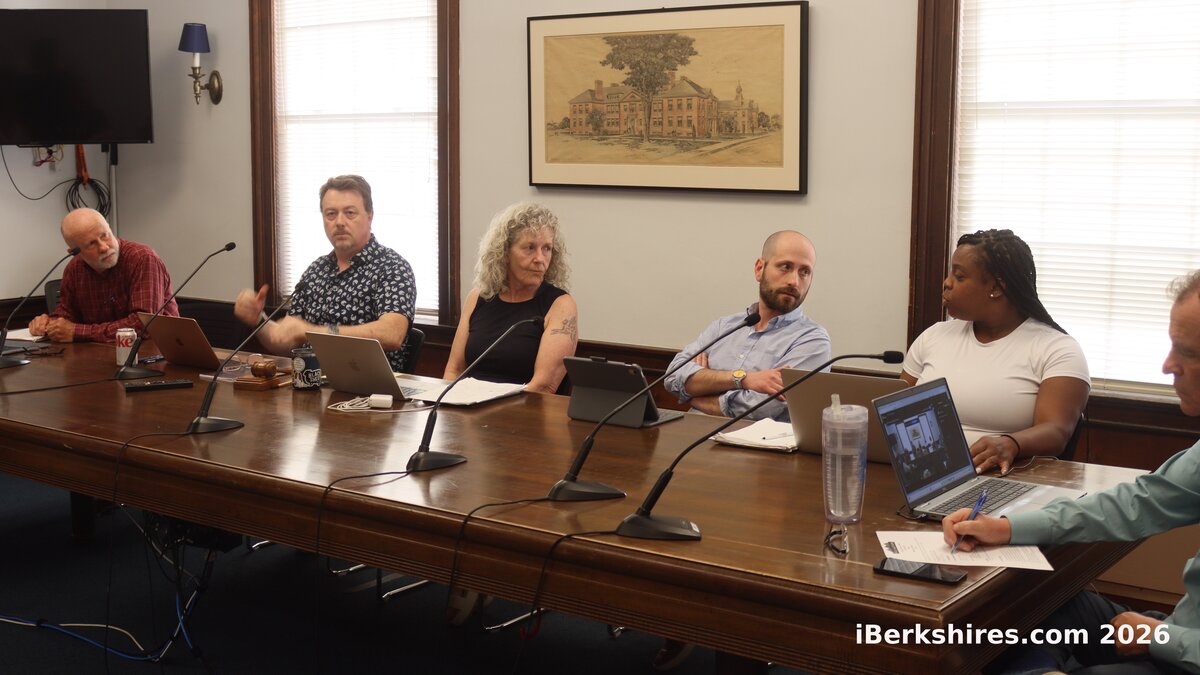
Newly elected board member Nate Budington, far left, participates in his first in-person meeting along with, from left, Matt Neely, Stephanie Boyd, Peter Beck, Shana Dixon and Town Manager Robert Menicocci.
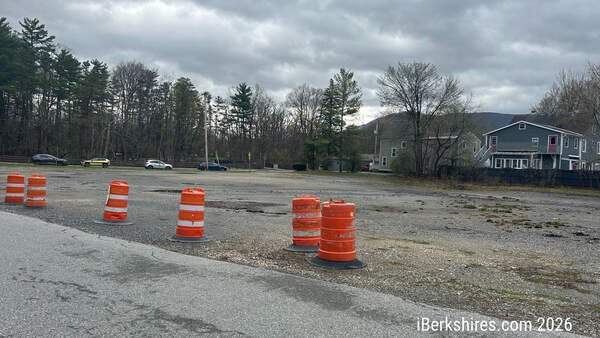
WILLIAMSTOWN, Mass. — The Select Board on Monday decided to enter into negotiations with Williams College on the sale of the vacant town-owned lot at 59 Water St.
 
But the board members made it clear that the college's proposal to acquire the lot is a starting point, not a final deal that the elected officials would accept.
 
"For the sake of continued conversation, I'm in favor of [awarding Williams the site], but if this process wasn't continued with the opportunity for further negotiation, I wouldn't vote to continue this," Peter Beck said. "I think that next step is necessary for us to get to a yes on this."
 
"I think there's wide agreement on that," Matthew Neely said just before the 5-0 vote to enter talks with the college.
 
Williams was the sole respondent to a town-issued request for proposals to develop the former town garage site, currently a dirt lot.
 
The college's stated intent is to build a new Facilities office and create up to 170 parking spaces at 59 Water Street. That use will allow the college to redevelop the current Facilities building site and parking lot as part of a reconception of the school's indoor athletic and recreation facilities.
 
Under the terms of the RFP, the college's proposal was subjected to review by an ad hoc advisory committee to the town manager, who brought the question to the Select Board. That board will have the final say on any purchase and sales agreement.
 
View Full Story

More Williamstown Stories