EMS: Courage and Compassion in Action
By Shawn GodfreyPrint Story | Email Story
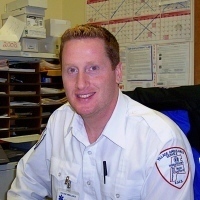
Shawn Godfrey is a certified paramedic and the operations manager for the Village Ambulance Service Inc. in Williamstown.
Military Medics: Saving Our Saviors The military medic shares a responsibility for emergency care similar to civilian emergency medical service (EMS) providers. However, the military medic is not only responsible for saving the lives of our troops through basic medical care, but also for the acute care rendered in military hospitals as well. This practice is well-established and has been the springboard for many of today’s civilian EMS expanded-scope programs. Expanded-scope EMS care is when the emergency medical technician (EMT) or paramedic practices in a nontraditional role, like working in the emergency department as an employee of the hospital, rather than in the back of an ambulance. This is a topic of growing interest in civilian EMS forums and often focuses on new and innovative approaches for providing assistance to underserved areas and personnel for understaffed medical institutions. The modern-day military medic combines conventional soldiering tactics with state-of-the-art medical knowledge and skills. All three major uniformed services utilize medics: Army Medical Specialists, Air Force Medical Technicians and Navy Hospital Corpsman. The training and function within each branch is similar. For the sake of brevity, this column will focus on the largest and most recognizable group, the Army medics. Roles and Responsibilities All Army medics are enlisted soldiers who begin their medical training at the U.S. Army Medical Department Center and School (AMEDDC&S) at Fort Sam Houston, Texas. Most of the 10-week training program is devoted to learning skills similar to their civilian EMS counterparts. However, beyond the basic emergency medical skills, including oxygen administration, spinal immobilization, and bleeding control, military medics also receive training in intravenous (IV) line insertion and fluid resuscitation. For the civilian EMT to acquire IV certification, and depending on where they practice, a 40 to 80 hour supplemental training program, in addition to their initial EMT training, is required. In contrast to civilian EMS providers that are limited to emergency care in their scope of practice, military medics possess additional skills because of the nature of the military environment. Military medics are frequently assigned to first-aid stations and hospitals where they assume some basic nursing functions. In addition, under the supervision of nursing officers, military medics work in all areas of the military hospital, including the emergency department, medical and surgical wards, operating and surgical areas, and in outpatient clinics. Typical skills utilized in these settings include triage (determining how severe a patient’s illness or injury is) of ambulatory patients, initiating and maintaining IV lines, recording vital signs, electrocardiograms, wound care, splinting, and immunizations. Historically, and quite surprisingly, the largest cause of casualties in war is not the enemy, but rather diseases and non-battle injuries. To contend with this, the military medic is trained in basic preventive medicine and immunizations. Finally, the military medic receives extensive training in conducting operations and in caring for casualties in an environment contaminated by nuclear, biological, and/or chemical weapons. This skill is directly related to hazardous materials (haz-mat) operations like those taught in the civilian haz-mat practicum. Scope of Practice Besides emergency care, basic nursing, and preventive medicine, the military medic plays an important role in providing limited ambulatory care. Typically, the military medic will see ambulatory patients in a clinical setting (peacetime) or at a frontline aid station (on the battlefield). Usually, the care is restricted to active duty service members and civilians are not authorized for care in these settings. Ideally, the degree of supervision is an on-site physician or physician assistant (PA). The military medic works with one of these professionals to render care efficiently and effectively. There are circumstances where the physician or PA is not immediately present. Examples include night and weekend hours and field conditions. In these situations, the medic will screen the patient for serious medical problems and perhaps initiate therapy for minor symptoms. Any patient with a suspected serious problem is immediately referred for further care. All other patients are instructed to return within 24 to 48 hours to consult with a physician. To assist the military medic in accurately screening or identifying patients with serious problems, a comprehensive algorithm is applied. Most major chief complaints, like chest pain or shortness of breath, are included. A brief history, vital signs, and physical examination are required to obtain the data necessary to run the algorithm. By “plugging in” the required information, the military medic can decide if a physician or PA referral is immediately needed or can safely be delayed. Similar algorithms are used by civilian EMS providers to determine a specific treatment protocol; however, the final treatment decision often results in either a “rapid” or “delayed” transport determination rather than establishing the need for an on-site physician or PA. The other expanded skills the military medic is authorized to perform depend on the available supervision. Military medics can dispense nonprescription drugs for a variety of minor symptoms, such as cough and sore throat. They may also provide routine treatment for minor wounds or blisters (not requiring suturing) and remove sutures without a physician or PA present. More advanced skills, such as suturing, aggressive wound care, and plaster splints and casts, require supervision. In a typical scenario, a soldier might present to an aid station complaining of a cough. The military medic would elicit a basic history and measure the patient's vital signs, including temperature. If shortness of breath and fever were all absent, the military medic would recommend avoidance of smoking and prescribe throat lozenges and cough syrup. If the soldier failed to improve or worsened, follow-up is readily available. For the same patient, in the civilian EMS setting, the medic would elicit a basic history, measure the patient’s vital signs and simply treat any life-threatening symptoms during patient transportation to the emergency department. The civilian medic would not administer over-the-counter medication, such as cough syrup and lozenges. Reasons for Success The success of the military medic expanded-scope of practice is related to several factors. Most important is the young, healthy, active duty personnel that make up the volume. These individuals are usually in the prime of life, undergo thorough medical screening examinations, and regularly perform rigorous physical activity. The net result is an extremely low probability of underlying serious illness when compared to the general population. Furthermore, should a soldier develop an illness or sustain an injury, the high physiological reserves of healthy soldiers would help prevent rapid de-compensation from developing. Also important is the excellent follow-up available in the military. The broad network of military healthcare facilities assures excellent access to care. Moreover, military personnel have an obligation to comply with medical advice and follow-up, further reducing the possibility of deterioration or exacerbation. The final element of success is the lack of civil liability (for example, malpractice) for military medics. The Feres doctrine prohibits military members from suing the government and other military members. This creates a climate of trust and confidence between healthcare providers and their patients that is free of any malpractice fears. A lack of civil liability does not, however, equate with a lack of provider responsibility. Negligence or dereliction of duty are serious offenses and can result in punishment. Translating the success of military medic expanded-scope practice directly to the civilian community is risky. The unique healthcare environment of the military is not always reproducible in civilian communities. The military experience can, and often does, provide valuable information in implementing a civilian program and offers many strategies and/or ideas for success. Portions of this column were contributed by Captain Delorenzo from the Department of Emergency Medicine, Darnall Army Community Hospital Fort Hood, Texas.
If you would like to contribute information on this article, contact us at info@iberkshires.com.

Former Harry's Supermarket Under Construction for Restaurant

By Brittany PolitoiBerkshires Staff

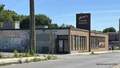
PITTSFIELD, Mass. — Construction is underway to transform the former Harry's Supermarket into a restaurant

Late last month, the Conservation Commission greenlit some tree pruning on the property. New windows and a new door can be seen in the front of the building. 

"It's a substantial renovation that's currently underway here," Brent White of White Engineering said, speaking on behalf of the applicant and owner, Huajie Zhu. 

A fire gutted the longtime Wahconah Street supermarket in 2023, and the following year, Zhu purchased the property for $460,000 two years ago to build a restaurant with hibachi in the existing footprint of the more than 100-year-old building. 

White explained that the project has been ongoing for over a year, and the Community Development Board granted the property a waiver to reduce the minimum required number of parking spaces so that additional spaces aren't needed.  

He noted that, looking at the site plan, there is very little room to do so. A mirror will be installed near the sharp turn on Bel Air Avenue to alleviate traffic concerns. 

Pruning will be done on trees in the southeast corner of the existing paved parking lot, as a number of branches are hanging over. The new owners also intend to patch, sealcoat, and re-stripe the parking lot. 

A fire tore through the building less than an hour after the supermarket closed for the day three years ago. An automatic sprinkler system is required for the new use. 

View Full Story

More Stories