FLORIDA - Thanks to the power of the blogosphere, members of the town's broadband committee, as well as Berkshire Connect Inc., have come under fire this month for perceived shortcomings, including accusations of using flawed technology and squandering state funds.
"There's a lot of misinformation out there and people are getting the wrong idea," said Berkshire Connect's Business Manager Sharon Ferry on Thursday.
Officially launched this month, a beta test to determine the best way to serve rural communities with wireless broadband service is the source of the controversy. At an informational meeting Wednesday night, members of Berkshire Connect and the local broadband committee addressed citizens' concerns, but that didn't stop angry bloggers from pointing fingers.
"It's my understanding that the project is out of grant money, has little coverage and is now (in order to survive) forced to ask the residents of Florida to put up some serious cash per household in order to connect," claims a blogger with the username "Da Snoop" on the blog iTalkback. "At this point I don't place any blame on any member of the Florida Broadband Committee, other than being buffaloed by the supposed experts. The blame has to lie squarely on the shoulders of whoever designed this system and walked away with the [$100,000] that was granted to this group."
According to Ferry, Berkshire Connect Project Manager Maggie Bergin and broadband committee member Kathy Keeser, the project is the victim of a series of "misconceptions" and any hostility would be cleared up with open discussion.
"This is just a small part of a larger project. It is a short-term, not global, solution to a long-term, global problem," said Bergin. "It's a case of a misunderstanding. People think we're an [Internet service provider] and we're not. We don't have an 800 number and we don't have a support service."
The beta test is not intended to provide coverage to all residents of the town. Instead, the project aims to better understand certain technologies that could be used to eventually establish broadband connectivity in rural Massachusetts municipalities. Similar tests - with different technologies - are under way in New Salem and Worthington and Berkshire Connect, in collaboration with Pioneer Valley Connect, hopes to determine the best options at the completion of the test.
In town, the beta test has established a hotspot for access at the Gabriel Abbott Memorial School, where the signal has a one-square mile radius.
Some of the funds for the test were provided by a two-year, $300,000 "Connecting Western Massachusetts" Regional Priority Grant from the John Adams Innovation Institute.
"Another misconception is that we have $300,000 for this project and we've already used it all. Yet another one is that we have $300,000 for three communities, meaning there is $100,000 for each one, but that's not the case either. The $300,000 is for the bigger picture. Beta testing is just one small portion of what we're doing," said Ferry.
Ferry could not state how much exactly was used on the beta testing.
Clearing Up the Problems
Bergin said she hoped to correct the misperceptions of the project in the coming months as more testing goes on in town.
"Dealing with wireless systems in rural areas is engaging in guerrilla warfare," she said. "We just want to know how it's going to work. We're learning, too."
The beta testing program has approximately 27 participants, some of whom must purchase additional equipment for their homes to maximize the signal. Bergin said the cost for that equipment should be less than $100 per household.
"We just want to test wireless technology and see what works. We're addressing those concerns on the ground," Bergin said.
For committee member Keeser, the negative feedback is a result of disappointment.
"There's no promises and some people get disappointed because they tend to think miracles can happen. Everything has to be figured out and there's no one answer to working in rural areas. All I can say is don't give up hope; nowhere is the technology figured out," she said. "When you want something to work, you get frustrated. Just give it time. Anything's better than dial-up."
"The lesson for us is we could've been clearer," said Bergin.
Graphic by Designed to a T
If you would like to contribute information on this article, contact us at info@iberkshires.com.
Your Comments
iBerkshires.com welcomes critical, respectful dialogue. Name-calling, personal attacks, libel, slander or foul language is not allowed. All comments are reviewed before posting and will be deleted or edited as necessary.
I still ask the question what is being tested in Florida that hasn't already been tested a thousand times before. LOS signal through foliage does not work. If anything should have been tested in this environment it should have been WiMAX or Xohm.
I welcome any of those involved to post any misconceptions on my blog (www.italkback.blogspot.com) or start a dialog and lets see just what is being tested (and why) and where the money went.
If I am incorrect, I post my apology there as well.
In my experience, beta tests are for determining the supportability of a product, increasing the scale of a product that is determined to be feasible in a lab setting, or taking an established product and trying it in a new setting or application.
In this case, I feel it's more financially responsible to attempt to adapt an existing technology and try to overcome the inherent shortcomings, especially when considering the budget figures listed.
The skeptics are correct in this situation. 2.4 Ghz on 802.11b+g or WiMax will not work to get through the trees. Physical properties of the wavelength have massive limitations. WiMax in not a do all solution either. WiMax is simply a language that can only slightly enhance the performance of certain frequencies. I have personally test just about every piece of equipment and frequency available. Unfortunately you are wasting money on the beta test you are now undertaking if the focus is 2.4 Ghz. You will need to look at using 900 Mhz or 700 Mhz (licensed) if you are to have any hope of success. I've also use both of these frequencies with success in heavily tree covered areas. Good luck.
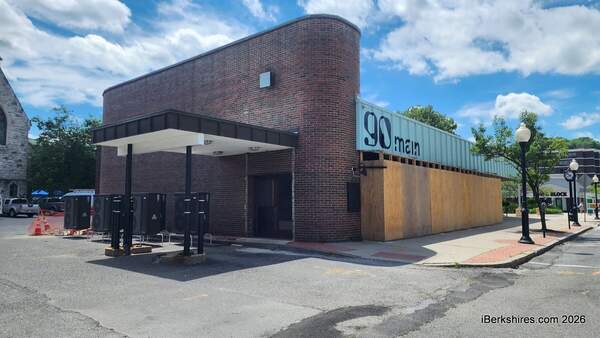
Late last month, the Conservation Commission greenlit some tree pruning on the property. New windows and a new door can be seen in the front of the building.
"It's a substantial renovation that's currently underway here," Brent White of White Engineering said, speaking on behalf of the applicant and owner, Huajie Zhu.
A fire gutted the longtime Wahconah Street supermarket in 2023, and the following year, Zhu purchased the property for $460,000 two years ago to build a restaurant with hibachi in the existing footprint of the more than 100-year-old building.
White explained that the project has been ongoing for over a year, and the Community Development Board granted the property a waiver to reduce the minimum required number of parking spaces so that additional spaces aren't needed.
He noted that, looking at the site plan, there is very little room to do so. A mirror will be installed near the sharp turn on Bel Air Avenue to alleviate traffic concerns.
Pruning will be done on trees in the southeast corner of the existing paved parking lot, as a number of branches are hanging over. The new owners also intend to patch, sealcoat, and re-stripe the parking lot.
A fire tore through the building less than an hour after the supermarket closed for the day three years ago. An automatic sprinkler system is required for the new use.
Cassidy Flynn scattered five hits in a complete-game effort in the circle as Lenox upset top-seeded Hoosac Valley, 3-2, in the quarter-finals of the Division 5 State Tournament. click for more
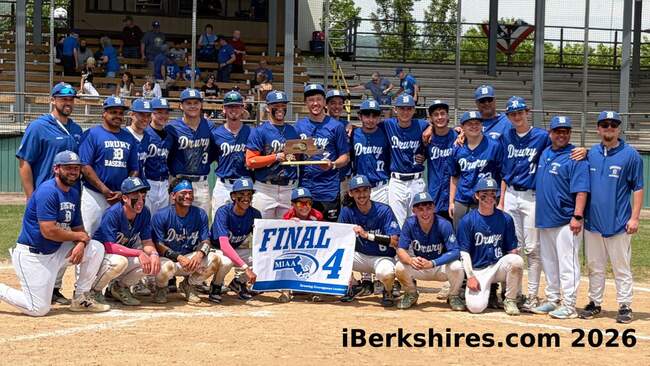
Brayden Durant struck out seven and walked one in a complete-game effort on the mound Saturday to pitch the Drury baseball team to a 6-0 win over Keefe Tech in the quarter-finals of the Division 5 State Tournament at Joe Wolfe Field. click for more