Williamstown School Marks Martin Luther King Day
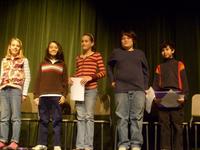 |
| Essayists at Williamstown Elementary. |
The readings included winning works by pupils Miranda Dils and Alex Chung and other fifth- and sixth-graders touching on the slain civil rights leader's vision. Dils and Chung had read their works at the annual Martin Luther King Jr. Dinner the evening before.
The auditorium, filled with children and parents, was decorated with posters and pictures the children made about King.
Dancers from Williams College - Irish step group Inish, South Asian-influenced Bhangra Troupe, contemporary-flavored Dance Company and the Kusika and Ritmo Latino groups together performing dance, song and drumming - entertained the audience with lively, toe-tapping renditions.
<L2>True great leaders try to remake the world for their children, said Principal Steven Johnson.
"Look at so many things Dr. King said, it was hopes for his children, that his children would have a better," said Johnson. "He wanted his children to be measured by the content of their character. ... When a great leader shows up he wants things better for his children."
In her poem "If I Were There," Miranda, a fifth-grader, explained what she would have seen and heard if she'd been in Washington, D.C., when King gave his famous "I Have A Dream" speech.
"I would see him swooping down on the people below sending a message to everyone," she said. "I would hear Martin Luther King Jr. singing a song of equality ... I would believe that someday little black children and little white children could hold hands together."
"I looked segregation up in the dictionary and found two meanings - separated by race and set apart from the rest," said sixth-grader Alex. He said he had seen segregation in some situations. "If kids start to play a game and exclude one it's another form of segregation."
He said segregation had to be left on the "old road of history" and, like the children and adults who stood hand in hand in the past, we today, must stand for freedom.
Other students reading poems and essays were fifth-graders Amy Larabee and Jacob Francis and sixth-graders Stone Stewart, Alex Delano and Sam Klass.
Williams College sophomore Krystal Jillisa Duffus was the guest speaker. She was impressed with the children's knowledge of King and asked how they would define social injustice.<R3>
One child put it succinctly: "It's when people are mean to other people and they don't deserve it."
Perhaps reflecting the town's often liberal stance, another child's example was "we're at war with Iraq and they didn't do anything to us."
Another who spoke about fighting Iraq to get oil evoked a chuckle from Duffus and the comment, "I'm starting to think you all are in college."
She noted that King had taken onresponsibilities at a young age - graduating from high school at 15 and becoming leader of the Montgomery bus boycott at 26.
Many civil rights activists at the time were also young - a 15-year-old was among the first to attend a white Arkansas high school, a 14-year-old marched in Washington.
"You already have the tools to be an activist," said Duffus. "You know the difference between right and wrong and if someone is being treated unfairly."
The children had shown their ability to write "beautiful speeches" and create art. They could sing and dance as well to help people understand when injustice was taking place.
"Spread the word to others so the community can take action," she said. "You can also ask your parents how you can help in the community.
"I know you can see injustices in your community ... treat every day as a day for action."