Trial Takes on New Meaning
 |
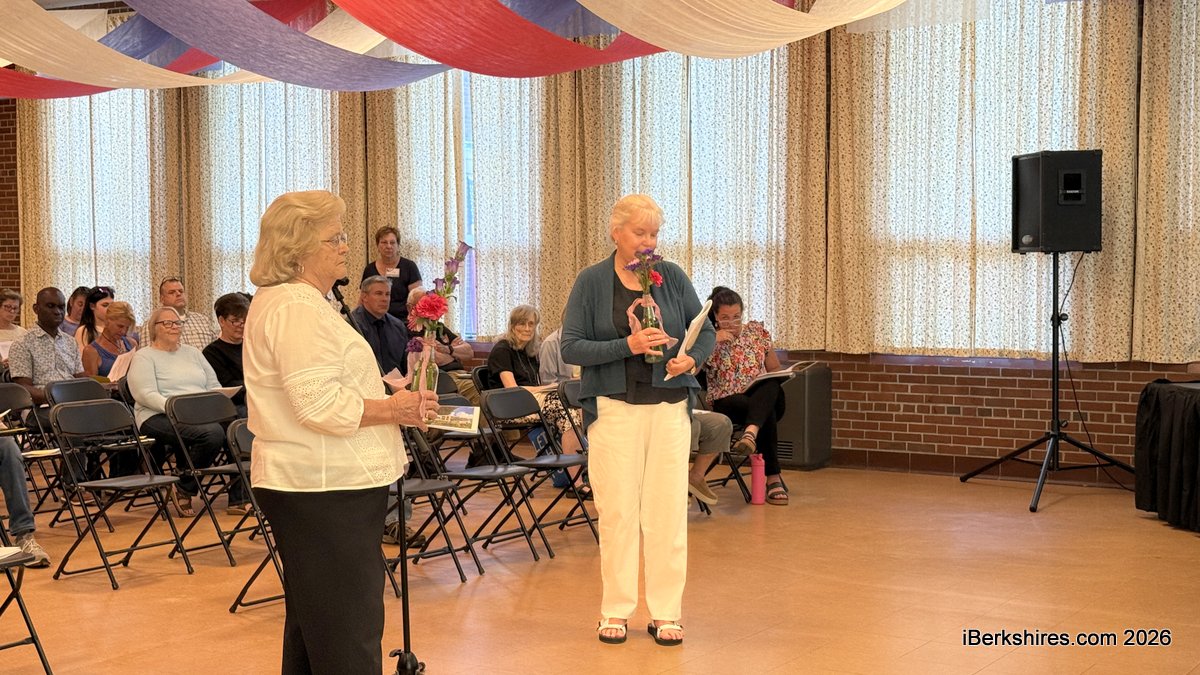
| Susan B. Anthony and her lawyers defend an 'illegal voting' charge during Sunday's 'The Trial of Susan B. Anthony.'
View Slide Show |
On Sunday, Anthony's landmark trial was more than just a history lesson; it was an opportunity to truly understand what it means to be human.
"Today's audiences can learn and take value from [Anthony's] trial because it brings home the meaning of personhood and the rights of personhood," said Carol Crossed, owner and director of the Susan B. Anthony Birthplace Museum.
Crossed and nearly 100 town residents and visitors from Rochester filled the pews at the First Baptist Church on Sunday afternoon to be a part of "The Trial of Susan B. Anthony," an interactive re-enactment of the historical milestone. Led by actor Hank Fincken (as U.S. Attorney Richard Crowley), the mock trial incited gasps of shock, boos and indignant outbursts from the crowd, many of whom were decked in full 1870s garb.
"The law is clear. Women have never voted before and they're not ready to vote yet," said Fincken in Crowley's opening statement. "If we allow them to vote, we're inviting the country to end in ruin."
Other than the role of Crowley, the characters in the trial were hand-picked audience members, asked to portray their personas with only a quick fact-sheet for reference.
"The off-the-cuff approach definitely brought a different dimension to the trial. It made it more of a feeling thing than an intellectual exercise," said Crossed. "We all felt personally involved in her case."
<L2>The unsuspecting actors took on the roles of Anthony, her lawyers, Judge Ward Hunt, Elections Inspector Beverly Jones (played by Town Administrator William Ketcham) and former President Millard Fillmore, delivering impromptu pleas on Anthony's behalf and developing a defense for the noble suffragette based on the meaning of a "person" in the 14th Amendment. Fillmore had attended the trial but had not spoken.
"I'm not as concerned with historical right," Fincken told the crowd. "There's the historical right and then there's the character's right and I'm more interested in staying true to the character."
Both Lucy Czaja, who played Anthony, and Eric Anthony, who played defense lawyer Henry Selden, are distant cousins of Susan B. Anthony and said they were "honored" to have the chance to re-enact a portion of her struggle for equality.
"It gives you a feeling of what it was like during those times," said Czaja, who said she was surprised to be chosen to play the title role.
"She overcame insurmountable odds and it incites people to think about important issues. We still need to think about choices in this time," said Eric Anthony.
In the months and days leading up to her 1873 trial, Anthony toured dozens of New York post offices, delivering a speech she called "Is It a Crime for a U.S. Citizen to Vote?" On Sunday, her mock trial's defense rested on the same idea - a person and a citizen should be entitled to the rights and privileges granted in the Constitution, regardless of gender.
"It is the genius of our forefathers that laid for us the foundation of today's trial. 'All men are created equal.' We have seen the fruit of those words now. Today, we have tried to attain the true and rightful meaning of those words, that all citizens means all citizens and all persons means all persons," said Drew Gibson, as Anthony's defense lawyer.
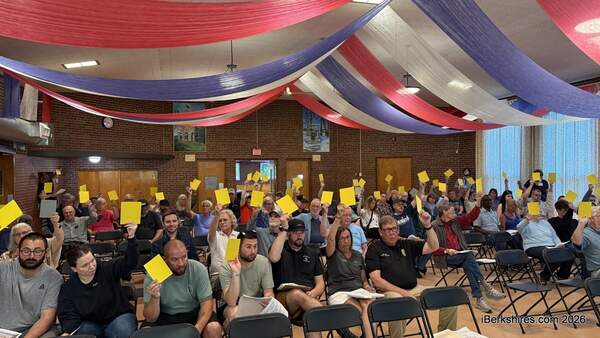
Met with cheers, the jury (composed of audience members young and old) indicated a verdict of not-guilty by a show of hands just minutes after three outspoken women carried a banner reading "Free Susan B" interrupted the trial proceedings.
<R3>Though the townspeople present at the mock trial were forgiving, Anthony's verdict never came to a jury decision. Following the closing arguments, Judge Hunt read a prepared statement, directing the jury to deliver a guilty verdict without discussion.
Calling the real trial a "high-handed outrage," Anthony protested, making a rousing speech against what she perceived as injustice. Fincken read the statement at the close of her mock trial, using Anthony's own words to best defend her.
"Yes, your honor, I have many things to say; for in your ordered verdict of guilty, you have trampled under foot every vital principle of our government. My natural rights, my civil rights, my political rights, my judicial rights, are all alike ignored. Robbed of the fundamental privilege of citizenship, I am degraded from the status of a citizen to that of a subject; and not only myself individually, but all of my sex, are, by your honor's verdict, doomed to political subjection under this, so-called, form of government," he read.
The trial, sponsored by the Adams Historical Society and the Susan B. Anthony Birthplace Museum, is this year's event in honor and celebration of Anthony's birthday on Feb. 15.
"Anytime we celebrate the life of Susan B. Anthony, it's a good thing for Adams," said Eugene Michalenko, the Adams Historical Society's acting president.
"I'm so impressed with the people of Adams, who always come out to promote Anthony's legacy, her values and her beliefs," said Crossed.