Sixth-Graders Tour Williams Campus
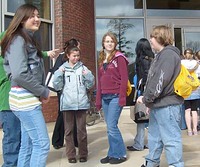 |
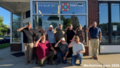
| Marissa Pilger, left, leads a group of Conte students around Williams. |
The idea was to encourage the youngsters to see themselves on the other side.
"It's an excellent college and it lets the kids realize they can come to Williams," said Conte teacher Linda Neville. "I think it's a great opportunity for them."
It was all part of "Berkshire County Goes to College," an initiative of the Berkshire Compact for Higher Learning that over the next week will bring nearly a thousand sixth-graders to the county's four colleges: Williams, Massachusetts College of Liberal Arts, Berkshire Community College and Bard College at Simon's Rock.
Led by guide Marissa Pilger, a first year from Hawaii who's been trying to acclimate to the bizarre Berkshire weather, the 30 odd kids and teachers Sarah Spooner and Neville trooped from building to building on Wednesday in the chilly wind. It was enough for one boy to remark, "How big is this school, anyway?"
<L2>It's the not the size but the opportunities that a college education can offer that's the thrust behind the Berkshire Compact.
Spearheaded by MCLA, the group of education, civic and business leaders has been working on ways to institute the idea of lifelong learning in residents across the county. The goal is to start at a young age to raise awareness that college or other type of secondary school is a natural progression in education - and follow through with broader opportunities for higher education access.
Engaging the kids in college life is being done through the Berkshire Higher Education Passport.
"It was really great of the college to reach out to local kids and show them what college is like," said Conte teacher John Jacobbe, who had another 30 or so in his group. It's not the first time some of the kids had been on a campus, he said, because has been doing a lot of partnering with MCLA.
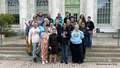
More than 100 middle school children from North Adams toured the campus; all together, about 300 kids from Conte, Adams Memorial Middle School, Abbot School in Florida and Nessacus Regional Middle School in Dalton filled Chapin Hall early in the day.<R3>
They were welcomed by college Chaplain Richard Spalding and introduced to the dozen college students who would guide them around the campus. Each student was given a goodie bag of Williams items and the yellow bags with their purple cows marked the visitors in vibrant colors.
The Conte group raised some questions that stumped Pilger at first — How long is detention here? Who's the principal? Do you ever get lost trying to find your dorm?
Pilger rallied by stressing both the fun and the challenges of attending college, along with taking responsibility for your actions.
<L4>There's no detention, she told them, "but if you choose not to go to class ... you're going to have a problem when there's a test."
"College is an opportunity," said Pilger. "People come here because they want to learn, because they want the experiences."
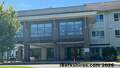
The children walked through Paresky Center, peeked in the windows of Lasell Gymnasium and Simon Squash Center, stood in the Science Center atrium to see down in the Schow Science Library and took a seat in the '62 Center for Theatre and Dance before heading to lunch.
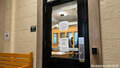
Some students, however, were a little disappointed that much of their tour was on the wrong side of the glass.
"I wanted to see a dorm, I wanted to see a classroom," said Stephen LaForest, 11, whose favorite subject is space. "I wanted to see what they do."
Alison Tassone, 12, and Maria Mazzu, 11, were impressed by the athletic facilities. "I think it would have been better if we could have inside," said Alison.<R5>
Glen Field, 12, gave Williams and its food a thumbs up as the kids were served lunch in one of the dining halls.
"Best place ever," he said, chomping on an onion ring. "I like the [science] library and I like the theater."
He's not sure Williams is for him, however. "I want to see some other colleges first."