A team of researchers led by the University of Colorado at Boulder
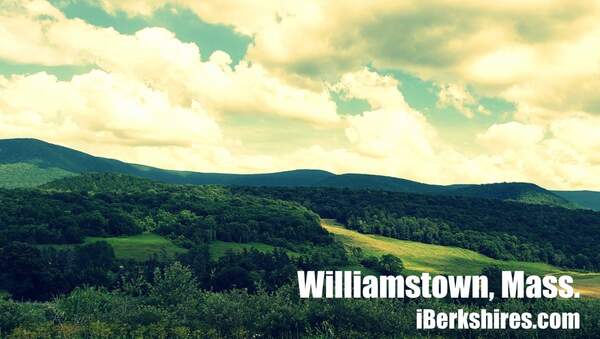
WILLIAMSTOWN - A team of researchers led by the University of Colorado at Boulder has been awarded a $4.25 million National Science Foundation grant to study critical zones of the Boulder Creek watershed in central Colorado. The team includes David Dethier, the Edward Brust Professor of Geology and Mineralogy at Williams College, CU-Boulder is coordinating the five-year study with Williams College, the U.S. Geological Survey, Stanford University, and Technical University of Munich.This is one of three NSF grants designated to establish critical zone observatories. With the Boulder Creek Critical Zone Observatory, the team will explore variations in critical zone development.
Critical zones, or heterogeneous regions comprising weathering rock and overlying soil, are the primary habitat for terrestrial life. These dynamic regions are shaped by the interplay of physical, chemical, and biological processes acting on "rock parcels" as they move upwards from the parent rock mass to the surface.
"When you ask the question of how we go from hard rock up to soil that can support life, that's a system we really need to understand," said principle investigator Suzanne Anderson. Anderson is an assistant professor at the Institute of Arctic and Alpine Research at the University of Colorado, Boulder.
Understanding of the chemical and mechanical weathering interactions in critical zone development is pivotal in predicting the responses of landscapes to climate and land use change.
"One thing we're looking at is how different watersheds within Boulder Creek respond to rainstorms, and ultimately which ones are more likely to produce flash floods," Anderson said.
The team is studying three subcatchment sites at the erosionally diverse Boulder Creek: a glaciated alpine valley, a forested gulch, and a steep gulley composed largely of bedrock with deep weathering.
Dethier, together with Williams undergraduates, (three, who worked on a Keck Consortium project) focused on the processes and pace of weathering in critical zones. This study builds on research that Dethier and his students have conducted over the past eight years.
The grant will also fund a number of education and outreach initiatives, including a partnership with K-12 students throughout Colorado, an undergraduate research program, and a graduate critical zone course.