Patrick Signs Measure Revamping Transportation Structure
 Eugena Ossi/Governor's Office
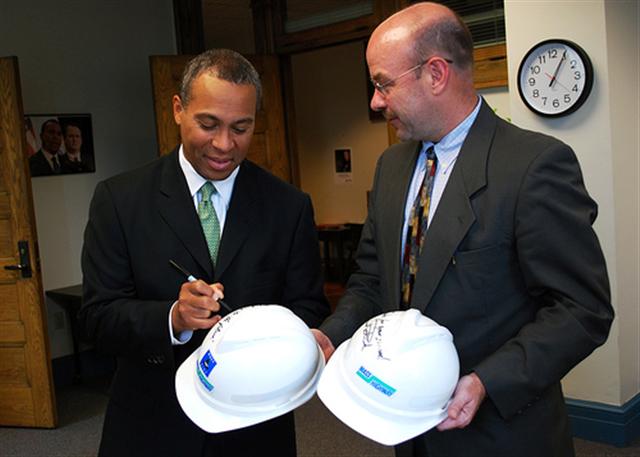
Gov. Patrick autographs a state helmet with turnpike Executive Director Jeffrey B. Mullan after signing the transportation reform bill. |
"The meaningful, long-lasting reforms we will make to our state's transportation system will rebuild public trust and put an end to the old ways of doing business," said Patrick, who signed the legislation at his Western Massachusetts Office in Springfield. "Today, we are inaugurating a new era of streamlined and efficient delivery of transportation services to the residents of Massachusetts."
Transportation reform is one of three initiatives the governor has said is vital to regaining the public's trust and creating long-term efficiencies to save the state money.
Patrick signed pension reform legislation last week and had threatened to veto a hike in the sales tax if lawmakers didn't give him significant ethics reform. He is expected to sign both an ethics bill recently arrived on his desk and the 2010 budget.
Under the leadership of House Speaker Robert DeLeo and Senate President Therese Murray, the three major pieces of reform legislation reached the governor's desk in the past two weeks. The bills include pension reform that eliminates the most egregious abuses and special perks from the state's pension system, transportation reform that abolishes the Turnpike Authority and streamlines the transportation system in an effort to save millions, and the most sweeping ethics, lobbying, and campaign finance reforms in decades.
"This law eliminates the antiquated and inefficient transportation structure in Massachusetts and brings considerable cost savings," DeLeo said. "Without the cooperation between House, Senate and administration, we would not have been able to achieve unprecedented, historic progress on pension, transportation and ethics reform."
The transportation bill is designed to help put an end to the Big Dig culture of deception, patronage and waste by eliminating the Turnpike Authority, streamlining numerous overlapping transportation agencies, ending unreasonable perks at the Massachusetts Bay Transportation Authority, and save tens of millions of dollars each year.
The legislation creates a new Massachusetts Department of Transportation (Mass DOT) to oversee four divisions: Highway, Mass Transit, Aeronautics and Registry of Motor Vehicles. Mass DOT will be administered by a secretary of transportation, and overseen by a board of directors appointed by the governor with expertise in transportation, finance and engineering.
When combined with a new source of dedicated revenue, the new transportation law will be a first step toward putting an end to decades of neglect and inaction by building a unified transportation organization that can support economic growth by fixing broken roads and bridges, investing in regional equity and strengthening public transit.
"The restructuring of our cumbersome and inefficient transportation system is a landmark achievement that will dramatically improve the way we deliver transportation services while saving billions of dollars for the commonwealth," Murray said. "This work, along with comprehensive reforms in our pension system and ethics and campaign finance laws, represents our collective commitment to honoring the public’s demands for real change and restoring public trust."
The state transportation system faces an estimated $15 billion to $19 billion funding gap in the next 20 years to maintain the current network of roads, bridges and transit for safe, reliable service. A 2007 report issued by the Transportation Finance Commission stated: "The cost of this neglect will be felt in our regional economy and in our way of life. ... Business as usual will not suffice."
Crushing debt and substandard management from the Big Dig has siphoned much-needed dollars away from maintenance and operations, and fed a culture of out-of-scale benefits, inefficiencies and a lack of accountability.