Museum Showcasing Williamstown's Postcard Past
 Thomas W. Bleezarde, a board member of the Williamstown Historical Museum, looks over some of the postcards of the town at the museum's newest exhibit 'Williamstown in the Golden Age of Postcards.' |
"Every move a picture! The most beautiful town in the state!! Much love, Ernest," writes the postcard's sender.
The penny postcard was the tweet, text and Instagram for more than a 150 years, a way to send a short note to say this is where I am, this is what I saw, wish you were here.
Williamstown, the most beautiful town in the state, according to Ernest, was a favorite subject for the summertime crowds who flocked to its hotels and strolled its rural pathways.
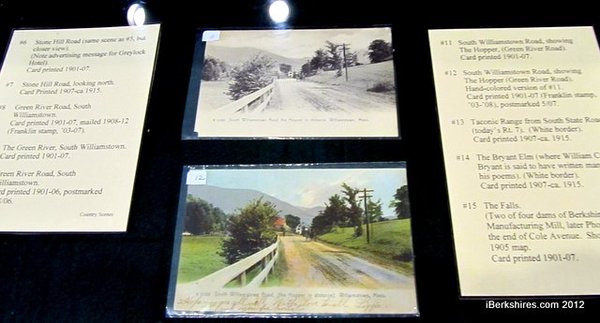
More than a 100 century-old postcards documenting its scenic byways and long-gone buildings are now on display at the Williamstown Historical Museum in the special exhibit "Williamstown in the Golden Age of Postcards," curated by Gale Griffin.
"The exhibition will focus on images of Williamstown from circa 1900-1915 that will convey what Williamstown looked like 100 years ago, or perhaps more precisely, what visitors to Williamstown liked to remember about their visit," said Griffin's husband, Dustin Griffin, chairman of the museum's Exhibition Committee and assistant curator.
Many of the buildings pictured on the postcards have been torn down, including the famed Greylock, Idlewild and Sand Springs hotels, which were frequented by vacationers when Williamstown was considered a summer retreat.
"Green River Road was more rural and agricultural a century ago than it is today," said Griffin. "Old structures that have survived are college buildings and churches."
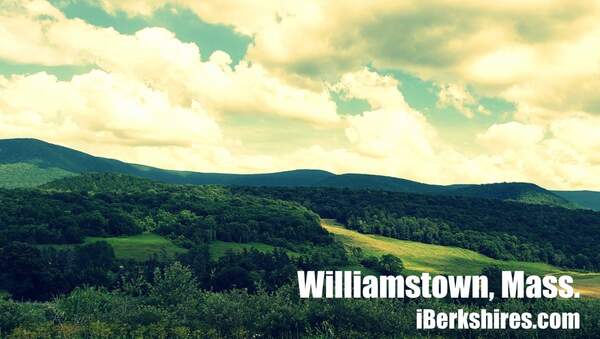
Still, he said, "the views of the Hopper and Greylock are much the same as what you see when you look at the Hopper and Greylock now. Mountains don't move." And people who routinely walk on Torrey Woods Road might recognize the location of certain postcards.
 |
|
| Curators Gale and Dustin Griffin will give an illustrated lecture at the opening of the exhibit on Saturday at 11:15. The museum is on the south side of the Milne Library. |  |
"I am an accidental collector," said Flynt, a longtime resident known for his commitment to service. He said he had acquired a series of scrapbooks designed to hold postcards many years before at a Williamstown Rotary auction. It was the scrapbooks that first caught his eye.
"There were 50 to 60 postcards in each of the books — some from Williamstown and others from out-of-state," Flynt recalled. "They were from a time when people who were traveling did not have cameras. They would buy postcards as souvenirs. It was a way to remember their trips."
In days gone by, families kept albums containing souvenir cards in the parlor and then took them out to show to visitors or simply to refresh memories of carefree days.
On view from Saturday, Oct. 6, until February, the exhibition also "focuses on the history of postcards, who produced them, how they were made, what's involved in 'reading all the information encoded on them, how to date them, etc.," said Griffin. "We will display the postcards face up, but the backs of some will be visible."
Postcards became popular in mid-1800s, spreading quickly through Europe and across the Atlantic by the 1870s as printing capabilities expanded and postal systems standardized. Cards, as they do today, frequently portrayed images of scenery, architecture, historical and exotic locations, as well as recording disasters, everyday life, amusing sketches and more.
The backs of cards can indicate when they were made and mailed, and the subject matter. For instance, "stamps are dated and continue to be printed for a particular period," Griffin pointed out. "In the early 20th century, the life of a stamp was about two to three years."
And cards can be dated by whether the back is divided or undivided. In the earliest years postcards were made, the back was solely for penning an address. If people wanted to send a short greeting, etc, they could jot a few words on the border around the picture on the front of the card.
About 1907, backs of postcards were divided by a line going down the center to provide individual spaces for an address and a message.
"Curating this show was fun for me in part because my father, born in 1911, grew up in a small and remote town in northern Wisconsin, not as sophisticated as Williamstown with its college, but something like it," said Gale Griffin. "This was the world of his childhood, too."
Tags: museum, postcards,