WILLIAMSTOWN — Afghanistan, where U.S. troops overthrew the repressive Taliban government two years ago, has been so eclipsed by the U.S. invasion of Iraq that it could be termed the forgotten country, according to David B. Edwards, Williams College professor of anthropology.
Edwards has just returned from two and a half months in the capital, Kabul, where he was making a documentary film with a grant from the Carnegie Foundation. On Tuesday, he took a break from editing his material to talk about what he found — and some of those findings are troubling.
While news reports detail the billions to be spent reconstructing Iraq – and the giant corporations gaining contracts – Afghanistan is strapped, struggling to rebuild with only a trickle of American cash, Edwards said.
Unlike international non-governmental organizations, the U.S. government and military are viewed with distrust by ordinary Afghans, he said: Rather than improving the daily lives of ordinary Afghans, Americans have isolated themselves and seem intent on remaining so.
“Americans don’t have a good reputation,†Edwards said. “They are not peacekeepers. They are there to kill Taliban, and they’ll tell you so. When you see American military personnel, they’re in a convoy, driving Hummers, wearing black goggles and tearing through the streets.â€
Speaking in his office, with a map of Afghanistan above his desk and a handmade rug depicting an AK-47, two Soviet tanks and two Soviet helicopters on the floor, Edwards said the American troops haven’t done much better than the Soviets did.
“They’ve turned the U.S. embassy into Fort Apache, and its secured areas disrupt traffic even more than it already is,†he said. “Americans are viewed as arrogant. They behave in away that indicates lack of cultural understanding, and Hamid Kharzai [ the country’s interim leader] is viewed as their puppet, not as a forceful leader.â€
Historically, puppets have not lasted long in Afghanistan, he noted.
“Americans have got themselves boxed in,†he said. “The security chiefs are running the show. There’s very little understanding of what’s going on in Afghanistan. They’re so wrapped up in security.â€
During his visit, however, he said he had little trouble with the Afghan people.
“The only time we had any trouble filming was with the Americans,†he said.
Edwards had wanted a quick shot of sandbags reinforcing the U.S. embassy, but security officials refused.
“They considered it a breach of security,†he said. “Americans take security precautions to absurd levels. The people in charge of security are super cautious because they don’t want to get blamed if anything happens.â€
He added, “But that attitude undermines the American mission to win the hearts and minds of the Afghan people. Instead, the Americans have completely isolated themselves from the Afghan people.
Edwards was joined in his film-making venture by cameraman Greg Whitmore, a 1998 Williams graduate, and by Afghanistan-born sociologist Maliha Zulfacar, who now teaches at California Polytechnic State University and whose family left their native country in the 1970s at the time of the communist takeover.
“We went with no script or set idea,†Edwards said. “As an anthropologist, I’m leery of a script. It blinds you to what you’re actually seeing. We could learn about and follow the stories that seemed most interesting to us. Most funding is not for open-ended projects. Most want scripts, but we had the luxury of doing what we considered important, and we could follow any lead. The difficulty comes when you start to edit, but even that can be a creative process, because you’ve got to find ways to tell the story compellingly.â€
That approach, he said, would have been much more difficult before recent technological developments. Using 16 mm film, as in the past, would have been prohibitively expensive, he said.
“Now we can shoot on digital video that costs $5 or $6 each. We came back with 140 hours of video and 100 hours of audio,†he said. “I’m indexing all the tape.â€
One of the story his film will tell is that of his longtime friend and colleague Shahmahmood Miakhel, who had been living in exile.
“Greg and I filmed him in Washington, D.C., where he was driving a taxi,†Edwards said. “Now he has an important post in the Ministry of the Interior.â€
As senior adviser to the minister, Miakhel is closely involved in counter-narcotics and counter-terrorism measures, as well as the disarmament of feuding warlords, Edwards said. Miakhel is an important player in the rebuilding of a major ministry, he said. “A lot of issues come to him.â€
Miakhel, along with Edwards, spearheaded the creation of the Afghan archive at Williams, which was the topic of an Advocate story in the summer of 2001. His friend, said Edwards, has not let his changed circumstances go to his head, “even though now he’s surrounded by bodyguards.â€
The hitch, Edwards added, is that although Miakhel’s modest salary is supposed to be paid by the United Nations, “he has yet to be paid, and his family back in Washington is struggling.â€
“But he believes in what he’s doing,†Edwards said. “He believes there’s a limited window of opportunity for this experiment in government to succeed. It’s the chance for his generation, and he’s excited and happy to be part of the process, despite personal hardships.â€
Another segment of the film captured a seminar of women in leadership sponsored by the World Bank.
“They’re a very dynamic group of women, outspoken, opinionated, energetic, some of them working for NGOs [non-governmental organizations],†Edwards said. “One woman told of her difficulties convincing her father to let her go to university. She always had to leave promptly in order to be home at 4 p.m. Most of the time now, it’s not what the government decrees but what the neighbors think and neighbors talk. Really, it’s more public opinion that inhibits the activities of women.â€
Under the Taliban regime, it was the Bureau for the Prevention of Vice and Promotion of Virtue that served as the official watchdog against what the cleric-dominated, Muslim fundamentalist government frowned upon as Western-influenced corruption and loose morals.
Much was written about the oppressed condition of women under the Taliban regime. But, said Edwards, “the reality is that the situation of women has not changed much. To see this as a failure of government is too simplistic. The government can build schools and staff them, but attitudes are deeply ingrained.â€
The situation of women “has been one of the flashpoints†in that traditional society,†he said.
After the Marxist revolution in 1978, the perception was that the government was decadent and would impose its morals on the country, Edwards said. “Governments, if they want to stay in power, have to tread lightly,†he said. “Women have found ways to operate within the system by bending the rules.
He recalled the example of a young woman, a Shia who had spent most of her life in Iran, a country where women’s lives are far less circumscribed – and who brought her brother along to an evening discussion group as, essentially, her safe conduct pass.
In Kabul, Edwards stayed in a building rented by the American Institute of Afghan Studies, an organization of which he is a board member. An adjacent building, part of the complex, had been used as a prison by the Taliban’s morality police, and bore the carved names of former prisoners.
“I remember going into one room and feeling my spine go cold,†Edwards said.
He learned from a former prisoner that that room had been a holding cell. One of the trees still had tape dangling from its branches, flung by the Taliban as a warning to those who dared listen to Western music.
“The Taliban has its supporters,†Edwards said. “It’s hard to know how many.â€
While kidnappings and school burnings had been centered around the Taliban stronghold of Kandahar, now they have occurred within 50 miles of Kabul.
“It’s hard to know of those are with or without the support of the people,†Edwards said.
The loya jirga, which just this past weekend completed approving a constitution, illustrated “the very strong ethnic divide in the country,†he said. But, he added, some attitudes that are considered ideological and Taliban-influenced are, in fact, motivated by a desire for Pushtun primacy, since that tribe was dominant in the Taliban regime.
A prime concern of Afghans now is security, he said.
“Afghans are not as concerned with drugs as they are with crime. They are worried about the police, who are so poorly paid they can be easily bought.â€
Edwards noted that in February 2002, at a donors conference in Tokyo, $4.5 billion was promised, most of which has gone to non-governmental organizations.
The country is desperate for funds, he said, noting that the police guarding the Dutch embassy across the street from his quarters had not been paid in three months.
“There’s no infrastructure,†he said. “Iraq happened and distracted the Americans from Afghanistan.â€
And most American money has gone toward building the embassy and Agency for International Development (AID) complex, and “very little into helping this government actually stand on its own two feet,†he added.
“The roads are full of potholes, and the electricity is on only from 5:30 or 6 p.m. to 4 a.m. There’s no sewage, and the pollution is terrible. The infrastructure is overtaxed beyond its limits,†he said. “But Kabul is an exciting, interesting dynamic city, and I’m amazed by the resiliency of the people, who are hospitable, generous and open.â€
He said the country needs to gear up for presidential elections in June, and parliamentary elections the following December, but voter registration “is not going well.†There are sections of the country, such as around Kandahar, that may be too dangerous, he said.
“The challenges are only beginning.â€
If you would like to contribute information on this article, contact us at info@iberkshires.com.
Your Comments
iBerkshires.com welcomes critical, respectful dialogue. Name-calling, personal attacks, libel, slander or foul language is not allowed. All comments are reviewed before posting and will be deleted or edited as necessary.
No Comments
North Berkshire Educational Study Updating Communities
By Breanna Steele & Tammy DanielsiBerkshires Staff
CHESHIRE, Mass. — The steering committee for a regional study on secondary education is getting the word out to participating communities and asking for input.
The goal of the study is to focus on Grades 6 through 12 to understand current conditions across districts, hear people on their educational priorities, analyze strengths, opportunities, and challenges, and identify opportunities for future collaboration.
Steering Committee Chair Erin Milne, also a member of the Hoosac Valley Regional School Committee, introduced the study and why it was needed.
"We've been talking for decades about how the Northern Berkshire school communities can better collaborate with one another, rather than necessarily duplicating services," she told he Cheshire board. "And over time, it's become more and more of a pressing issue as our enrollment has been going down, but costs have been going up."
Hoosac Valley, North Adams, Mount Greylock Regional, Clarksburg, Savoy and Florida are participating in the study. A combination of declining population and rising costs are putting pressure on the districts, but the study will also look at educational opportunities that could come from collaboration.
In North Adams, Superintendent of Schools Timothy Callahan noted that "the reality is that in the North Adams Public Schools, our graduating class is now closer to what Lenox used to have as a graduating class 20 years ago ... So those are the realities, and what can we sustain, and what are the educational opportunities for our young people? Those are the questions that we're asking."
The Cooperative Hoosac Valley football program will resume football related activities on Monday, Sept. 28, after being on “pause” for the past nine days. click for more
Hoosac Valley High School has postponed this weekend’s football games following a reported alleged hazing incident involving a large number of football players, the athletic director announced Friday afternoon. click for more
The increase is because of a 9.12 percent hike in the levy based on the budget and fiscal articles approved for FY27 at May's annual town meeting. click for more
The mission of the Nonprofit Center of the Berkshires is to facilitate growth for charitable organizations through shared resources, affordable services, and creative collaborations. click for more
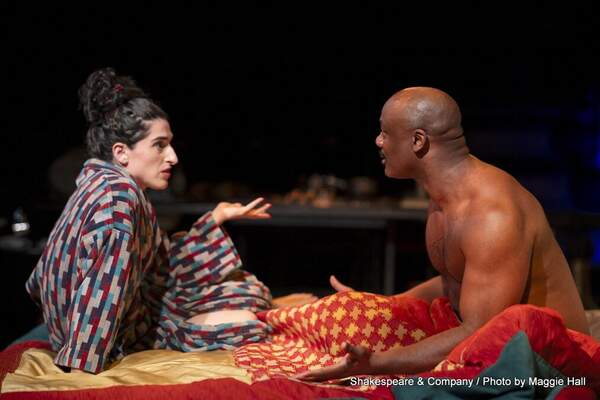
Talk about strangers in the night. There's lots of social intercourse between Frankie and Johnny. There's also lots of sexual intercourse. click for more