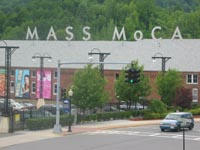
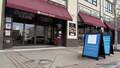
Officials at Mass MoCA are hoping to get a green light for green energy, to the tune of $8 million or more in funding that would place solsr panels on many of the roofs in the massive complex. (Photo By Glenn Drohan)
NORTH ADAMS — Following its dynamic role in revitalizing this once ailing mill city into a destination for the arts, Mass MoCA has proposed to combine art, technology and alternative energy into an $8-million-plus showcase project designed to help put the whole region on the map.
The idea sounds terrific, nearly everyone agrees, but it might be pie in the sky unless substantial public funding can be found.
In a proposal to the state’s Renewable Energy Trust, earlier this year, MoCA officials outlined a plan to cover 150,000 square feet of the sprawling complex’s rooftops with solar panels as part of a 1-megawatt photovoltaic plant that could save up to 60 percent of the museum’s annual energy costs.
Beyond that, the proposal states, “We now propose utilizing this high-profile public venue to demonstrate and dramatize effective large-scale application of renewable energy technologies, creating both a lab and a legacy in collaboration with the Renewable Energy Trust.
“We propose augmenting a large-scale ‘real life’ demonstration of renewable energy technologies with a roster of thought-provoking public educational programs and displays. Mass MoCA’s audience — who arrives at the factory campus expecting to be confronted with the best and most challenging of new ideas, designs and progressive thinking — will witness firsthand how historic buildings and public spaces can benefit from creative application of new renewable energy technologies.â€
While acknowledging the idea met with some skepticism from the energy trust during a meeting this spring, Eric Kerns, originator of the plan at the Massachusetts Museum of Contemporary Art, said Monday that he believes it would make infinite sense and yield immediate benefits.
“It would be like an endowment on your roof,†he said, referring to the enormous potential for saving energy costs — estimated at up to $170,000 per year.
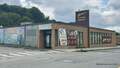
The museum complex has 28 buildings, many of them with large, flat roofs that have a southern exposure conducive to generating large amounts of solar energy. The first roof to get solar panels would be Building 12 (the one with the huge Mass MoCA sign on it), which would also generate significant public exposure for the project, according to Kerns, who has worked for four years as MoCA box office manager and is currently on vacation.
With the backing of MoCA Director Joseph C. Thompson, Kerns developed the proposal and approached both the energy trust and leaders in the renewable-energy field, receiving positive feedback but major questions about its financial feasibility.
The proposal had been a well-kept secret until it surfaced in a draft report on strategic investment initiatives for the “Northern Tier†discussed at a conference hosted by U.S. Rep. John D. Olver, D-Amherst, in Greenfield Monday.
Renewable energy is part of a four-pronged economic-development strategy for about 40 Western Massachusetts communities along the Route 2 corridor being researched by Olver, community leaders and consultant Mount Auburn Associates Inc. The other prongs would involve a “creative cluster†of art venues, museums and educational facilities in the region, establishing a comprehensive plan for eco-tourism and outdoor recreation and investing in “small, growth-oriented manufacturing.â€
Well over 100 leaders from Gardner to North Adams attended the conference, with over 40 of them choosing renewable energy as their focus of interest. Most agreed that the use of renewable energy could play a role in each of the other economic-development strategies, particularly manufacturing and eco-tourism. Consultants have already recommended pursuing wind, solar and biomass projects throughout the region. (Biomass basically involves the clean burning of wood and other plant material). Among the recommendations is that nearby Greenfield should be investigated as a “regional manufacturing and distribution hub for renewable energy.â€
The section of the Northern Tier draft report that discusses the Mass MoCA proposal states, “It is estimated that this installation could generate a megawatt of electricity and would be one of the largest single installations in the state. This project has the potential to give the region a major presence in photo-voltaic development in the Northeast and possibly nationally as well, establishing Mass MoCA as an arts/eco-industrial site.â€
Mayor John Barrett III said yesterday that he was familiar with the idea and intrigued by it but had doubts it was “doable†because of the amount of money needed.
“I suppose it’s a way we could find a renewable energy source, which is good, but whether it’s economically feasible, I don’t know. It would save more than $100,000 a year in energy costs, but what’s the investment?†he said, later adding, “If we could use it as a pilot program and refine it for other entities, I think it might be worth a shot.â€
MoCA Director Thompson said he had enthusiastically pursued the plan but thought the financing was a “deal stopper†until Olver recently approached the museum, expressing interest.
“Rep. Olver is very interested in this topic and invited Mass MoCA to make a presentation. That’s where it sits,†Thompson said. “I thought it was a great idea that had died, but perhaps it’s been resurrected.â€
In the MoCA proposal, Kerns noted that much of the solar technology used around the world was developed in Massachusetts, which had the first solar house and the first solar neighborhood (in Grafton).
“Massachusetts should stake out this historic legacy, exploiting it as a tool for public education and commercial marketing, by creating the first large-scale renewable energy center of its kind at Mass MoCA,†he wrote in the proposal.
Part of the grant money MoCA seeks would be devoted to researching other technologies for future installation, including small-scale demonstration plants for hydrogen fuel cells, biomass generators and low-impact hydropower generators. The museum could link with other educational institutions, such as Williams College and the
Massachusetts College of Liberal Arts, as well as provide bus tours to nearby wind farms in Searsburg, Vt., and, potentially Florida and Monroe, where 20 large turbines are expected to be constructed by enexco Inc. next year.
“Indeed, the project will position Mass MoCA as a public port of access for a wide array of renewable energy installations throughout Berkshire County,†the proposal states.
While the idea is still in the formulative stage, Kerns and others at Monday’s conference said they hope it could move forward soon. Kerns pointed to Mass MoCA’s proven track record in converting former mill space into world-class art galleries and commercial enterprises. The museum has developed a reputation for turning projects around quickly, creating jobs and producing results.
“We are incredibly savvy construction managers,†Kerns said. “If they signed a check, I could make two phone calls and we’d have guys on the roof in a month.â€
Among the potential benefits of the project would be the following:
• Mass MoCA would serve as a beacon to the renewable energy manufacturing, installation and maintenance industries, confirming and advertising the commonwealth’s leadership position in the industry.
• A valuable “real-world laboratory and test site for renewable energy technology†would be established, with successful technologies installed statewide.
• Reduced greenhouse gas emissions.
• The ability for Mass MoCA to attract commercial tenants looking for green power, broaden its educational mission and increase visitation, as well as prolong the life of its roofs.
• Increased tourism and public awareness of alternative energy.
• Job creation.
• Vocational training and education in energy technology.
• An improved environmental image — “from brownfield to brightfield.â€
“Everybody I talk to says ‘Omigod, this is such a great idea!’†Kerns said. “It’s such a no-brainer. Everyone would benefit — the state Mass MoCa, green energy as a whole. It all sounds great, but who’s going to pay for it? That remains the problem.â€
He said he was hopeful that, with Olver’s backing, federal money might be found. Another option would be to seek major corporations seeking tax breaks, which could be substantial under the state’s energy policy.
“One of the problems has been that renewable hasn’t been treated like a technology, which is what it really is,†Kerns said. “It shouldn’t be thought of as something that can never happen or is too expensive. It should be given the same credence as the Pentium chip.â€
If you would like to contribute information on this article, contact us at info@iberkshires.com.
Your Comments
iBerkshires.com welcomes critical, respectful dialogue. Name-calling, personal attacks, libel, slander or foul language is not allowed. All comments are reviewed before posting and will be deleted or edited as necessary.
Burning biomass will result in increased levels of particulate pollution and lead to increased illness and mortality for North Adams' residents. Biomass, because it is less concentrated than the fossil fuels it replaces, is always more polluting.
This is why the Massachusetts Medical Society opposes the construction of large biomass burners and tighter regulation of small burners.
Biomass burning is NOT "carbon neutral," and is now contributing to increased deforestation around the world.
Burning biomass would be a step backwards for Mass MoCa.
DALTON, Mass. — The town's popular Dalton Day festival is returning this weekend after a year's hiatus.
The event will kick off this Saturday at 11 a.m. and runs until 4 p.m. in the field in front of the Senior Center.
The community celebration was established in 2023 by the Cultural Council in an effort to increase resident participation at town meetings while also showcasing the area's welcoming, diverse, artistic and sporty atmosphere. In 2024, the event brought together 300 residents.
"The primary mission of Dalton Day is to foster a strong sense of community, build civic pride, and bring residents together through a shared celebration of local culture, music, and food," said Jeannie Ingram, Select Board member and cultural council chair, and Lori Venezia, executive assistant to the town manager.
The event provides an accessible and free platform for "civic education, community bonding, and supporting local businesses, artisans, makers, and culture more broadly," they said.
The festival strengthens the fabric of the town both civically and economically by connecting grassroots organizations with residents, fostering a shared sense of belonging, and providing free, family-friendly entertainment.
It also serves as an opportunity for community members to meet with local officials and a couple of state officials. State Sen. Paul Mark and state Rep. Leigh Davis will be coming from Beacon Hill to speak at the event.
Cassidy Flynn scattered five hits in a complete-game effort in the circle as Lenox upset top-seeded Hoosac Valley, 3-2, in the quarter-finals of the Division 5 State Tournament. click for more
Brayden Durant struck out seven and walked one in a complete-game effort on the mound Saturday to pitch the Drury baseball team to a 6-0 win over Keefe Tech in the quarter-finals of the Division 5 State Tournament at Joe Wolfe Field. click for more
Jason Codey struck out 13, walked two and allowed just an infield single as the Generals earned a 7-1 win over Wahconah to claim their third straight regional title. click for more
Gracelyn Wright struck out eight, and Genevieve Lagess went 3-for-5 with four runs batted in as the Hurricanes beat Monson, 17-3, to claim their first Western Mass title in four years. click for more