Tilting at windmills once again

Print Story | Email Story
To the Editor, To adequately refute all of the statements made by Eleanor Tillinghast in her most recent article [Advocate, Dec. 9] would take far more time and space than I have, but I will mention as many as I can. Her article begins by stating the tip height of various wind turbines above sea level. How this relates to environmental impacts I do not know, since the tallest point in Massachusetts is a TV tower. There are only two wind projects anywhere close to completion in the Berkshires, and both have gone or are going through extensive review, as would any project of this magnitude. The Hoosac Range in Florida was not even mentioned by the Berkshire Natural Resource Council in the BRPC regional plan as deserving special protection. Yet somehow the destruction of Berkshire County is eminent? The general sensation one receives in Tillinghast's article is that various environmental, governmental and local organizations are arrayed in a vast conspiracy to desecrate and ruin "our ridgelines, quality of life and tourism economy." The fact of the matter remains that reliable and scientific studies show wind turbines may actually improve tourism and home values. Tillinghast then misrepresents the state’s Renewable Energy Portfolio Standard by not recognizing that the RPS can be satisfied by projects outside of Massachusetts, which meet certain requirements. She also uses figures from the United Kingdom and Germany, which are simply not applicable to today’s wind turbines. Regarding conservation, it is obvious that energy conservation must be a truly important part of our future, as must sustainable agriculture and population. However, energy conservation cannot be considered a source of energy. Wind energy is the only viable source of electricity that does not result in large-scale pollution or radioactivity, and as Berkshire Wind’s recent long-term contract illustrates, the price of wind can be significantly lower than that of traditional sources. Tillinghast seems quite certain about the subsidies Hoosac Wind might receive, but totally neglects the 200 billion dollars in various direct and indirect subsides provided to traditional sources... every year. At one point Tillinghast claims that Florida “rejected a wind power plant proposal 20 years ago.” In fact, the article referenced on her Web site makes no such statement. Moving on to public opinion, the handful of news articles sited by Tillinghast does not change the fact that the majority of citizens in European countries continue to support the changeover to renewable energy, and some polls indicate increased approval among people who live near a turbine, or have visited one. According to the BBC, “Initial concerns over the impact of turbines on the landscape, noise and construction traffic, had largely vanished after development was completed.” In the final footnote provided on Tillinghast’s Web site, she seems to state that since some of our pollution comes from China or the Midwest, it is not worthwhile to reduce pollution locally. Global warming and pollution are a global problem, and not recognizing this, in my opinion, is more likely to “ruin our environment” than anything else. There is not a “rush to wind power.” This is the steady progression of a technology, as well as a society. A society that recognizes the importance of a stable, renewable, clean source of power, when done correctly as governmental agencies have certified time and again. Simon Zelazo Florida The writer is a member of Citizens Using Renewable Energy
If you would like to contribute information on this article, contact us at info@iberkshires.com.

Air Quality Alert Issued for Berkshire County

Staff reports
WILLIAMSTOWN, Mass. — The state's on an air quality alert through midnight Thursday because of the smoke from wildfires in Canada. 
 
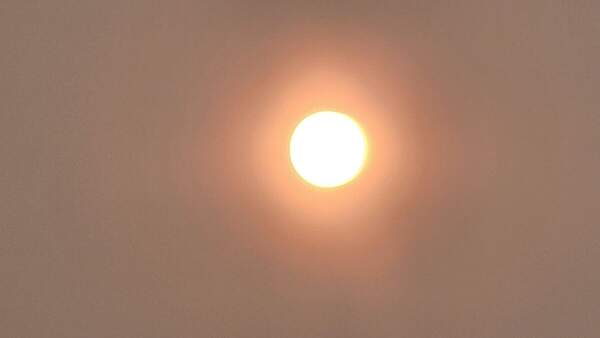
Berkshire residents woke up to smoky, hazy skies and a red glowing sun on Wednesday morning, but with less oppressive heat.  
 
The Department of Environmental Protection issued an air quality alert for elevated levels of fine particles (PM2.5). This refers to microscopic airborne particles measuring 2.5 micrometers or less in diameter — about 30 times smaller than a human hair. These particles come in many sizes and shapes and can be made up of hundreds of different chemicals.
 
The U.S. Environmental Protection Agency says the size of these particles can cause serious health problems because they can get deep into your lungs and even into bloodstreams. Particles less than 2.5 micrometers in diameter pose the greatest risk to health.
 
The air quality statewide is expected to be unhealthy for sensitive groups. These include people with heart or lung disease such as asthma, older adults, children, teenagers, and people who are active outdoors. People with either lung disease or heart disease are at greater risk from exposure to air pollution. 
 
MassDEP advises people in sensitive groups to reduce prolonged or heavy outdoor exertion, take more breaks, do less intense activities, follow asthma action plans, and keep quick relief medicine handy. Watch for symptoms such as coughing or shortness of breath. 
 
EPA's air quality index rates levels from "good" at 0-50 and "very unhealthy" from 201 to 300. Residents of Williamstown can track the AQI through PurpleAir, which displays results from monitors in five sections of town.
 
View Full Story

More Stories