The Center for Ecological Technology and Conservation Services Group, Massachusetts based non-profits announce the launch of GreenerWatts New England, a renewable electricity choice for Massachusetts Electric Company customers.
GreenerWatts New England is an easy and affordable way for households, non-profits, religious organizations and small businesses to “GreenUp†the electricity they use for just a few pennies a day.
Beginning with the October bill, Massachusetts Electric Company residential and small commercial (G1) customers can enroll in GreenerWatts New England. That includes small businesses, non-profits and spiritual organizations. By paying a small premium, 100% of their electric usage is matched with purchases of renewable resources for use in the New England power pool.
The premium will add about $3 - $12 a month, depending on one’s usage. MECO will continue to deliver electricity and provide customer service to those who sign up, thus ensuring that the electricity people depend on will be reliable and uninterrupted. Those who enroll can terminate their participation at any time, without incurring any penalties.
GreenerWatts New England is available to all Massachusetts Electric Company households, small businesses, non-profits and spiritual organizations beginning with the October 2003 bill. MECO territory encompasses much of south county, including Alford, Great Barrington, Monterey, Mount Washington, New Marlborough, Sheffield, Stockbridge and West Stockbridge. It also includes Williamstown, North Adams, Adams, Florida, Monroe and parts of Hancock and Cheshire.
GreenerWatts is an investment in electricity generated from sustainable sources, such as the sun, wind and water that are generated in Connecticut, Massachusetts and Vermont. Over time, this effort will begin to re-shape how electricity is generated in Massachusetts. It will encourage new, responsibly sited renewable energy projects that will keep dollars in the local community.
Nationally, electricity generation produces more pollution than any other single activity. Choosing electricity from cleaner resources will have a direct impact on air, water and the health of local forests, rivers and lakes. Power plant emissions are a major source of mercury pollution, which can lead to learning and development disabilities in children. Research funded by the Rockefeller Family Fund found that just two of the six coal powered generation plants in Massachusetts were responsible for over 298,000 daily incidents of asthma, bronchitis and other respiratory problems.
Emissions from conventional power plants are the leading cause of climate change gasses in the United States. Western Massachusetts has already experienced changes in weather that many scientists attribute to climate change. These include the early arrival of spring and warmer winters. Throughout the nineteen nineties, summers were among the warmest ever recorded. These climatic changes are weakening the local maple sugaring industry and the ski industry. Climate change tends to create more extreme weather events. For example, an increase of just one degree in the overall temperature can result in more frequent and severe flooding and drought.
The National Renewable Energy Laboratory reports that over 300 utilities in 32 states now offer "green pricing" options that are similar to Massachusetts Electric Company’s “GreenUp†program. In just a few years, more than 425 megawatts (MW) of renewable energy capacity has been installed or is planned as a result of these efforts. The larger green power market, of which the utility-based programs are one part, serves hundreds of thousands of people across the country and has resulted in nearly 1,500 MW of actual or planned renewable energy development.
GreenerWatts New England is a venture of CET, a western Massachusetts community-based non-profit organization committed to assisting those who seek to reduce the environmental and health impacts of our daily lives. CET has been promoting renewable energy technologies for over 27 years and this effort is an outgrowth of CET’s commitment to a cleaner and more diversified electricity mix. CET coordinates the activities of the Berkshire Renewable Energy Collaborative, whose mission is to promote the responsible use of renewable energy.
Collaborative members have been supportive of development of a green power choice to stimulate both supply and demand for renewable energy. For two years CET, with support from the Massachusetts Technology Collaborative has been exploring the feasibility of establishing a green power consumer aggregation. GreenerWatts New England is one of the results of that effort, and reflects the strong interests and demands of residents and small businesses for clean, reliable, renewable energy.
"I am excited about CET's GreenerWatts New England. I wholeheartedly believe that leadership begins in local communities and I applaud CET for bringing affordable renewable electricity to so many people,†stated Congressman John W. Olver. “CET's effort is part of a growing national movement and is one way that individuals can begin to transform how our electricity is produced - replacing polluting fossil fuels with clean and sustainable renewable sources,†Olver continued.
GreenerWatts New England is certified by Green-e. This means that the project will undergo an annual verification audit, submit marketing materials in order to meet green-e disclosure and truth-in-advertising requirements, and abide by the green-e code of conduct. For more information, visit http://www.green-e.org/.
For information or to enroll, visit www.GreenerWattsNewEngland.com or call CET at 413-445-4556. CET is a non-profit energy and resource conservation organization that has served western Massachusetts since 1976. CET receives funding from the Massachusetts Cultural Council, a state agency.
If you would like to contribute information on this article, contact us at info@iberkshires.com.
Your Comments
iBerkshires.com welcomes critical, respectful dialogue. Name-calling, personal attacks, libel, slander or foul language is not allowed. All comments are reviewed before posting and will be deleted or edited as necessary.
No Comments
Williamstown Homeowners Facing 7 Percent Hike in Tax Rate
By Stephen DravisiBerkshires Staff
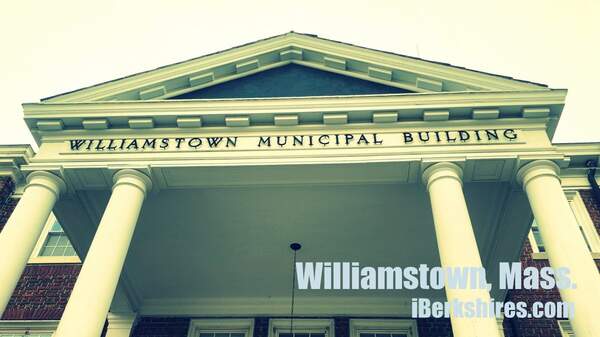
WILLIAMSTOWN, Mass. — Property owners will pay nearly a dollar more per $1,000 of assessed value in the current fiscal year under a tax classification proposal that goes to the Select Board on Monday evening.
According to a memo prepared by town Assessor Christopher Lamarre, the FY27 tax rate will be $15.16 per $1,000 of property value, an increase of 96 cents, or 6.8 percent, from the $14.20 per $1,000 property owners paid in the fiscal year that ended on June 30.
The increase is because of a 9.12 percent hike in the levy based on the budget and fiscal articles approved for FY27 at May's annual town meeting.
In FY26, the town collected $21.9 million from property taxes; this year, it needs to collect $24.1 million to pay its bills, a rise of $2.2 million.
That is by far the largest hike in the last 10 years — the period covered by data readily available on the town's website. In FY26, levy grew by 5.8 percent, following an eight-year period where the largest jump was 5.52 percent in 2018.
At the same time, the town continued to see growth rate in the tax base that does not keep up with rising costs. In FY27, "new growth" is pegged at $18.2 million, yielding just $258,004 in new tax revenue — far below the $2.2 million in needed revenue.
The total of taxable property in town in FY27 is $1.6 billion.
The increase is because of a 9.12 percent hike in the levy based on the budget and fiscal articles approved for FY27 at May's annual town meeting. click for more
The mission of the Nonprofit Center of the Berkshires is to facilitate growth for charitable organizations through shared resources, affordable services, and creative collaborations. click for more
Talk about strangers in the night. There's lots of social intercourse between Frankie and Johnny. There's also lots of sexual intercourse. click for more