Mayor-elect James Ruberto’s transition team is sponsoring a talk by nationally renowned land use researcher and author Karl Kehde on collaboration and team building among diverse interest groups to enhance proposed land development projects.
The talk and subsequent discussion are open to the public and will be held on Friday, December 19 at 10 am at Mazzeo's Ristorante at 7 Winter Street in Pittsfield. Refreshments will be served and a small donation is requested.
An award-winning land developer, environmentalist, and planning board member, Karl Kehde is the author of Smarter Land Use, a do-it- yourself guidebook for improving relationships and enhancing proposed projects.
He has participated in more than 500 meetings among neighborhood groups, developers, and environmentalists in 48 land developments in New York, New Jersey, Florida, Pennsylvania, and the state of Washington to research the procedures he will present in his talk. “It turns out that when the primary purpose of a land development is to enhance community spirit, we get the best economic growth,†Kehde said.
Reba Evenchik, a member of Mayor-elect Ruberto’s transition team, and her husband, Bruce Evenchik, invited Kehde to bring his innovative approach to working collaboratively to the Berkshires after hearing him speak in North Carolina this year.
“I was very impressed with the way his approach brings together all the diverse elements of a community to work cooperatively,†said Evenchik. “Although his work focuses on land use issues – of which there are many here in the Berkshires, where we cherish the beauty of our environment – his innovative approach can be used in many different areas of life.â€
“Mr. Kehde’s talk is very timely considering the number of land use issues we face in Pittsfield and in the Berkshires,†Jim Ruberto said, citing the proposed Pittsfield airport expansion and river walk, the proposed waste transfer site off South Street and the Dalton gravel plant as examples. “Building up our community means building teams of people working together cooperatively, and I am willing to consider any constructive approach to accomplishing that goal.â€
Karl Kehde has personally designed, developed, and marketed three major residential real estate projects. He has built active and passive solar homes, implemented energy and wildlife conservation deed restrictions, and donated land to conservation organizations. He served 5 years on an Advisory Committee working on New Jersey's State Development Plan, and 8 years as a member of his town planning board.
He was a member of the Board of Directors of the American Clean Water Association and, as a developer, received a Special Award of Merit from the United States Environmental Protection Agency and was awarded the Distinguished Planning Citation by the American Planning Association. In 1997 he was awarded a contract from National Park Service to help resolve environmental land use disputes.
Kehde developed the "Project Integration Procedure," outlined in his book, Smarter Land Use, as way to involve all stakeholders - neighbors, developers, planning officials, and environmentalists - in a collaborative decision-making process. Funded by the Geraldine R. Dodge Foundation and others, the book is the result of 12 years of hands-on learning and teaching.
Smarter Land Use provides all land development stakeholders with a procedure for designing and gaining approvals for land development that improves local property values, reduces traffic congestion, enhances natural and historic resources, and builds community spirit.
Kehde wrote the guidebook and invented the companion Collaborative Planning Kit so that communities can succeed with this procedure on their own with no outside assistance. The book, which includes a CD of sample forms and letters, and kit will be available for purchase at Kehde’s talk, and is also available for free in the form of downloadable PDF files at www.landuse.org .
Kehde will be in the Berkshires from Thursday through Sunday and is available for free personal consultations on community land use issues by appointment. Kehde can be reached at karl@landuse.org or 908- 625-0638.
If you would like to contribute information on this article, contact us at info@iberkshires.com.
Your Comments
iBerkshires.com welcomes critical, respectful dialogue. Name-calling, personal attacks, libel, slander or foul language is not allowed. All comments are reviewed before posting and will be deleted or edited as necessary.
No Comments
North Adams Officials to Revote School Committee Members
Staff reports
NORTH ADAMS, Mass. — City and school officials will meet a second time to vote in two new members of the School Committee.
The joint convention of the City Council and School Committee will be held on Tuesday at 6 p.m. in the City Hall conference room and via Zoom.
Damon Grimes and Paul Moriarty were jointly elected on Monday to fill two seats vacated by resignation. They were two of four candidates standing for election.
Mayor Jennifer Macksey, chair of the School Committee, said she had received in inquiry about the votes, which were done by secret ballot.
"I have been advised that voting by ballot was not permissible in this circumstance," she said, after consulting the School Committee's attorney Adam Dupere and city solicitor KP Law.
To ensure the validity of the votes and conduct of the election, the joint convention will reconvene and formally confirm the selection of Grimes and Moriarty.
"I apologize for the inconvenience of having to reconvene," the mayor said in a statement. "My intention in using a ballot was to address concerns raised following our previous convention, when some members expressed discomfort with publicly voting for or against individual candidates.
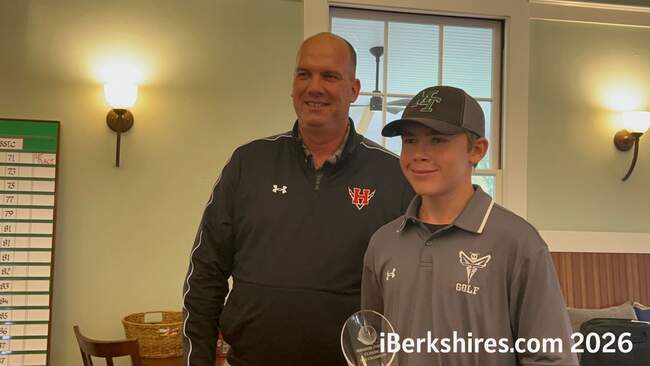
Gabe Thomas carded an even par round of 71 at Stockbridge Golf Club Monday to finish two shots clear of the field and claim the first county individual championship for the McCann Tech golf team. click for more
The Cooperative Hoosac Valley football program will resume football related activities on Monday, Sept. 28, after being on “pause” for the past nine days. click for more
Hoosac Valley High School has postponed this weekend’s football games following a reported alleged hazing incident involving a large number of football players, the athletic director announced Friday afternoon. click for more
The increase is because of a 9.12 percent hike in the levy based on the budget and fiscal articles approved for FY27 at May's annual town meeting. click for more
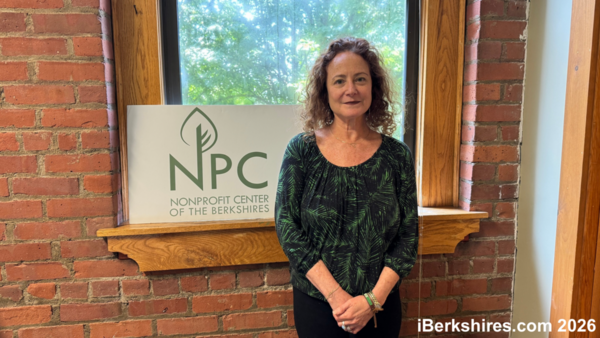
The mission of the Nonprofit Center of the Berkshires is to facilitate growth for charitable organizations through shared resources, affordable services, and creative collaborations. click for more
Talk about strangers in the night. There's lots of social intercourse between Frankie and Johnny. There's also lots of sexual intercourse. click for more