Cable Mills Gets Green Light
WILLIAMSTOWN, Mass. — The developers of the General Cable mill on Water Street can proceed with plans to convert the old mill building into condominiums and build new townhouses.
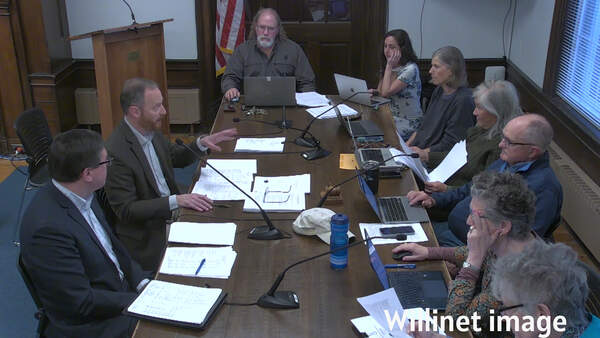
The Zoning Board of Appeals unanimously granted them their necessary permits Thursday. One quarter of the condominiums are designated "affordable," with priority for their sale given to Williamstown residents, their family members or town employees.
"We're delighted. This is exciting. It's been a great, smooth process," Peter Lafayette, executive director of Berkshire Housing Development Corp., said after the board meeting. Berkshire Housing is teaming with Keen Development Corp. of Cambridge to develop the 10 Water St. property into 90 one-and two-bedroom flats, with construction to start in the spring.
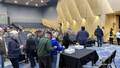
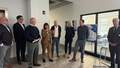
Also attending Thursday were Bob Kuehn of Keen Development, architect James Alexander of Alexander Finegold, and attorney Adam Filson, who outlined the development. In a second phase, developers plan to build two-bedroom townhouses along the Green River and a commercial building in the style of the mill buildings.
Filson, of Grinnell, Dubendorf & Smith, said demolition of some structures in the complex is expected to begin next month. Williamstown residents, members of their immediate families and town employees will have priority for at least the first three months for the affordable units. A lottery will determine their allocation if demand exceeds availability.
Prices for the affordable units will not exceed $90,000 for a one-bedroom flat, $110,000 for a two-bedroom flat and $174,000 for a two-bedroom townhouse, according to the developers. The board granted Cable Mills a comprehensive permit under Chapter 40B, which streamlines the application process for developers in communities where the supply of affordable housing — meaning essentially subsidized housing in a state or federal program — is deemed insufficient for the demand implied by the percentage of low-and moderate-income residents. Only 4.3 percent of the town's housing is considered affordable by state guidelines, while 37 percent of residents qualify as low-or moderate-income. The threshold for Chapter 40B is 10 percent of a town's housing stock.
The developers at one point expected to use a new state program recently passed by the Legislature, Chapter 40R, which gives financial incentives to towns that, among other criteria, reuse old mills or industrial sites. But the state office of Communities and Development would not accept applications until it has completed drafting its regulations, which it has said will be in December.
Also Thursday, the board approved the development plan, special permits and a variance for the Four Acres Motel on Route 2, Main Street, owned by Navin Shah, who wants to build a two-story building angled on the property, which will increase motel rooms from 31 to 48.
The new structure will replace a 1 1/2-story building behind the restaurant. Restaurant owner Fred L. Ackley Jr. voiced concerns about drainage, which he said is a pressing issue. Ackley received assurance that a drainage system would collect and divert water away from the restaurant, while the remainder would flow into two catch basins at the Main Street entrance. Construction is expected to be finished by the summer tourist season, according to Shah's attorney, Sherwood Guernsey.
Tags: affordable housing, Cable Mills,