Works by Louise Bourgeois, Catherine Chalmers, Jennifer Angus, and other nationally recognized and emerging contemporary artists will be featured in a new exhibition organized by the Berkshire Museum. Bug Out of the Box: Contemporary Art, History, and Science of Bugs will be on view July 8 through October 29, 2006.
The innovative exhibition will combine the diverse works of art, including sculpture, photographs, drawings, digital media, and site-specific installations, with historic cultural artifacts, decorative arts, and natural science specimens, including some living insects and arachnids, from the Museum’s collections. Interactive educational stations will enhance the experience for visitors of all ages. Bug Out of the Box will explore the contemporary issues that artists use to interpret insects and spiders, the diverse responses humans have to them, and the metaphors and interactions between bugs and humans. The exhibition comprises 71 works of contemporary art, about 20 decorative arts objects, and four tanks of live insects. The Berkshire Museum is the only venue for the exhibition.
“This dynamic exhibition not only presents fascinating and challenging work by some of today’s most exciting artists, but also represents a collision among the three aspects of the Berkshire Museum’s mission: art, science, and history,†said Stuart A. Chase, executive director of the Berkshire Museum. “Bugs—insects and arthropods—inspire diverse reactions in human beings, from phobias about spiders to admiration for the beauty of butterflies. These artists represent the range and scope of these reactions, and the exhibition also looks back over the centuries. The many visitors who enjoy our interactive science exhibitions will also enjoy that aspect of the show.â€
Bug Out of the Box is sponsored by Greylock Federal Credit Union. Greylock Federal Credit Union members qualify for discounted Berkshire Museum memberships through August 31.
Additional support is provided by Jane and Jay Braus, Joan and Jim Hunter, and Ingrid and Richard Taylor. Media sponsor is WMHT.
Artists featured are Jennifer Angus, Bennie Flores Ansell, Hillevi Baar, Louise Bourgeois, Catherine Chalmers, Glenn Corbiere, Marc Dennis, Greg Edmondson, Nancy Graves, Linda Horn, Patricia Johanson, Don Jones, Margaret Kasahara, Paul Paiement, Jeff Slomba, Victor Trabucco, and Ann Weiner.
The exhibition’s four sections will take visitors through a range of perspectives on bugs. “Ick†explores human reaction to cockroaches and other so-called disgusting creatures. “Wow†shows the remarkable design of insects and arachnids, and explores the way artists have incorporated them. “Awesome†is a look at butterflies and other “pretty†insects and arachnids. The final gallery, “Morph†explores insect metamorphosis and challenges the viewer to transform their own fears and distaste for bugs into an understanding and appreciation.
Featured Artists
Born in France in 1911, Louise Bourgeois is a pivotal abstract expressionist artist who has often depicted spiders in her work. Bourgeois’s spider represents a benevolent weaver that she likens to her mother. Her work is in major museum collections around the world, including the Guggenheim Museum, the Metropolitan Museum of Art, and the National Gallery of Art, Washington. Bug Out of the Box will include Bourgeois’s sculpture Spider IV and a group of prints illustrating the cooperative and special essence of the spider.
Houston-born artist Bennie Flores Ansell installs swarms of butterflies and collections of resin insect “fossils†which she creates from digital photo constructions of images of shoes, each “pair†placed symmetrically to create insect wings. Her site-specific installation for the Berkshire Museum, I2K6, will comprise 2006 of these translucent “butterflies†pinned to the wall. Two other works by Flores Ansell are mock-scientific specimen displays. She draws on her Filipino ancestry and relates her work to Imelda Marco’s famous shoe collection. Flores Ansell, who refers to herself as a “cultural entymologist,†poses the question of whether the shoes, an object of desire for many women, are still desirable in insect form. Her work has been exhibited at the Houston Center of Photography, the Galveston Art Center, the International Center for Photography in New York City, and elsewhere.
Another site-specific installation will be the 20-foot by 12-foot walk-in room, Study, by Jennifer Angus. Angus creates large-scale patterned installations using insect specimens. Her installations first fool the eye that the viewer is walking into a room with patterned walls. On closer inspection, the surfaces are created with richly patterned exoskeletons of multi-colored bug specimens collected by indigenous peoples in the Malyasian rainforest. Angus is originally from Toronto and is currently assistant professor of Environment, Textiles, and Design at the University of Wisconsin. Her work is in the collections of the American Craft Museum in New York, the Canadian Embassy in Bangkok, Thailand, the Museum for Textiles, Toronto, and other public and private collections. She has exhibited at numerous in the United States and Canada.
Seventeen works by Catherine Chalmers will include ten large-scale photographs from her “American Cockroach†series. Chalmers’ Residents places cockroaches, which she raises, in miniature household settings—the bathroom, the bedroom, the kitchen, or nursery. Her Imposters features roaches transformed with paint and colorful materials into more “acceptable†insects like ladybugs and bumblebees. Three Pit Drawings by Chalmers mount dismembered cockroach parts into abstract patterns. The large work Pile of Legs comprises a pile of four-foot long cockroach legs made of resin. Two videos by Chalmers, Squish and Crawl space will be shown continuously in the gallery. Chalmers’ work has been the subject of solo exhibitions at such museum as the Chicago University Art Museum, California State University Long Beach, and Corcoran Gallery of Art, Washington D.C.
Greg Edmondson paints moth and butterfly forms onto squares of vintage wallpaper. The bodies of the insects incorporate the patterns of the wallpaper, mimicking their rich colors and patterned wings and bodies. The exhibition will include nine gouache drawings and four digital prints by Edmondson, with titles that combine the wallpaper name with the insect’s Latin name, such as Clarence House Rust, Citheronia Regalis. Edmondson is also represented in the show by the five-foot long sculpture Modified Danus Plexipus Chrysalis—a butterfly chrysalis made of steel, paper, and acrylic—and four sculptures of caterpillars. Edmondson’s insect paintings were recently the subject of the exhibition Natural Selection at the Saint Louis University Art Museum.
Paul Paiement’s egg tempera paintings depict colorful hybrid insects whose bodies are partly composed of technological products like cellphones and nosehair trimmers. Four works by Paiement will be on view in the exhibition. Paiement made his solo museum debut at The Laguna Art Museum in Laguna Beach, CA, in 2005 and recently published the book Hybrids 1.0-3.0. His work has been featured in numerous group shows at galleries and museums across the United States, and is in many private and corporate collections.
Based in Columbia County, New York, Linda Horn challenges viewers perceptions of reality. In Collection and Artificials, Horn combines body parts of real dead insects with parts of plastic insects, making a whole that at first glance appears to be an entomologic study. In the series Actuals, Horn mounts real insects under Plexiglass and frames each one with a painting on one side and a computer scan on the other, allowing the viewer to compare the insect’s appearance in each media.
Nancy Graves (1939-1995), a Berkshire native, spent much of her childhood in the natural history galleries of the Berkshire Museum and was inspired by the natural specimins. Her Arachn was inspired by the Greek myth of Arachne, who was transformed into a spider after enraging Athena with her skillful weaving.
Two paintings by Marc Dennis demonstrates the artist’s modern Surrealist twist on the style of 17th-century baroque painters like Caravaggio and Goya. Dennis employs layers of glazes, each a translucent color built up against a dark background. Bug Out of the Box features Dennis’ Grasshopper and Orchids and Lady Bird Beetle and Yellow Iris.
Victor Trabucco, one of the leading glass artists working today, is represented by the sculpture Dragonfly and a butterfly paperweight.
Dragonflies are also the subjects of seven works by nature photographer Glenn Corbiere. A native of Adams, Mass., Corbiere uses macro photographic techniques to capture the intricate details of the insects.
Patricia Johanson is an environmental artist whose work includes public commissions such as Fair Park Lagoon, Dallas, and “Park for the Amazon Rain Forest,†commissioned for the 1992 Earth Summit. In the 1960s, she traveled with Georgia O’Keefe and was inspired by O’Keefe’s organic landscapes. Her butterfly and moth-shaped color garden designs, as seen in the drawing series O’Keefe Equivalents from the Berkshire Museum collection, incorporate the physical elements of O’Keefe’s features.
Sculptor Don L. Jones creates large-scale, life-like representations of many insects in metal. In addition to an installation of carpenter ants that crawl up and around the gallery wall, Bug Out of the Box will include an outdoor sculpture of a praying mantis by Jones.
Bronx-born artist Ann Weiner creates uses cutting edge software to create lenticular images—optically altered images in which lenses reflect a different aspect of the image below them as the viewers point of view changes. Her work Las Mariposas, depicting butterflies, is featured in the exhibition.
M. Butterfly, a painting by Margaret Kasahara, is a stylized self-portrait of the artist as a butterfly. Like much of Kasahara’s recent work, the painting focuses on her Asian-American background; the body of the butterfly is a kokeshi, a traditional Japanese wooden folk doll, while the golden yellow wings are derived from the North America clouded sulphur butterfly.
History and Culture
The Berkshire Museum will draw on its diverse and extensive collections of art, decorative arts, and cultural artifacts for Bug Out of the Box, from Chinese import porcelain decorated with bugs to Victorian-era jewelry set with ancient Egyptian scarabs to a group of Chinese prints, titled “Mustard Seed,†from the Kang His period (1621-1723). Many of the pieces were made from insect products such as silk (from silk moths) and lacquer (derived from secretions of the insect Coccus lacca). The historical uses of such products, and the methods used to make them, are highlighted in the interpretative materials for the show.
The show will also include cases featuring pop cultural items that can be found in any discount or toy store, demonstrating the continuing influence of insects and spiders on everyday life.
Real Insects and Interactives
Examples from the Museum’s vast natural history collection will also be included. Boxes of butterflies, beetles, and other bugs, pinned in traditional collecting mounts, will be seen, including some “hidden†in drawers inviting visitors to open and discover the contents. Live insects or arachnids included in the exhibition are cockroaches, a tarantula, a scorpion, milkweed bugs, a mantis, and silkmoths. Scientific information and “fun facts†about these creatures will enhance the interactive, multi-disciplinary experience of the show. An observation hive will allow visitors to watch honeybees at work.
Interactive stations will include “Bugs in Vogue,†a change for visitors to try on different props that mimic adaptations that different bugs have evolved to survive in their diverse environments. Regular “discovery cart†programs (Wednesdays and Saturdays at 1 p.m.) will also provide the opportunity to learn more about bees, watch the stages of caterpillars changing into butterflies, or see ants digging in their ant farm.
Bug Out of the Box was organized by the Berkshire Museum exhibits team. Wall labels and interpretive texts were written by guest curator Marianna Poutasse, with scientific input from entomologist Lisa Provencher.
Opening Party and Related Events
Bug Out of the Box will open with a lecture and reception on Friday, July 7. At 5:30 p.m., entomologist Faith Deering will give the talk, “Six-Legged Wonders: Insects and Their Impact on Human Society. From 6:30 to 8:30 p.m., a casual indoor “picnic†will celebrate the opening. Admission, including lecture and reception, is $20 (free to members). To reserve, call 413-443-7171, extension 10.
Public tours of Bug Out of the Box will be offered on alternate Saturdays at 2 p.m., beginning July 15. “Ants, Bees, and Butterflies†Gallery Discovery programs for families are every Wednesday, July 8-October 21, and every Saturday, July 12-August 30, at 1 p.m.
The Berkshire Museum’s popular Family Performances will have a buggy theme this summer. BTF Plays! will present “James and the Giant Peach†Wednesdays through Saturdays, June 28 through July 22. The Grumbling Gryphons will perform “Anansi the Trickster Spider†on Saturday, July 29, and Sunday, July 30. From Wednesday, August 9, through Saturday, August 12, Mamalade Productions will present “Maggie’s Garden.†Berkshire Children’s Theatre will perform “Charlotte’s Web†from Wednesday, August 16, through Saturday, August 19. All Family Performances are at 11 a.m. Tickets available the day of the performance are $10 for adults, $7 children 3-18 ($5/$3 for members) and include Museum admission. Family Performances are sponsored by Pittsfield Cooperative Bank.
Other family programs will include the chance to bring in insects and “Bug the Expert†on Sunday, July 30, and Sunday, October 8, at 1 p.m., and the “Bugapalooza†Family Day on Sunday, August 6, featuring a butterfly tent, dancers art-making, and more from 1 to 4 p.m. Both are included with Museum admission. On Sunday, August 20, the Berkshire Museum will travel to the Bronx Zoo to see the butterfly garden and new insect carousel. For prices and details on the trip, call 413-443-7171, extension 10.
Entomologist John Stoffolano will give the lecture “Insects in Design and Art†on Wednesday, July 19, at 2 p.m. Admission is $13 ($5 for Museum and B.I.L.L. members). In addition to the opening talk on July 7, Deering will give two lectures in the fall as part of the “Art for Lunch†series. On Wednesday, September 27, at noon, her topic is “Silken Threads and Ruby Dyes.†On Wednesday, October 18, she will demonstrate techniques for cooking and eating insects in her talk “Entertaining with Insects.†Both Art for Lunch lectures are free with Museum admission.
Berkshire Museum
The Berkshire Museum enriches, educates, and inspires through diverse collections of art, natural science, and history, as well as dynamic educational programs and special exhibitions. The galleries feature American art by John Singer Sargent, Gilbert Stuart, Norman Rockwell, and others. The Berkshire Museum has a significant group of paintings by Hudson River School artists such as Albert Bierstadt and Frederick Edwin Church. The aquarium features more than twenty tanks and assorted terrariums housing both native and exotic fish, reptiles, and amphibians. Natural science galleries include an interactive dinosaur dig, numerous examples of regional animals, an array of rocks and minerals, and miniature dioramas from the Northern Tundra to the Amazon Jungle. Artifacts from ancient Egypt include the mummy of Pahat, a Sem priest from the Ptolemic period (332 - 30 B.C.E.).
During Bug Out of the Box, the Museum is open Monday through Saturday, 10 a.m. to 5 p.m., and Sundays, noon to 5 p.m. The galleries are closed on July 4. General admission is $8 for adults, $6.50 for seniors, $5 for children ages 3 to 18. Members and children under 3 are admitted free.
The Berkshire Museum is located at 39 South Street on Route 7 in Downtown Pittsfield. For more information, contact the Berkshire Museum at (413) 443-7171, ext. 10, or visit www.berkshiremuseum.org
If you would like to contribute information on this article, contact us at info@iberkshires.com.
Your Comments
iBerkshires.com welcomes critical, respectful dialogue. Name-calling, personal attacks, libel, slander or foul language is not allowed. All comments are reviewed before posting and will be deleted or edited as necessary.
No Comments
Pittsfield Subcommittee Considers E-Bike Safety
By Brittany PolitoiBerkshires Staff
PITTSFIELD, Mass. — Some city councilors want to explore ways to encourage safe e-bike use.
Amuso has gotten reports of kids going 15 to 20 miles per hour on the sidewalk with motorized bikes while people are trying to back out of their driveways, and fears someone might get hurt.
She said if they could start with some of the basics such as riding with traffic in bike lanes and operators under 16 wearing helmets, it would address most of the calls.
"Do I think we need to put ten police on trying to find e-bikes throughout the city? I don't. But there are enough calls that I'm getting, and other councilors are getting, that we have to say, ‘Okay, what can we do?' And we have a lot of bike lanes in Pittsfield, and the e-bikes and all bikes should be in the bike lanes, not on the sidewalk,” she said.
The petition was tabled so that the Department of Public Works can study it and gather further information.
In Massachusetts, an e-bike with a top speed of 20 miles per hour and a motor of 750 watts or less is classified as a traditional bicycle. State law defines two e-bike classes:
A Class 1 electric bicycle is defined as having a motor of 750 watts or less that provides assistance only when the rider is pedaling and ceases to provide assistance when the bicycle reaches the speed of 20 miles per hour.
JMJ has had a purchase and sale agreement with real estate developer Cypress Equities since May. Cypress Equities was established in 1995 in Dallas and has been building shopping centers around the country.
click for more
Members of Girls Inc. of the Berkshires visited City Hall, where they learned about local government, civic engagement, and discovered how their voices matter at any age. click for more
On Tuesday, the City Council accepted the mayor's response to Ward 2 Councilor Cameron Cunningham's request to explore turning the 100 Burbank St. campus into the Pittsfield Police Department’s headquarters. click for more
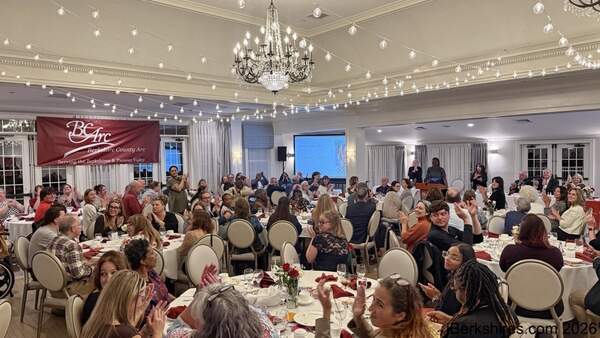
Over the past 72 years, Berkshire County Arc has built a community of support for individuals with intellectual and developmental disabilities and acquired brain injuries. click for more