Pittsfield - Sometimes the work of one artist overflows what a single exhibition space can hold. In the case of celebrated 76-year-old artist Julio Granda, a thirty-five year resident of the Berkshires, former professor and head of the Fine Arts Department of Berkshire Community College, and mentor to dozens of other artists in the region, two gallery spaces are partnering in an innovative show highlighting work from just one decade of this prolific artist’s work.
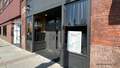
The Lichtenstein Center for the Arts gallery and the Storefront Artist Project Mainspace will both be featuring work by Julio Granda from 1980-1990, an active and vibrant period of his career where his paintings and drawings explored the expressive qualities of the line. Berkshire Eagle’s art critic Charles Bonenti wrote of Granda’s work in 1983: "we come away from Granda's work with a sense of having touched some cosmic or spiritual principle. We have been led to confront…the complexity and ambiguity that can exist in linear, spatial and color relationships..."
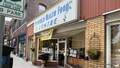
An opening reception for the artist will be held in both exhibition spaces on Friday, August 3. The opening at the Lichtenstein Center gallery, located at 28 Renne Avenue , is from 5:30 p.m. to 7:30 p.m., followed by the reception at the Storefront Artist Project Mainspace, located around the corner at 124 Fenn Street , from 6:30 p.m. to 8:30 p.m. Both shows are open from August 1 to September 15, 2007. The opening receptions are sponsored in part by The Kinderhook Group and Sabor Restaurant: Contemporary Latin American Cuisine.
Granda, a prolific artist whose career spans over several decades, is a true poet of line and space. Reminiscent of Lorca's poetry, his works take us into a different universe that denies concrete space. Seemingly simplistic, the juxtaposition of shapes and colors in his paintings and drawings is never pure abstraction but rather an animating force that gives his work dynamism and vitality.
Julio Granda has been living in the Berkshires for the past 35 years after moving here from New York City. He received his Master’s of Fine Arts at the University of Massachusetts - Amherst and also studied at School of Visual Arts and the Cooper Union School of Art in New York City. He served both as Fine Arts faculty and as Chairman of the Fine Arts Department with the Berkshire Community College. Recent exhibitions include Simon's Rock College of Bard in Great Barrington, Tokonoma Gallery in Housatonic and Ute Stebich Gallery in Lenox.
Gallery hours at the Lichtenstein Center for the Arts, where Granda’s paintings will be shown, are Wednesday through Saturday, 12 noon to 5 p.m.
Public hours at the Storefront Artist Project Mainspace, where Granda’s drawings are highlighted, are Wednesday through Sunday, noon to 5 p.m.
For more information on the Julio Grand exhibition, visit www.culturalpittsfield.com or contact the Lichtenstein Center for the Arts at 413.499.9348 or the Storefront Artist Project at 413.442.7201 and www.storefrontartist.org.
If you would like to contribute information on this article, contact us at info@iberkshires.com.
Your Comments
iBerkshires.com welcomes critical, respectful dialogue. Name-calling, personal attacks, libel, slander or foul language is not allowed. All comments are reviewed before posting and will be deleted or edited as necessary.
Wonderful show! Would like to be in touch with Julio and make a purchase.
Wini b
Nine Injured in Washington Mountain Road Crash, Prompting Mass-Casualty Response
Staff ReportsiBerkshires
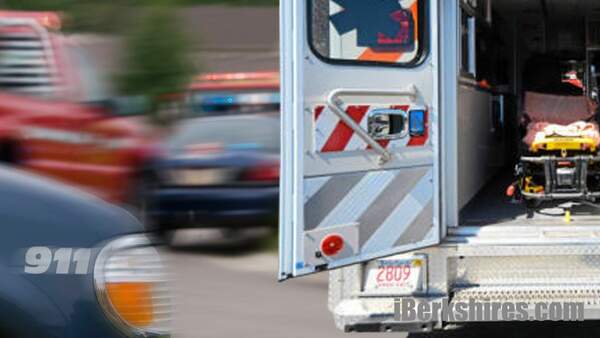
DALTON, Mass. — Local public safety personnel responded to a mass-casualty incident Sunday on Washington Mountain Road based on the number of patients although the injuries were reported to be "minor."
At approximately 12:52 p.m., the Fire Department was dispatched to the scene for a report of a multi-vehicle rollover accident.
At the time of the initial response, three patients were reporting injuries. However, after further assessment, first responders determined that there were a total of nine — prompting a mass-casualty incident response, the Fire Department said in a Facebook post.
A Jeep Cherokee driven by Anthony Stracuzzi, 27, was traveling north toward Dalton when it crashed into a Jeep Wrangler because of improper equipment.
Stracuzzi will be cited for the crash, Police Chief Deanna Strout said. At this time, the crash is still under investigation.
Stracuzzi’s vehicle was carrying three adult passengers and a baby. The Jeep Wrangler was driven by a 34-year-old man and had two juvenile passengers.
No life threatening injuries were sustained, however some injuries were more serious than others, Strout said.
Local public safety personnel responded to a mass-casualty incident Sunday on Washington Mountain Road based on the number of patients although the injuries were reported to be "minor."
click for more
The monies were accepted in August, and the committee could appropriate at its discretion. Officials have reported that State Rep. Tricia Farley-Bouvier pushed for the extra per-pupil aid to restore some positions after another tight budget year.
click for more
Independent gubernatorial candidate Andrea James said voters need to rise up and challenge the status quo to create meaningful progress for the working class rather than corporate capitalists.
click for more
The City Council on Tuesday rejected a $31,000 police drone grant after a larger conversation about surveillance and responsible data storage. click for more