Williamstown Projects Take Critical Step Forward
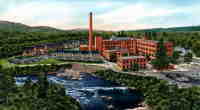 |
| An artist's rendering of the Cable Mills project. |
WILLIAMSTOWN, Mass. — Two major efforts to rehabilitate former industrial sites got a boost from the Selectmen on Monday night.
In unanimous votes, the board approved conditions that will help the Cable Mills project move forward and signed a sales-and-purchase agreement to turn the former Photech property into an assisted-living facility.
"This is a very, very, very good night for Williamstown," said Chairman David Rempell.
Selectmen signed grant and deed restrictions that will provide some $1.5 million to ensure historic preservation, affordable housing and open space in renovation and construction at the former General Cable plant on Water Street. The vote was greeted with applause.
"This is the only [community preservation project] I know of with benefits accrued across the board," said former Selectman John "Jack" Madden.
The Community Preservation Act Committee had worked on other projects, such as the Little Red Schoolhouse, he said, but much of the benefits went to small groups. Cable Mills will not only provide desperately needed housing in Williamstown, it will generate some $437,000 in annual taxes, based on this year's rate.
Developer Mitchell Properties LLC plans to do stabilization work on the still-standing brick mill buildings this fall and start construction on the 61 units in the spring.
Despite the current glut in the housing market, company President Bart J. Mitchell is confident the Cable Mills condominiums would find buyers. There has been no formal marketing for the project but his firm has received about 190 inquiries generated mostly by word of mouth, he said.
"This is a very nice option for many different reasons," he said. "For people who are downsizing, people who want to come back to the area. It's by the river, in walking distance of Spring Street. ... Who wouldn't want to live there?"
The Cable Mills project was thrown into disarry more than a year ago when its principal developer, Robert H. Kuehn Jr., died. Kuehn's firm, Keen Development, had been the lead in the public-private venture. With its owner's death, the company folded, leaving Williamstown wondering which way to turn until Mitchell, a Williams College trustee, came on the scene months later.
Mitchell Properties bought the mill from Keen in June for $3 million. Significant work has been done at the site already, including demolishing about 100,000 square feet of dilapidated buildings where duplexes will be built along the Green River and clearing and cleaning the brick mills that will be transformed into condominiums.
The funding was approved at town meeting in June; voters OK'ed using funds through the Community Preservation Act to the tune of $525,000 for no less than 12 affordable housing units. Historic preservation and open space will be funded at $500,000 each.
The preservation means "making the building look authentic and keeping looking authentic," said Town Manager Peter Fohlin. A portion of the open space money, around $166,000 for a proposed riverwalk on the property, can't be disbursed until the other conditions are filled. Preservation committee Chairwoman Janette Kessler-Dudley said the statewide lobbying organization for community preservation planned to highlight Cable Mills because it is considered a model project for the state.
Check for Photech
The town agreed earlier this year to sell the former Photech site, which it had taken by eminent domain, to Eby Group of Kansas for $179,000.
Eby owns and operates 27 assisted living communities throughout the Midwest; it plans a 46-unit facility and open space at the site of the former photographic paper production plant.
"We've gone all this time without a purchase-and-sales agreement but just a handshake between Richard Eby and I," said Fohlin. "They have spent on the order of $200,000 down there already."
That spending has apparently made the group's officers a little nervous, he said, and they want to make sure they'll own the site — so they've sent a $10,000 check to the town's counsel to guarantee their option. Fohlin said a number of agencies still have to weigh in on cleanup and other issues — once those "hoops are cleared," the sale will take place.
Editor's note: The Eby Group's purchase was never completed.
Tags: affordable housing, assisted living, Photech,