NORTH ADAMS - The Diocese of Western Massachusetts is reaching out to parishioners over the coming months to help it decide how to best use its resources.
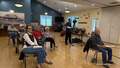
The so-called listening sessions will take place on Saturdays in the diocese's 10 regions under the auspices of the Pastoral Planning Committee.
Diocese spokesman Mark E. Dupont said not all the dates have been set for the sessions but the diocese wanted to get the word out to parishioners.
"We had a compelling interest to get this out now in hopes people will hear about it and come forward [to participate]," he said on Thursday.
According to a press release, these will be important opportunities for parish communities, meeting together regionally, to have input into plans to help the diocese reconfigure its resources to meet the future needs of the Catholic population in the four western counties of Berkshire, Franklin, Hampden and Hampshire.
Attendance will be limited to delegations chosen by parishes and the planning committee. Dupont said the idea is to create an atmosphere at the sessions that will allow frank and open discussions.
That means neither media nor diocesan officials will be allowed to attend, he said.
The sessions are being built around the 74-page Mullin Report that was released last March. The report was an analysis of the parishes in terms of declining and shifting populations, a decrease in the number of priests available and the costs of maintaining parish properties. It also provided recommendations, which have been under review by the diocesan planning committee.
For example, the report found the North Adams Region is "characterized by a high level of linkage among parishes and by the rural, sparsely populated section of Western Massachusetts its parishes serve. ... In general, financial indicators suggest that parishes in this region are not in financial difficulty." Among its recommendations were merging St. Francis' and St. Anthony's parishes to improve their financial status.
The planning committee has been reviewing the findings along with other data, meeting with priests throughout the diocese and preparing a strategy for these listening sessions. Depending on the number of parishes in each region, every parish will be allowed to send a specific number of participants. Parishes are being encouraged to send delegations comprised of people representing a cross section of the community who are also active within the parish.
"This is a critical part of the pastoral planning process," said Monsignor John J. Bonzagni, director of pastoral planning for the diocese, in a press release. "Until now, we have been focusing on data. This is the time for the committee to hear from our people about their thoughts and ideas concerning the reconfiguring of the resources of the diocese."
The Pastoral Planning committee has targeted Easter 2008 to have the listening sessions completed, but that will depend on the availability of parishioners over the winter months and weather related factors. The committee plans to provide recommendations to Springfield Bishop Timothy A. McDonnell on an ongoing basis as they work with each region and its parishes.
The overall goal of the pastoral planning process is to develop a plan that will ensure that parishes can function with 65 diocesan priests by 2010 and that all Catholics have equitable access to the Eucharist and sacraments.
"I think pastors will have a well-rounded choice of delegates," said Dupont. "But we want to parishioners who feel they want to be involved to know they can approach their local pastors."
If you would like to contribute information on this article, contact us at info@iberkshires.com.
Your Comments
iBerkshires.com welcomes critical, respectful dialogue. Name-calling, personal attacks, libel, slander or foul language is not allowed. All comments are reviewed before posting and will be deleted or edited as necessary.
No Comments
Pittsfield Subcommittee Considers E-Bike Safety
By Brittany PolitoiBerkshires Staff
PITTSFIELD, Mass. — Some city councilors want to explore ways to encourage safe e-bike use.
Amuso has received reports of kids riding motorized bikes at 15 to 20 mph on the sidewalk while people are trying to back out of their driveways, and she fears someone might get hurt.
She said that if they could start with some basics, such as riding with traffic in bike lanes and requiring operators under 16 to wear helmets, it would address most of the calls.
"Do I think we need to put 10 police on trying to find e-bikes throughout the city? I don't," she said. "But there are enough calls that I'm getting, and other councilors are getting, that we have to say, ‘OK, what can we do?’ And we have a lot of bike lanes in Pittsfield, and the e-bikes and all bikes should be in the bike lanes, not on the sidewalk."
The petition was tabled so that the Department of Public Works can study it and gather further information.
In Massachusetts, an e-bike with a top speed of 20 mph and a motor of 750 watts or less is classified as a traditional bicycle. State law defines two e-bike classes:
"Class 1 electric bicycle" is defined as having a motor of 750 watts or less that provides assistance only when the rider is pedaling and ceases to assist when the bicycle reaches 20 mph.
"Class 2 electric bicycle" is defined as having a motor of 750 watts or less that may be used exclusively to propel the bicycle and is not capable of assisting when the bicycle reaches 20 mph.
Riders 16 years or younger must wear a helmet by law.
The Cooperative Hoosac Valley football program will resume football related activities on Monday, Sept. 28, after being on “pause” for the past nine days. click for more
Hoosac Valley High School has postponed this weekend’s football games following a reported alleged hazing incident involving a large number of football players, the athletic director announced Friday afternoon. click for more
Cassidy Flynn scattered five hits in a complete-game effort in the circle as Lenox upset top-seeded Hoosac Valley, 3-2, in the quarter-finals of the Division 5 State Tournament. click for more
Brayden Durant struck out seven and walked one in a complete-game effort on the mound Saturday to pitch the Drury baseball team to a 6-0 win over Keefe Tech in the quarter-finals of the Division 5 State Tournament at Joe Wolfe Field. click for more
Jason Codey struck out 13, walked two and allowed just an infield single as the Generals earned a 7-1 win over Wahconah to claim their third straight regional title. click for more