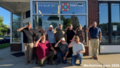
Williams College Department of Music Class of 1960 Lecture: Daniel Melamed

Print Story | Email Story
WILLIAMSTOWN - The Williams College Department of Music will present a Class of 1960 Lecture featuring Daniel Melamed, J.S. Bach Scholar, on Wednesday, Feb. 20 at 4:15 p.m. in Bernhard Music Center, Room 30 on the Williams College campus.

This free event is open to the public.

Daniel R. Melamed is Professor of Musicology at the Jacobs School of Music, Indiana University. He is the author of Hearing Bach's Passions and J. S. Bach and the German Motet, co-author (with Michael Marissen) of An Introduction to Bach Studies, and editor of Bach Studies 2. He has has published articles, reviews and musical editions on J. S. Bach and members of the Bach family, and serves as associate editor of the Journal of Musicology.

The Class of 1960 Scholars Fund, established at their 25th Reunion, brings eminent researchers from other colleges and universities to campus to give colloquia. In advance of the colloquia, the group of 1960's Scholars read and discuss the speakers' work with faculty members and students.

If you would like to contribute information on this article, contact us at info@iberkshires.com.

Williamstown Planning Board Narrowing in on Subdivision Bylaw Changes

By Stephen DravisiBerkshires Staff
WILLIAMSTOWN, Mass. — The Planning Board late last month discussed specific features of what it plans to pass as a new subdivision control bylaw this year.
 
The board long has discussed the complex set of regulations as being out of date and cumbersome to both potential developers and the board itself, which has needed to hear requests for waivers of outdated rules for the handful of residential subdivisions that have been proposed in town in recent years.
 
This spring, the town engaged consultants from Northampton's Dodson and Flinker Landscape Architecture and Planning to go through the existing bylaw, compare it to more contemporary regulations in other communities and help craft a revised bylaw.
 
Unlike the zoning bylaw, where amendments require approval of town meeting, the subdivision control bylaw is a creation of the Planning Board, which can make changes on its own after a public hearing process it hopes to complete this year.
 
At a special Planning Board meeting on May 26, Dillon Sussman of Dodson and Flinker and his colleagues walked the board through a dozen different decision points that the board must resolve — either by leaving the bylaw as is or making a change — and offered suggestions based on best practices.
 
All of the issues are technical and ranged from the fundamental, like how the bylaw will define types of subdivisions, to the highly specific, like what turning radii will be required in new streets that are constructed to serve planned developments.
 
One example of a topic that came up in the recent approval of a four-home subdivision off Summer Street is stormwater management.
 
View Full Story

More Williamstown Stories