Training for the Masses: Animation Nation
 |
| Paul W. Marino |
Animation is a loaded word. It can mean a lot of things, from "a state of being animated ..." (duh!) to "lively" and "vivacious."
It can also refer to cartoons, as in an "animated cartoon." And while many of the good folk here at NBCTC strike our visitors as behaving like cartoon characters, that's not why this definition is so important to this particular missive.
No, the important thing is what makes a cartoon animated in the first place: How do you take something that doesn't move (a drawing or other inanimate object) and make it seem to move?
Characters like Gumby and Wallace and Gromit are fashioned of clay, and then filmed one frame at a time, the figures being moved slightly between shots. Hence, when the film is shown, they seem to move all by themselves.
<L2>Cartoon characters, like Bugs Bunny and the Roadrunner are even easier to produce. They're drawn in a sequence of pictures that are then transferred to film. And again, when the film is shown, the drawn characters move about, just if they were real.
Notice anything similar about these two methods? Both employ a system by which a series of individual images are recorded — and played back — in sequence to simulate motion. Thus, the characters have been "animated."
Which brings us to the point of this mound of verbiage. If you've been watching NBCTC over the past couple of years, you have no doubt observed our latest technological triumph: animated graphics.
What are animated graphics? For a start, graphics are the letters and/or numbers used in the titles of shows to let you know what you're watching. Animated, we've already covered. We animate our graphics using a computer program that's in our character generator, but it works exactly the same as the animation processes described above.<R3>
We create a graphic in the form of a line of text (or a group of objects), decide what we want the line (and/or its component letters) to do, and create a list of instructions for the computer to execute our plan. Then the computer creates a series of images. When these are played in sequence ... voila! Animation!
This program allows us to create titles in three dimensions (that is, they have depth, as well as height and width), and move them in three dimensions as well. We can move them up and down, from side to side, and back and forth; we can have them rotate vertically and horizontally, and spin like a pinwheel. We can also alter size, and create light effects.
<L4>What does all this mean? For your author, it means I can play for hours at a time and call it work. For our producers, it means flashier, more eye-catching titles. For our viewers, it means more reasons to watch our already terrific programming. Talk about a win-win situation!
If you're interested in learning how to animate graphics or simply behave like a cartoon character, give us a call at 413-663-9006. Or e-mail us at nbctc01@gmail.com. Or better still, come and visit us in Building Six in Western Gateway Heritage State Park. We get lonely here. :-(
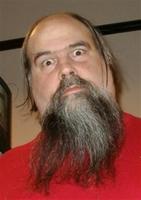
Paul W. Marino is the program director of Northern Berkshire Community Television Corp. His column runs once a month.