Tech Tuesday: Wind, Hydrogen, the Internet & You
 |
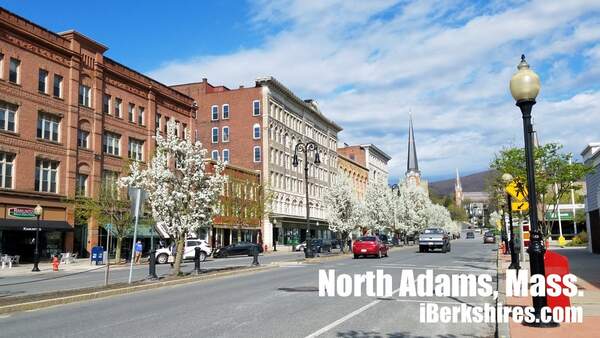
Last week, I came across a book jam-packed with pictures about North Adams from the mid- to late 19th-century and as I read it, I couldn't help but draw parallels between post-Hoosac Tunnel and what I see after high-speed Internet is available through out Berkshire and Franklin counties. The book is called "Images of North Adams" and is by Robert Campanile — I highly recommend it for those interested in the city's history.
It's a well-documented fact how the railroads helped make North Adams the great city it once was and I couldn't help thinking that what the railroads did for North Adams back then is very similar to what high-speed communications could do for the unserved/underserved areas of Berkshire County today.
While the trains made the area great by moving people and products into and out of the city, they also created a connection between North Adams and the larger cities of the East Coast. High-speed communications could do the same by moving data, voice and commerce into and out of the area and not only create connections nationally, but globally as well.
Railroaded Future?
I think it's pretty clear that Verizon's recent DSL announcement is not going to be the modern-day Boston & Maine. A recent article, "Verizon to New England: Bye Bye," focused on the sale of Verizon's land lines to FairPoint Communications in Vermont, Maine and New Hampshire. I think the following quote very realistically describes the latest Verizon proposal for Berkshire County as well.
"Most New England subscribers remain on dial-up, however, with a pledge that FairPoint will bring yesterday's 3 Mbps DSL to them within the next two years. While metro areas will get 'triple play' services that deliver telephone, Internet, and television over those new, high-speed connections, Northern New England will be stuck in the Internet stone age. As these new services come online, 3Mbps will be the new dial-up."
As I stated in my last article, I think a government-owned fiber backbone is the very least the solution should be with the ultimate being fiber to every home (FTTH); and could in fact be better than the public/private relationships that are being proposed.
According to Government Technology: "The business model that faltered in 2007 was the 'private corporate franchise' model based on the deal that Philadelphia and EarthLink agreed to in 2006. It was, in fact, the free market that failed last year — not governments in their traditional role as the builders and maintainers of critical infrastructure." (Full the full article, click here.)
<L2>So why is high-speed Internet important to more than just the latte drinking dilettantes of North Adams? There are the obvious benefits of bringing higher paying jobs to rural areas, the educational benefits, and increased property values; but more importantly what a high-speed communication line could do for energy and energy costs in this area in the very near future.
According to Jeremy Rifkin in his book "The Hydrogen Economy" (another great book I highly recommend — it's not just about hydrogen as the title would lead you to believe), the phenomenon that has happened with blogs and sites like YouTube — where the average person has become not only the consumers but also the producers of news and media is destined for the field of energy.
Consumers as ProducersRifkin, who has accurately predicted many of the major changes in modern society over the past 30 years, believes that in order for survival after oil, average citizens must and will become both consumers and producers of energy. Rifkin calls for, as well as demonstrates the need for, a dramatic change in the way our current national grid functions.
That distributed-generation (energy produced and consumed locally with excess being fed back into the grid) is the way of the future. However, in order, for this system to work effectively and efficiently, there needs to be a dependable high-speed communication link between these facilities to coordinate the flow and direction of power produced. I'm not capable of summing up his entire book in a sentence or two, so please read it and get the full picture the way it was intended by the author.
Already, we are witnessing the need for such a concept. Recently, several large paper mills have closed because the cost of energy is just too high; there has been local interest in small to mid-size companies banding together in an attempt to lower energy costs through buying in bulk; and, of course, the mayor of North Adams has called for lower gas prices for the area.
Following Rifkin's suggestions, and assuming a high-speed network were available, there are a couple solutions to these energy problems already at hand. A group such as the CDC could purchase and lease stationary hydrogen fuel cells (manufactured in Latham, N.Y.) to these local companies making them not only consumers of energy but producers as well — fuel cells produce electricity, heat, and clean drinking water with zero emissions depending of the hydrogen source.
And with the recent announcement of the launching of Eos Ventures LLC,rural land owners could produce not only enough electricity for their own use, but possibly make a handsome profit off of the excess power.
Many will say windmills are a bad choice because you can't count on the wind always blowing — however this is where the hydrogen economy dovetails nicely with alternate energy solutions.
By using the electricity produced from the wind and through a process called electrolysis, hydrogen can be produced from ordinary water and stored. The hydrogen can then be used to feed a fuel cell in times of low or no wind (or sun in the case of solar) and generate power with zero emissions. Or, the hydrogen can be used as the fuel for any device (after a few modifications) that currently get its power from gasoline or diesel fuel — however, hydrogen's real benefits come with the stationary production of power.
Without the high-speed network capable of connecting the energy producers with the energy consumers as well as the electrical grid itself, we are all left to bargain and plead with Big Oil and Coal, but before I do I think I'll enjoy my half-cafe, double decaf, soy espresso made with milk heated by solar energy.
C.J. Vadnais is president of the Southern Vermont Broadband Cooperative in Stamford, Vt. His opinions are his own. You can contact him at Tech_Tuesday@yahoo.com.