Arnold Place Is Coming Down; Council OKs Notre Dame Sale
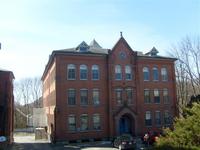 |
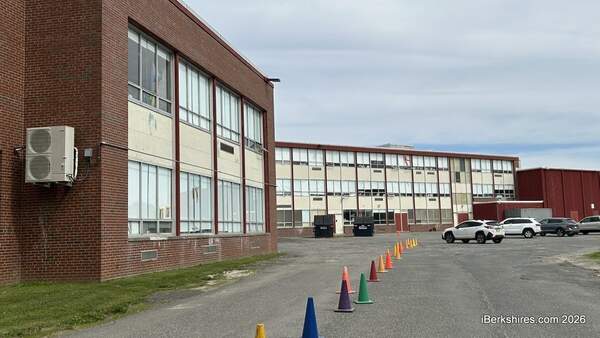
| The Notre Dame School will be turned into condominiums. |
Owner Franklin Perras brought his attempts to restore the crumbling structure to an end as the building's laundry list of problems ran into six figures.
"It could be between $300,000 and $375,000, which is way too much for me to invest at my age," Perras told the City Council on Tuesday night. "I'd never get paid off within my lifetime."
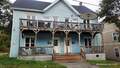
The four-apartment, two-story building at 34-40 Arnold Place was one of five structures targeted for demolition as part of Mayor John Barrett III's initiative to combat blight in the city. All five structures had been vacant for some time and not kept up. Their condition had prompted complaints from neighbors and the city's building and health inspectors had been frustrated in their attempts to force the owners in action.
Last month, the City Council ordered three of the buildings — two on East Main Street and one on Harrison Avenue — repaired or razed in two weeks. A third abandoned property was awarded to the city after several years in Land Court.
The fourth, Arnold Place, was given a reprieve after Perras convinced the council that he was sincere in his intentions to fix the massive wood-frame building, which sits in a historic neighborhood.
Perras, now retired, had planned to refurbish the structure as a five-unit residence to provide income for he and his ailing brother while they lived in a neighboring house at 124 Church St.
But Perras' brother, Lawrence, was found lying on the side of Route 8 in Hinsdale two weeks ago; he died the next day of injuries from an apparent fall.
It was the night before Franklin Perras was expected to present a detailed repair plan to the council. He didn't appear and the council gave him another two weeks.
But the time only proved that the house couldn't be fixed — at least not within the $50,000 Perras had estimated.
A number of contractors had looked the place over, only to declare it a money pit.
"They said, 'I'd like to work for the money, but you have to understand this is an awful lot of work,'" he said. The lowest price, counting the plumbing and electrical, was $254,000, and that wasn't counting the roof, which one contractor told him would have to be fixed as well.
That skyrocketed the price into the $300,000 range — a high price for a building he'd paid less than $20,000 for a decade or so ago.
Perras said he'd stopped calling contractors and started calling excavators for estimates on tearing the building down and filling in the lot. Those figures were more than $30,000.
At that point, Barrett jumped in to say he'd "have no problem extending this to June 1."
The mayor suggested that Perras contact Building Inspector William Meranti to see if he could help him find a lower price.
The City Council immediately agreed to extending Perras' two weeks to June 1.
Notre Dame Sold
The Notre Dame redevelopment took another step forward as the City Council authorized the mayor to sell off two pieces of the property.
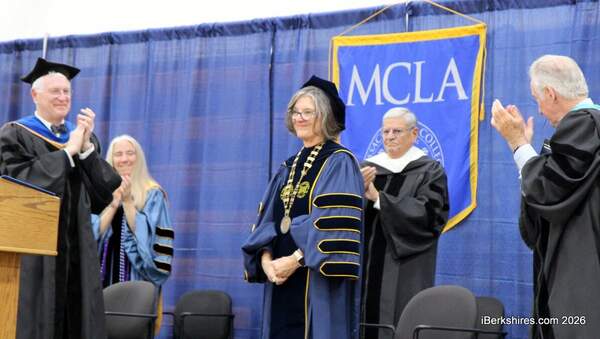
Arch Street Development of Needham is purchasing the former Notre Dame School for $255,000 to transform it into condominiums; the Massachusetts College of Liberal Arts Foundation is buying the rectory to be used as office space and possibly short-term living space for outside visitors to the college.
The sales will recoup the city's purchase price of $475,000 from the Roman Catholic Diocese of Springfield. The mayor had urged the council to purchase the site to ensure the preservation of Notre Dame's steeple, a landmark site in the city, and appropriate development of the property.
With two of the buildings to be sold, that leaves the city with the church, the mayor said.
The brick building will be mothballed for now. However, the mayor said he expects to put out requests for proposals within six to 10 months. The asking price? One dollar.
The building, which has a cafeteria kitchen, gym and stage on the ground floor, could be used for housing, assisted living, commercial or gallery space, Barrett suggested.
"It's your plan to how it's going to be used," that will determine the buyer, he said. "If we do do that we will sell it for a dollar basically to put it on the tax roll."
The city got the church for free, but Barrett admitted that some costs would be entailed in maintaining it. But, he said, "We've at least been able to do something with the property as a whole."
Councilor Richard Alcombright asked when the closings were likely to happen. Barrett said MCLA was ready to move fairly quickly but Arch Street had to get its financing package prepared first, estimated at about $3 million, so the closing would be closer to June.
Arch Street is currently renovating the former Clark Biscuit building on Ashland Street into affordable housing units. That project is estimated at $15 million.
Tax incentive
The council also approved a tax incentive financing agreement with Lowe's Home Centers Inc., which plans to construct a 132,000 square-foot home improvement retail store by 2009 on the site, owned by developer Starwood Ceruzzi.
The agreement would discount the tax rate on any improvements to the Lowe's property for 10 years. The property's current assessment is $1.7 million; once the company occupies the new building, the assessment is expected to be between $6 million and $7 million.
The difference would be taxed at 90 percent the first year, with one percent added on each year. Barrett said the overall discount would be about 5 percent over the 10 years.
"It really doesn't add up to much," said the mayor, but it showed a measure of good will and willingness to work with the national retailer. Lowe's officials had told him how pleased they were with both the state's and city's attitude in getting things done.
Alcombright and Councilor Michael Bloom wanted to be assured that the TIF agreement did not extend to any other buildings on the property and not to the adjacent gravel bank, also owned by the Connecticut developer.
Barrett said it only covered improvements or additions to the proposed Lowe's building and not to any other. The company also had to guarantee it would have at least 90 full-time jobs on site within three years.
Any further changes would have to come before the council, he said.
The council unanimously declared the former North Adams Plaza an economic opportunity area and authorized the mayor to enter into the TIF agreement.
Barrett said the Lowe's development, particularly in the current economic climate, was a good sign for the area.
"We probably will see further development over the next two to four years," he said, referring to the gravel bank.