Advocating for Green Berkshires
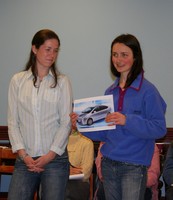 |
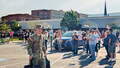
| Students from Williams College participate in a demonstration at the Northern Berkshire Community Coalition forum Friday. |
NORTH ADAMS – Solutions to global climate change, opportunities for green building and ways to promote sustainability dominated the conversation at the April meeting of the Northern Berkshire Community Coalition forum, held at First Baptist Church.
Titled "Greening the Berkshires," the Friday morning gathering brought together advocates from various Berkshire organizations aimed at eco-friendliness, environmental sustainability, energy-efficiency and conservation. A NBCC forum first, the discussion focused on highlighting initiatives in the region that seek to perpetuate tenants of environmental stewardship.
"We need to look at our environment and we really need to do a better job of taking care of it," Alan Bashevkin, the executive director of NBCC.
The forum brought together various youth leaders and presentations by students at Williams College and the Massachusetts College of Liberal Arts' chapter of the Public Interest Research Group detailed what campuses in the area are doing to affect change.
"Enough about the gloom and doom. We want to focus on solutions," said Tracie Kopinski, a campus organizer with MCLA's chapter of MassPIRG. "How are a bunch of college students going to work to change policy?"
Kopinski said Sen. Marc Pacheco's, D-Taunton, Global Warming Solutions Act – which calls for the reduction of greenhouse gas emissions 20 percent below 1990 levels by 2020 and 80 percent below 1990 levels by 2050 – is the key to making the state a national leader in curbing the effects of climate change.
The bill passed through the Senate in March and Kopinski said she hopes that student-led efforts, like organized phone calls to legislators' grassroots campaigning, will help push the bill through the House by Earth Day, April 22.
MCLA has spearheaded a sustainability and green technology campaign on its campus, even creating a "Green Team" of students, faculty and staff working to promote recycling, energy-efficiency and concentrating on reducing one's "carbon footprint."
The catalyst for the school's commitment to green initiatives comes following President Mary K. Grant's signing of the American College and University Presidents Climate Commitment last summer, which mandates the college reduce its greenhouse gas emissions 25 percent by 2012.
According to Spencer Moser, coordinator of MCLA's Center for Service and Citizenship, institutions of higher learning are responsible for "walking the walk."
"As an organization, to really make this happen and happen well, we need a lot of people and we're working in all kinds of areas to take accountability," said Moser.
Morgan Goodwin, a Williams senior, led a demonstration that illustrated the phenomenon of "eco-equity" or "eco-apartheid," a concept that separates those who can afford to go green from those who can't.
"We need to build green pathways out of poverty," said Goodwin, naming "green jobs" as a new form of economic development.
Eco-equity calls for bringing the "Green Wave" to all demographics, not just those who have the money to invest in hybrid cars or expensive new technologies.
"Green is a catch phrase that's not getting out to the people in the low-income neighborhoods," said Kathy Keeser, a program director for NBCC.
Many at the meeting expressed concern about educating the younger generation about the consequences of inaction but still others noted that students are leading the green charge.
"It'll be the young people who'll take this and run with it," said Bashevkin.
The discussion also featured input from representatives from the Center for Ecological Technology in Pittsfield, the COOL Committee in Williamstown and the Hoosic River Watershed Association, among others.